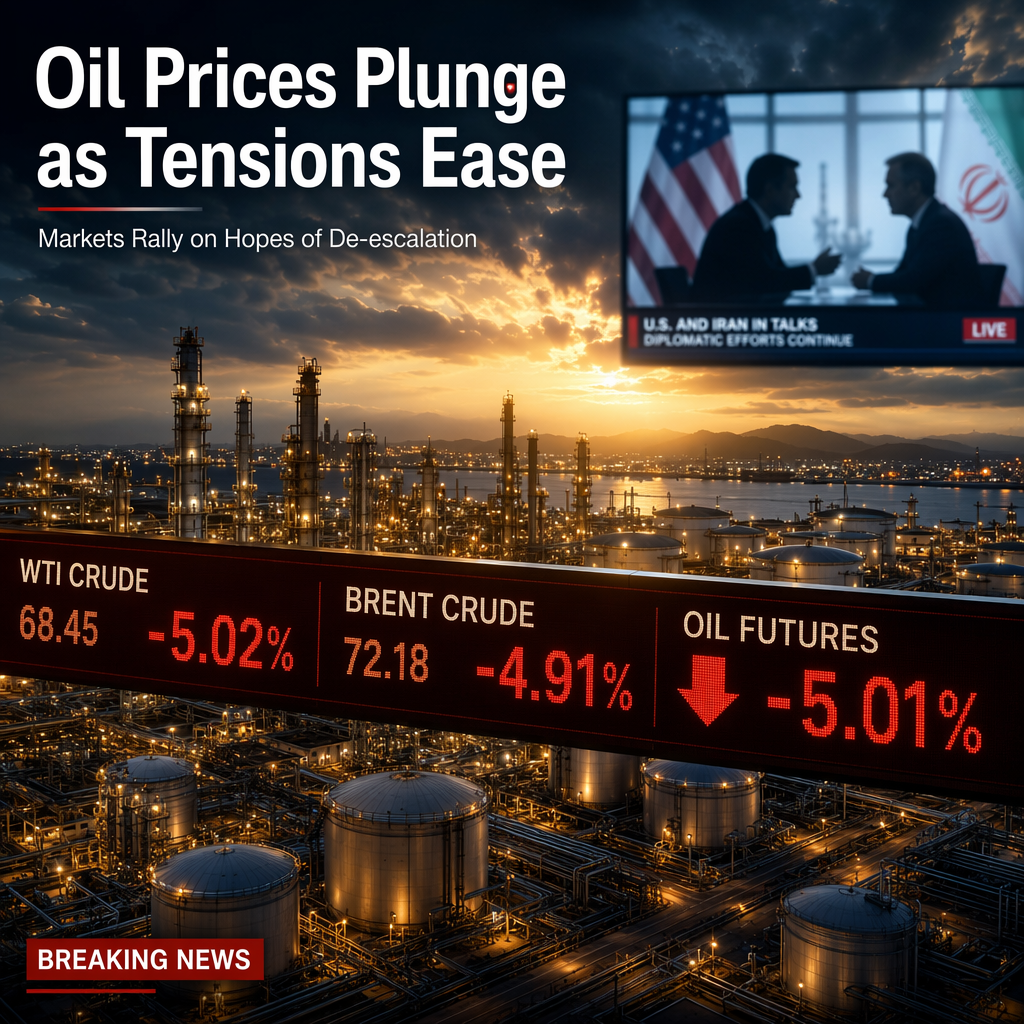
Oil prices experienced a sharp decline after Iran reportedly indicated it would suspend attacks if the United States maintains its pause in hostilities, alleviating market fears stemming from nearly two weeks of escalating conflict [1]. Brent crude futures for September delivery dropped 4.88% to approximately $92 a barrel, while U.S. West Texas Intermediate crude futures for September delivery fell over 5% to $84.84 a barrel [1].
According to Reuters, a senior Iranian official stated that Iran's position is 'attack for attack': if the attacks cease, Iran will also halt its operations. This message has already been communicated to the United States [1]. The pause in hostilities follows Washington's decision to suspend its bombing campaign after President Donald Trump's advisers reportedly warned about the depletion of viable targets and concerns regarding U.S. weapons stockpiles [1].
U.S. ambassador to the United Nations Mike Waltz confirmed on Fox News Sunday that President Trump opted to pause the strikes to facilitate ongoing diplomatic efforts [1]. HSBC's U.S. rates strategist Dhiraj Narula commented that higher oil prices have fueled expectations that the Federal Reserve may need to maintain tighter policy for a longer period. However, he noted that inflation expectations have remained relatively contained, attributing this to strong messaging from Fed officials about their commitment to price stability, which has prevented the oil shock from affecting longer-term inflation expectations [1].
CONCLUSION
The reported de-escalation between Iran and the U.S. has led to a significant drop in oil prices, easing immediate market concerns about supply disruptions. While higher oil prices had previously raised expectations for tighter Federal Reserve policy, inflation expectations remain stable due to firm Fed messaging. The market is closely watching diplomatic developments for further direction.