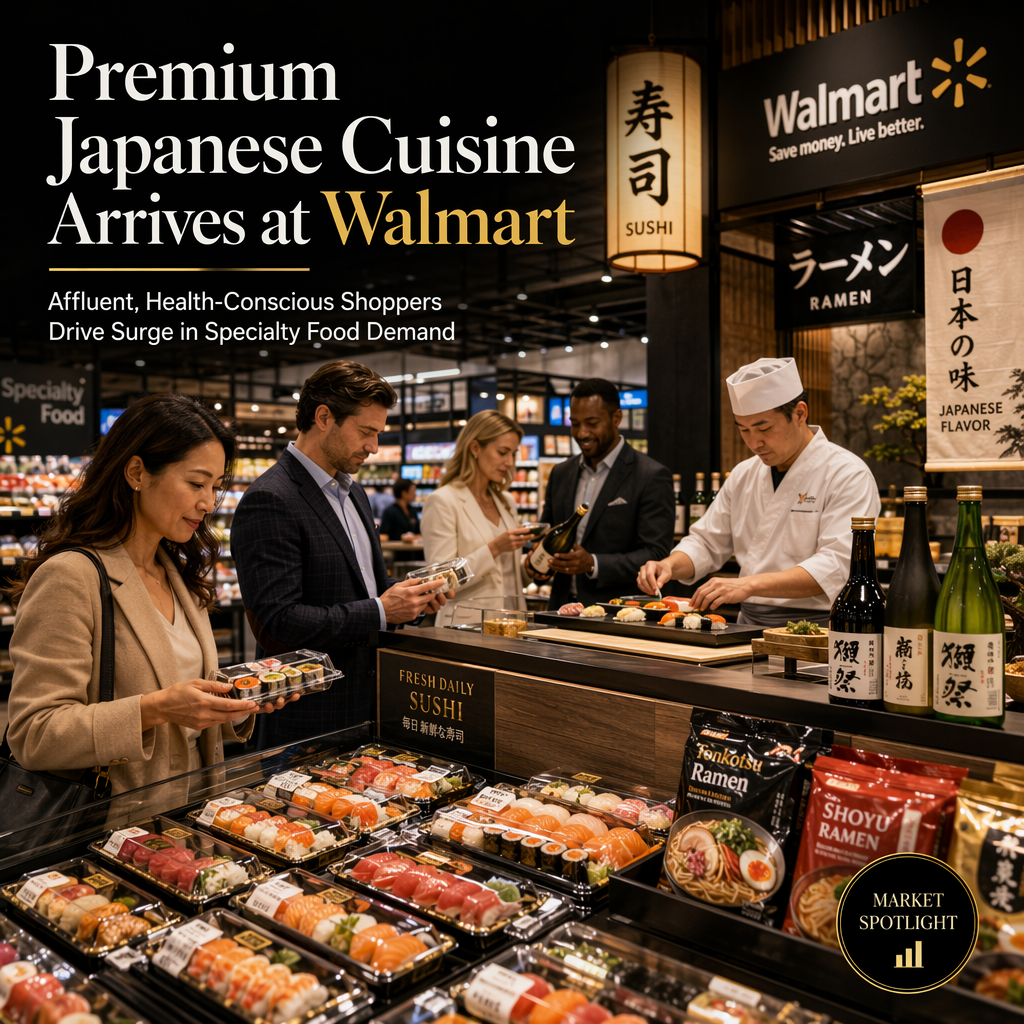
Walmart is increasing its sourcing of Japanese food and ingredients in response to a surge in demand from health-conscious, high-income shoppers in the United States, according to company executives. This strategic shift comes as inflation and rising food costs have prompted more affluent consumers to shop at Walmart, broadening the retailer's customer base and driving interest in premium and international food products, particularly Japanese cuisine such as sushi and ramen [1].
The Bentoville Food Theater in Walmart's hometown now showcases three types of Japanese cuisine—sushi, robatayaki, and ramen—highlighting the retailer's commitment to expanding its Japanese food offerings. A Walmart spokesperson stated, "We are seeing a surge in demand for authentic Japanese foods, especially sushi and ramen. Our customers are increasingly looking for healthier and more diverse options" [1].
Japanese companies, which have historically faced challenges entering the U.S. market due to stringent requirements and supply chain complexities, are now finding new opportunities as Walmart increases its sourcing of Japanese food and ingredients. This move is expected to boost exports and brand recognition for Japanese food producers [1].
Market analysts note that Walmart's pivot toward Japanese food is part of a broader trend among U.S. retailers to diversify product offerings in response to inflationary pressures and changing consumer preferences. Financially, the expansion is expected to contribute to higher margins for Walmart, given the premium pricing associated with imported and specialty items. Industry observers predict continued growth in the Japanese food segment at Walmart, supported by positive market sentiment and strong demand from wealthier shoppers. Traders and investors are monitoring Walmart's quarterly reports for signs of increased sales and profitability, as well as potential stock price movements for Japanese food exporters [1].
CONCLUSION
Walmart's increased focus on Japanese food is attracting a more affluent, health-conscious customer base and is expected to boost both the retailer's margins and Japanese food exports. Market sentiment is positive, with analysts and investors watching for further growth and profitability in this segment.