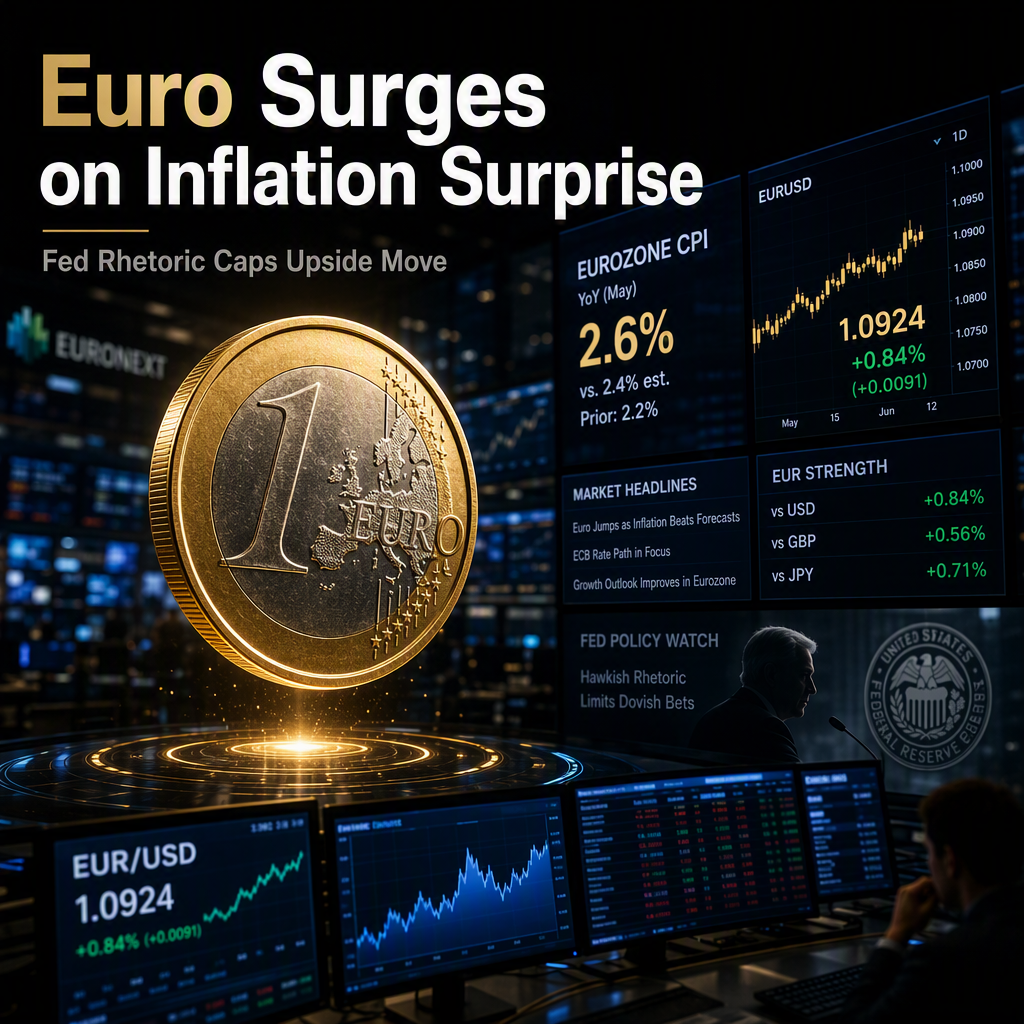
The Euro strengthened against the US Dollar during Friday's American session, with EUR/USD trading near 1.1530 after rebounding from intraday lows. This recovery was supported by resilient Eurozone inflation data, as preliminary Eurostat figures showed the Harmonized Index of Consumer Prices (HICP) rose 2.9% year-over-year in July, up from 2.8% in June. Core HICP accelerated to 2.5% year-over-year, exceeding both the previous 2.4% reading and economists' forecasts, indicating persistent underlying price pressures. On a monthly basis, headline HICP increased by 0.2%, while core HICP remained unchanged [1].
Labor market data from Germany was more mixed, with the unemployment rate edging up to 6.4% in June from 6.3%. The number of unemployed increased by 6,000, slightly above expectations, suggesting some moderation in labor market conditions [1].
Despite the Euro's gains, the US Dollar remained supported by hawkish comments from Dallas Fed President Lorie Logan. Logan stated that monetary policy is not restraining the economy and argued that inflation is not on track to return to the Federal Reserve's 2% objective, which limited further upside for the Euro [1].
From a technical perspective, EUR/USD trades at 1.1531 with a bullish near-term bias, as the pair is above both the 20-period and 100-period Simple Moving Averages. The Relative Strength Index is around 67, indicating firm upside momentum but also suggesting the risk of a brief pause or shallow pullback. Key support levels are identified at 1.1526, 1.1518, and 1.1513, with deeper retracement levels at 1.1485, 1.1457, and 1.1423, where dip-buying interest is expected if the broader bullish structure holds [1].
CONCLUSION
The Euro's recovery was driven by stronger-than-expected Eurozone inflation data, but gains were tempered by hawkish US Federal Reserve commentary. Market sentiment remains cautiously optimistic for the Euro, with technical indicators supporting a bullish outlook as long as key support levels are maintained.