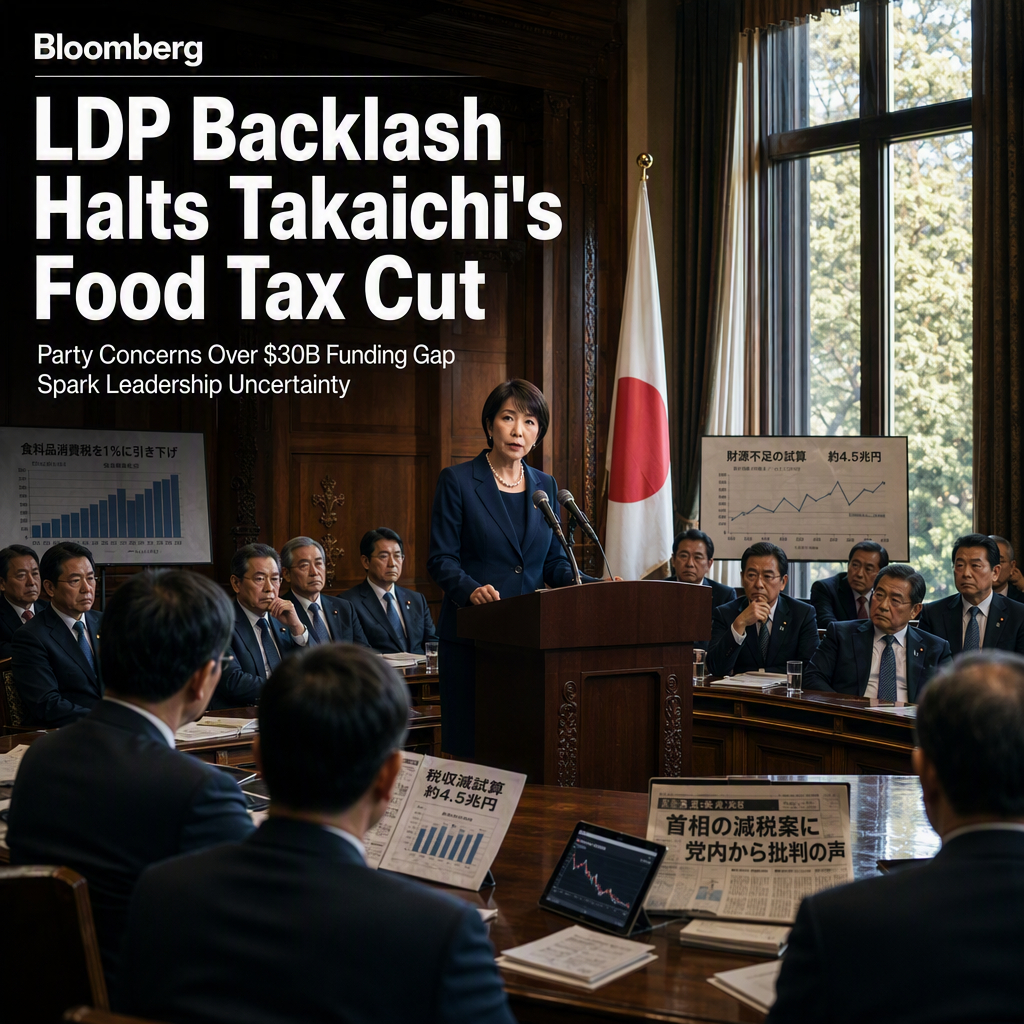
Japan's ruling Liberal Democratic Party (LDP) has postponed approval of Prime Minister Sanae Takaichi's proposal to reduce the consumption tax on food to 1%, following significant pushback from party members concerned about funding and the unilateral nature of the announcement [1]. Prime Minister Takaichi unveiled the tax cut plan without first seeking party consensus, a move that has caused discontent among LDP lawmakers who worry about the financial implications and the potential necessity of raising the consumption tax again in the future [1].
The proposed reduction in the sales tax on food is estimated to cost around $30 billion, prompting questions about how the government would address the resulting funding gap without undermining fiscal discipline or resorting to future tax hikes [1]. Lawmakers have also raised concerns about the timing and communication of the proposal, warning that bypassing party consensus could erode confidence in the administration and complicate future fiscal policy decisions [1]. There is additional apprehension that a sharp tax cut could be reversed if fiscal pressures intensify, potentially leading to instability in tax policy and diminishing public trust [1].
The debate over the tax cut comes amid declining approval ratings for Prime Minister Takaichi. Some analysts believe the initiative is aimed at alleviating the impact of inflation on Japanese households, but the response from both within the LDP and the business community has been mixed [1]. The $2.3 trillion economic package proposed by Takaichi has similarly received varied reactions, with some business leaders supporting the stimulus while others question its long-term viability [1].
Party discussions are ongoing, with lawmakers seeking more information on funding sources, possible offsets, and measures to prevent abrupt future tax increases [1].
CONCLUSION
Prime Minister Takaichi's plan to cut the food tax to 1% has sparked significant internal opposition within the LDP, primarily due to concerns over funding and the decision-making process. The uncertainty surrounding the proposal and its fiscal implications has led to a postponement of approval, highlighting the challenges facing the administration as it seeks to balance economic stimulus with fiscal responsibility.