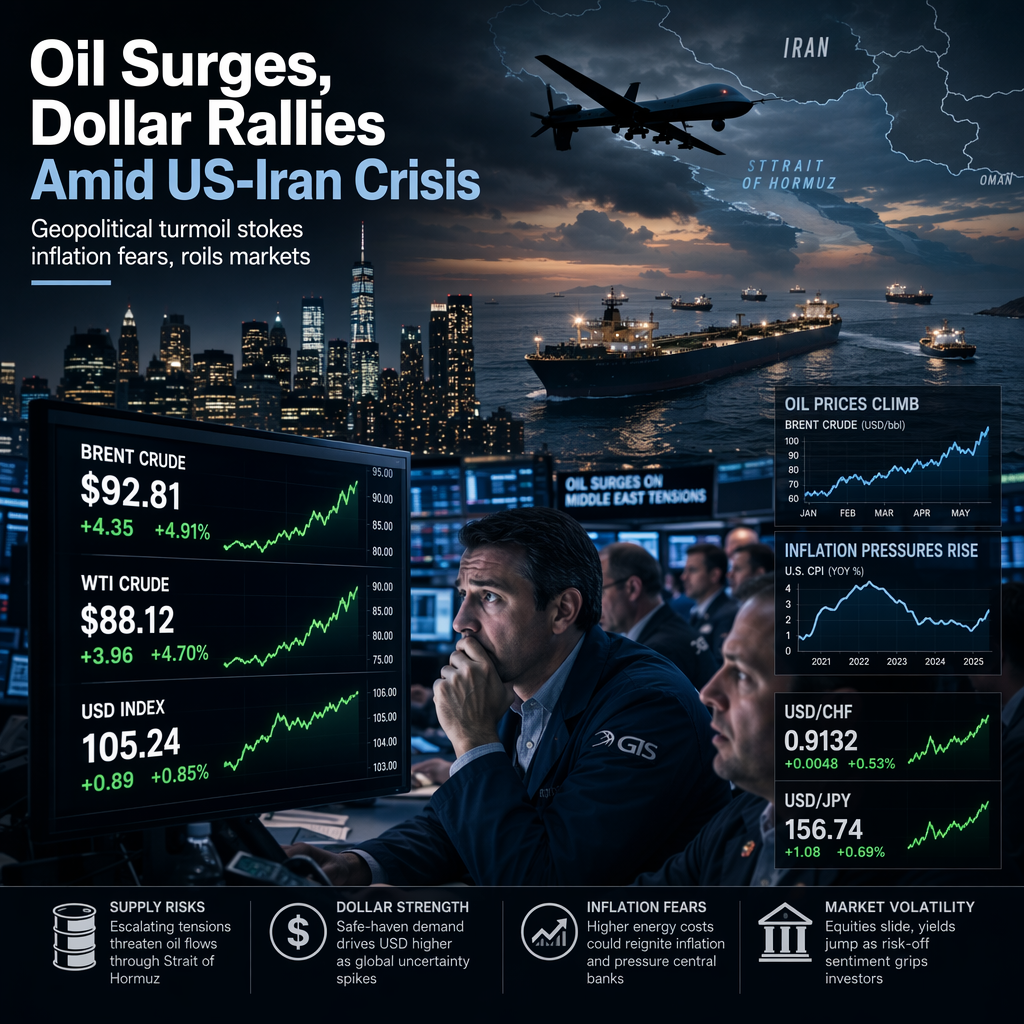
Escalating hostilities between the United States and Iran have triggered significant market reactions, with safe-haven demand lifting the US Dollar (USD) and keeping oil prices elevated, according to multiple sources [1][3][5]. The US military has conducted a tenth consecutive night of strikes on Iran, while Iran has retaliated with attacks on US military bases and allied infrastructure across the Gulf, raising the risk of a broader regional conflict [1][3]. Despite these tensions, US Secretary of State Marco Rubio stated that the US remains open to talks with Iran, and mediators have proposed a 10-day ceasefire to resume negotiations on an interim deal, though no resolution has been reached [1][2].
The conflict has disrupted global oil supplies, particularly due to restricted traffic through the Strait of Hormuz and a maritime blockade announced by Yemen's Iran-aligned Houthis against Saudi Arabia [1]. Analysts at BlackRock estimate that the ongoing conflict could add approximately 0.8 percentage points to global headline inflation, with Europe and parts of Asia being more exposed due to their reliance on energy imports [5]. OCBC and PNC Asset Management strategists warn that a fresh energy shock could keep the Federal Reserve (Fed) focused on upside inflation risks, with Fed hawkishness expected to persist until energy market pressures ease [5].
Market data reflects these concerns: the CME Group's FedWatch Tool shows traders pricing in an 83% probability of a Fed rate hike by year-end [1], while another source cites a 64.2% chance of a September hike, up from 57.8% the previous day [3]. The USD/CHF pair has extended gains for a second day, trading around 0.8110, as the Swiss Franc weakens amid reduced safe-haven demand for CHF and increased demand for USD [3]. The USD/JPY pair remains flat around 162.50, near a multi-decade high, as investors await further developments in the US-Iran situation and upcoming economic data releases, including Japan's June CPI and the US S&P Global PMI for July [2][4].
Gold (XAU/USD) has regained some positive traction but remains capped below $4,050, as a bullish USD and expectations of higher-for-longer US interest rates limit gains despite technical signals suggesting softening bearish pressure [1]. The Swiss National Bank (SNB) has reaffirmed its readiness to intervene in foreign exchange markets to curb excessive franc appreciation, citing increased short-term inflation risks from geopolitical tensions [3]. In Japan, Prime Minister Sanae Takaichi emphasized the government's commitment to fiscal sustainability and growth targets, but her comments had no immediate impact on the Yen [4].
Forward-looking statements from analysts highlight ongoing caution. PNC Asset Management's Yung-Yu Ma expressed doubts that positive trends in US small- and mid-cap equities can withstand prolonged high oil prices and inflation pressures, recommending portfolio diversification to mitigate risks [5].
CONCLUSION
The escalation of US-Iran tensions has heightened inflation fears and driven safe-haven flows into the US Dollar, pressuring other major currencies and capping gains in gold. With oil prices elevated and central banks signaling caution, markets remain on edge, awaiting further developments in the Middle East and key economic data. The outlook remains uncertain, with analysts expecting persistent Fed hawkishness until inflationary pressures subside.