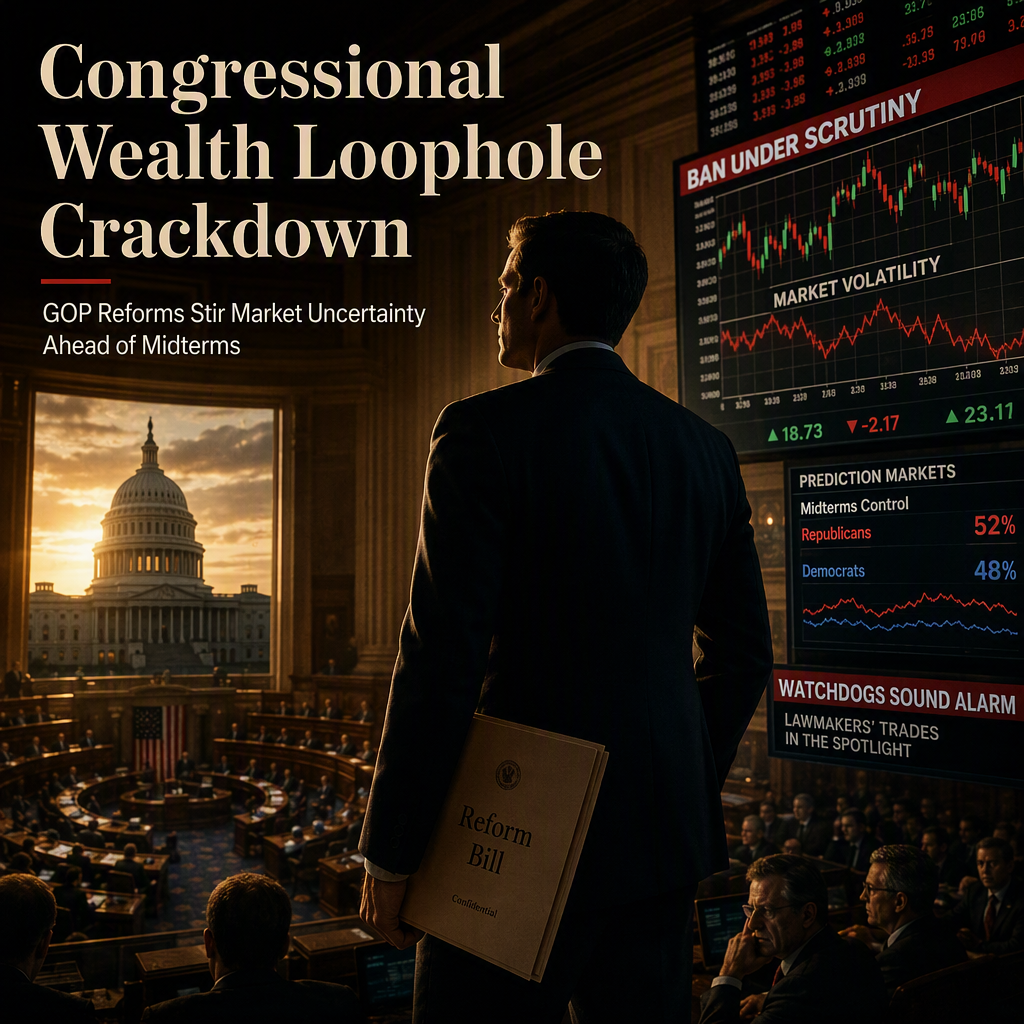
The GOP is intensifying efforts to close a loophole that allows members of Congress to profit financially, even after a stock-trading ban was implemented for lawmakers [1]. As the 2026 midterm elections approach, prediction markets are reflecting a dramatic shift and increased uncertainty in the battle for control of Congress, with the GOP proposing new legislation aimed at increasing transparency and limiting opportunities for personal financial gain through Congressional service [1].
Financial watchdogs and market analysts have identified that, despite the stock-trading ban, certain loopholes still enable elected officials to benefit from privileged information and complex investment vehicles [1]. A senior GOP lawmaker stated, "We saw the impact of the stock-trading ban, but there are still ways members can benefit from inside knowledge. This new loophole is the next target" [1].
Market sentiment regarding these proposed reforms is mixed. Some investors believe that stricter rules could reduce volatility in sectors heavily influenced by legislative action, such as pharmaceuticals, defense, and technology, while others caution that such limitations might have unintended consequences on liquidity and trading volumes [1]. A financial analyst noted, "Prediction markets are already pricing in a tighter race for control of Congress, reflecting growing uncertainty about how these reforms will play out" [1].
Traders are closely monitoring support and resistance levels in sectors sensitive to Congressional activity. Technical analysis indicates increased volatility as policy proposals move through committees, with key price levels being tested whenever headlines about financial reform emerge [1]. Market watchers are advising caution and recommending that clients monitor relevant news for trading opportunities and risk management [1].
CONCLUSION
The GOP's push to close Congressional wealth loopholes is generating mixed market sentiment and heightened uncertainty, particularly in sectors sensitive to legislative action. As the 2026 midterms approach, investors are urged to stay vigilant, with volatility expected to persist as reforms are debated.