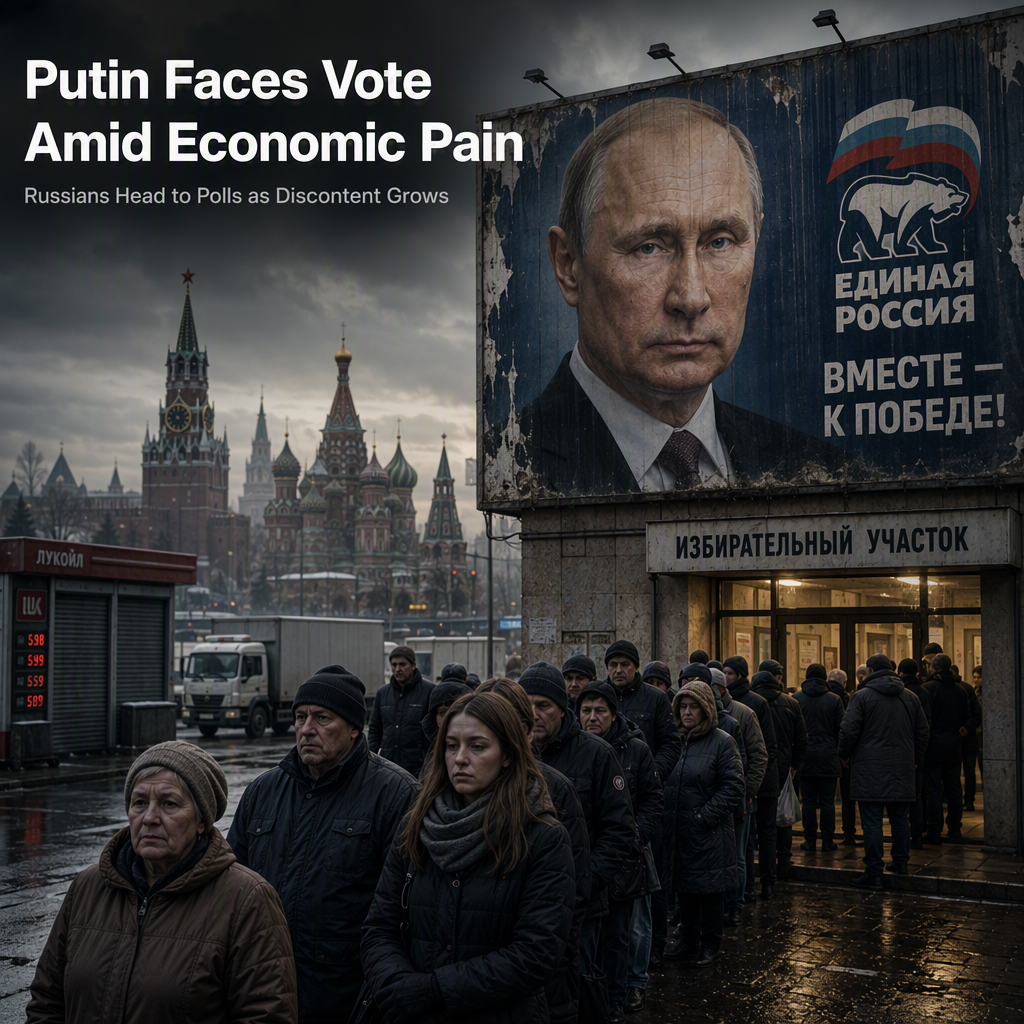
Russia is holding its first parliamentary election since the full-scale invasion of Ukraine in early 2022, with the vote expected to reinforce the dominance of the ruling United Russia party in the 450-seat State Duma. The election, taking place over three days from Friday to Sunday, is tightly controlled, and while the outcome is not in doubt, analysts and external observers are focusing on voter turnout and the margin of United Russia's victory as potential indicators of public dissatisfaction after more than four-and-a-half years of war [1].
Economist Sergei Guriev told CNBC that Russians are increasingly feeling the economic pain of the Ukraine war, as economic growth has stalled, taxes have risen, and the Kremlin is running a significant budget deficit. Guriev noted that a temporary oil windfall is unlikely to resolve Russia's longer-term fiscal pressures. He stated, "It is becoming a consensus and overall feeling in Russian society that the war is costly, to the extent that even members of Putin's elite start talking about the need to bring it to a close" [1].
Opinion polls show United Russia far ahead of its rivals, but the party's approval ratings have dropped to a four-year low amid a nationwide fuel crisis and Ukrainian drone strikes on delivery warehouses. All parties on the ballot have publicly pledged loyalty to Putin, except for the Yabloko party, which was barred from contesting the vote by the country's top court last month due to its opposition to the war in Ukraine [1].
Recent internal dissent has surfaced, with the Kremlin reportedly firing Andrei Klepach from the state-controlled development bank VEB after he warned that Russia could not win a prolonged war of attrition with Ukraine and predicted a major social crisis. Additionally, Sberbank CEO German Gref previously issued a recession warning, which led to a public disagreement with Putin [1].
Guriev emphasized that Russians are feeling the economic consequences of the war, with the economy having stopped growing and the government forced to raise unpopular taxes while still running a significant budget deficit [1].
CONCLUSION
Russia's parliamentary election is set against a backdrop of economic hardship and growing public discontent, with the ruling party expected to maintain control despite declining approval ratings. Analysts are watching turnout and victory margins for signs of unrest, as economic pressures and internal dissent challenge the Kremlin's narrative. The market impact is medium, reflecting ongoing uncertainty about Russia's fiscal and political stability.