
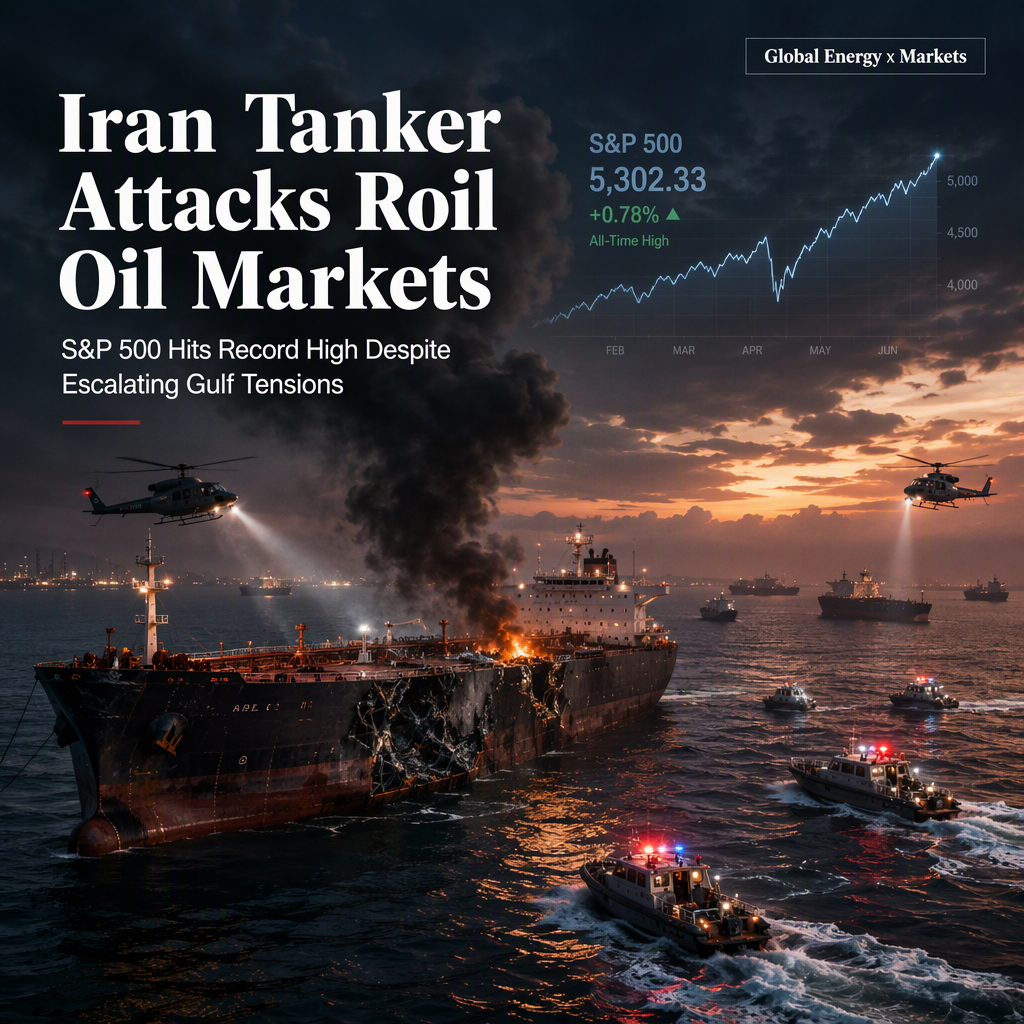
Iran has escalated attacks on commercial tankers transiting the Strait of Hormuz, raising concerns about the sustainability of the recent rebound in oil exports through this critical waterway. The Joint Maritime Information Center reported that nearly 20 commercial ships have been attacked over the past month while sailing through Hormuz, the Persian Gulf, or off the coast of Oman. The absence of a negotiated settlement or Iranian capitulation has fueled ongoing worries about potential disruptions to global oil supply [1].
In response to record-high fuel costs, U.S. President Donald Trump has authorized the broader use of red-dyed diesel, typically reserved for farm operations, on U.S. highways. This measure, announced ahead of the U.S. midterm elections, is intended to alleviate fuel expenses for truckers, who could save more than $100 per fill-up due to the exemption from highway fuel taxes, according to the White House [1].
Meanwhile, the U.S. trade deficit has widened to $105.6 billion, marking the steepest deficit since the all-time gap in March 2025, which occurred just before President Trump's "liberation day" announcement of "reciprocal" tariffs against U.S. trading partners [1].
Despite geopolitical tensions and economic headwinds, U.S. equity markets showed resilience. The S&P 500 climbed 0.58% to a record close of 7,818.93, while the Dow Jones Industrial Average gained 0.49%. The Nasdaq Composite also reached a new all-time high during the session. In Asia, Japan's Nikkei 225 rose 1.05%, Australia's S&P/ASX 200 advanced 0.57%, and South Korea's Kospi fell 0.89%. Mainland China markets were closed for a holiday [1].
CONCLUSION
Iran's attacks on tankers in the Strait of Hormuz have cast uncertainty over the recent recovery in oil exports, heightening concerns about global energy supply. Despite these risks and a widening U.S. trade deficit, U.S. equity markets reached new highs, reflecting investor optimism amid ongoing geopolitical and economic challenges.