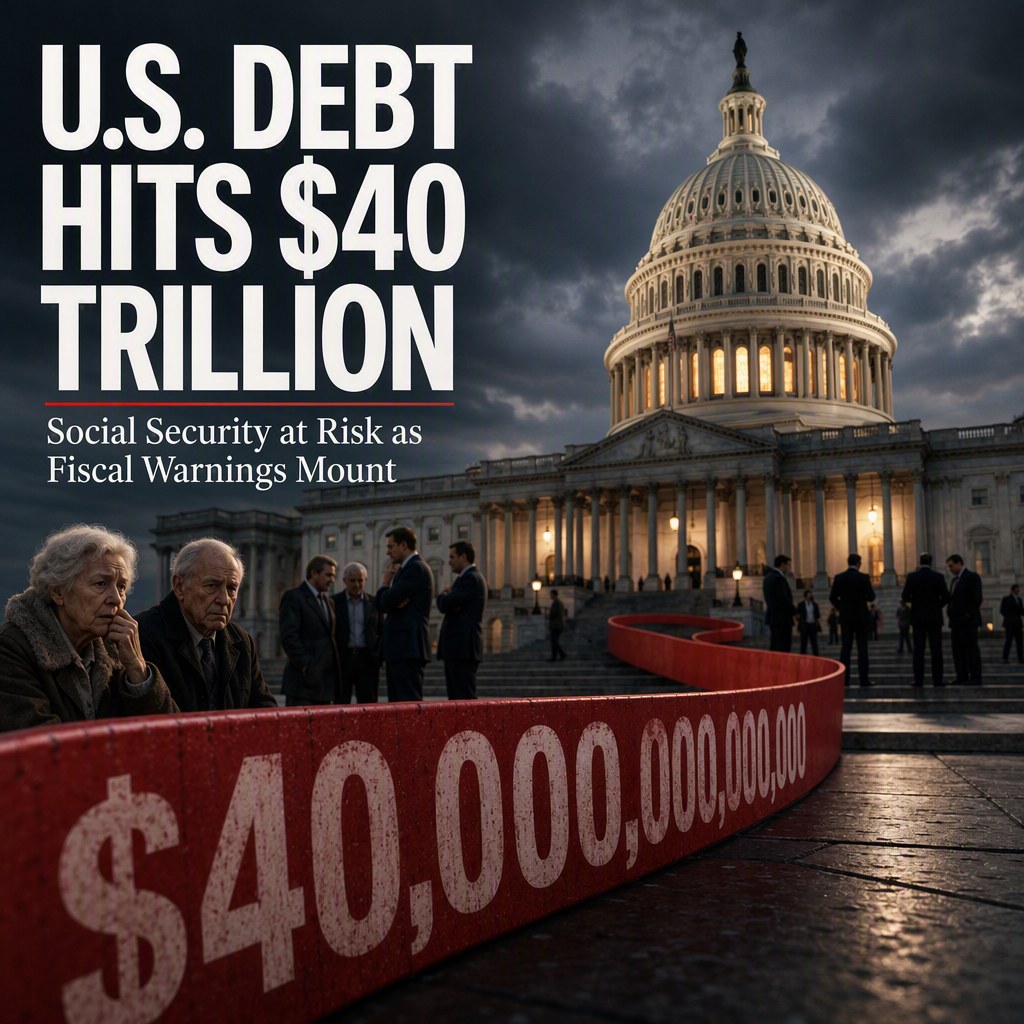
The U.S. gross national debt exceeded $40 trillion last month for the first time in history, marking a significant milestone that has heightened concerns among economists and policymakers about the nation's fiscal trajectory [1]. Michael A. Peterson, CEO of the Peter G. Peterson Foundation, described the rapid growth in debt as 'an urgent problem,' warning that it is 'stealing from our next generation' and negatively impacting the economy, wages, affordability, and key government programs [1].
A major point of concern highlighted in the article is the looming insolvency of the Social Security trust fund, which is projected to be depleted in 2032. If Congress does not intervene, this would trigger an automatic 22% cut to all Social Security benefits at that time [1]. Peterson emphasized the urgency of addressing this issue, stating, 'In just six years, our Social Security system's trust fund will run out and be fully depleted. And at that point, if Congress does nothing, we will have an automatic, across the board, immediate 22% cut to all benefits for all the beneficiaries' [1].
The article also notes that Social Security, Medicare, and interest expenses are the fastest-growing drivers of the annual U.S. budget deficit, which is projected to exceed $2 trillion for fiscal year 2026. Budget deficits are expected to widen further in the coming years due to rising debt, mounting interest costs, and an aging population [1]. Peterson warned that interest expenses are the fastest-growing component of the federal budget and are expected to double over the next decade [1].
Peterson argued that, unlike external geopolitical threats, the U.S. government has the power to implement budgetary reforms to stabilize or reduce deficits and the national debt. He called for urgent action, stating that the solutions are well-known and within the government's control [1].
CONCLUSION
The surpassing of $40 trillion in U.S. national debt has intensified warnings about fiscal sustainability, with Social Security's projected insolvency in 2032 serving as a critical inflection point. Economists urge immediate policy action to address rising deficits and interest costs, as failure to act could result in significant benefit cuts and long-term economic consequences.