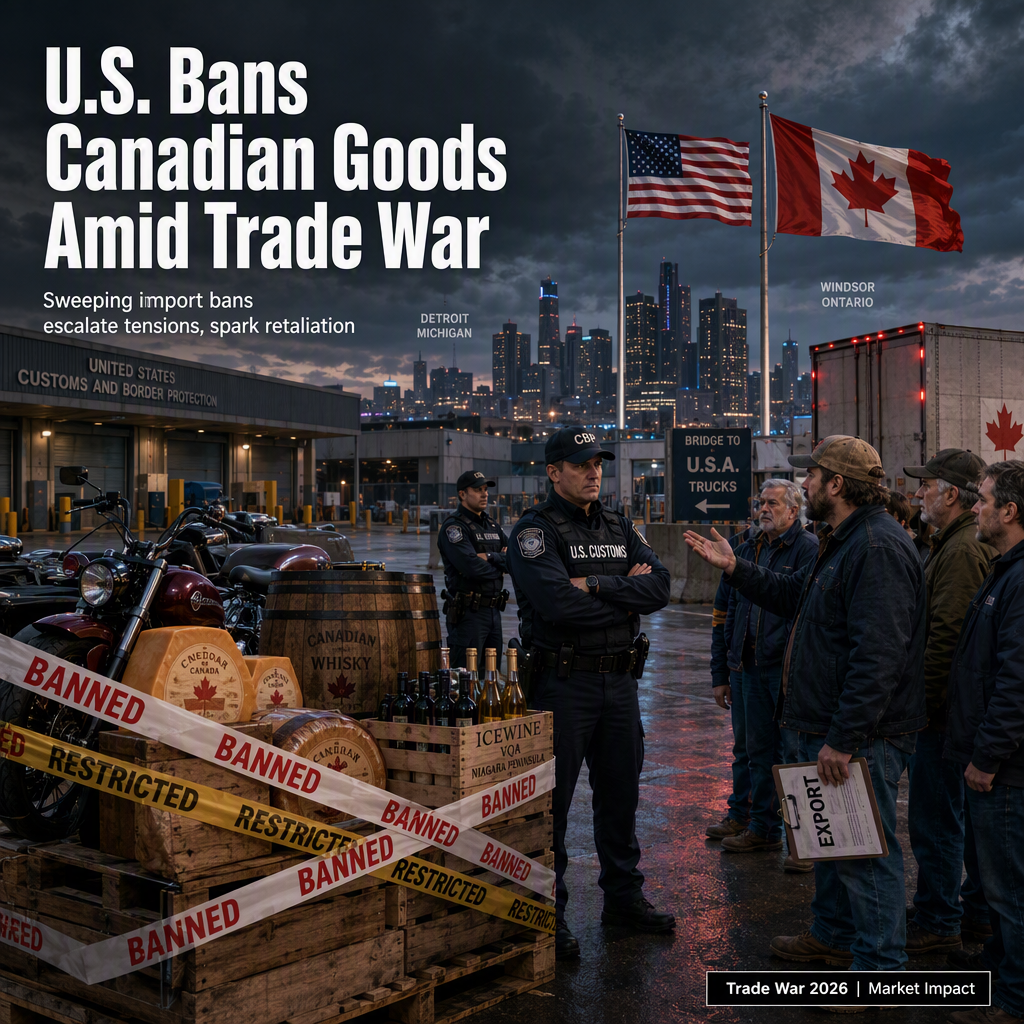
The United States has announced a comprehensive ban on imports of Canadian motorcycles, dairy, and alcohol products, escalating the ongoing trade war between the two countries. The White House stated that these bans, which include Canadian motorbikes, whey products, molasses, non-alcoholic beer, and a range of alcoholic beverages such as malt beer, wines, cider, whiskies, vodka, and other spirits, will take effect on September 29, 2026. Larger-capacity motorcycles and mopeds are also included in the ban. These import restrictions largely replace the previous 50% tariffs and are part of a series of executive orders issued by President Donald Trump late Monday [1].
In response, Canada has implemented what it describes as 'dollar for dollar' retaliatory tariffs on CA$27.6 billion worth of U.S. imports, targeting over 700 products including furniture, household appliances, beauty products, clothing, agricultural equipment, steel, dairy, farm equipment, pulp and paper, electronics, and more. These Canadian tariffs came into effect on the same day as the U.S. announcement and are a direct response to the 50% tariffs imposed by the U.S. in August, following the collapse of trade negotiations before the August 21 deadline [1].
The U.S. also revealed that tariffs on other Canadian products would be modified and extended from September 15, with new additions such as all-terrain vehicles and animal hides, while removing tariffs on rock salt and cement. U.S. Trade Representative Jamieson Greer described these measures as a 'natural consequence of Canada's continued discriminatory treatment of crucial American exports.' President Trump has further threatened to impose a 50% tariff on Canadian cars, trucks, and auto parts starting January 1, 2027, citing Canada's policies in the auto, alcohol, and dairy sectors and the U.S. trade deficit in goods [1].
Canadian Prime Minister Mark Carney responded by emphasizing that the U.S. trade deficit exists primarily because of American energy imports from Canada and highlighted that Canada is the largest consumer of U.S. cars and steel. Carney stated that the U.S. 'asked too much' during trade negotiations and that Canada's retaliatory measures are necessary to protect domestic workers and companies, even if they result in economic costs and reduced consumer choice [1].
Both sides continue to blame each other for the breakdown in trade talks and accuse one another of unfair practices that harm their respective domestic industries [1].
CONCLUSION
The U.S. and Canada have escalated their trade dispute with sweeping new bans and tariffs, impacting a wide range of goods on both sides. With both governments standing firm and threatening further measures, the trade war is set to have significant economic and market consequences for industries and consumers in both countries.