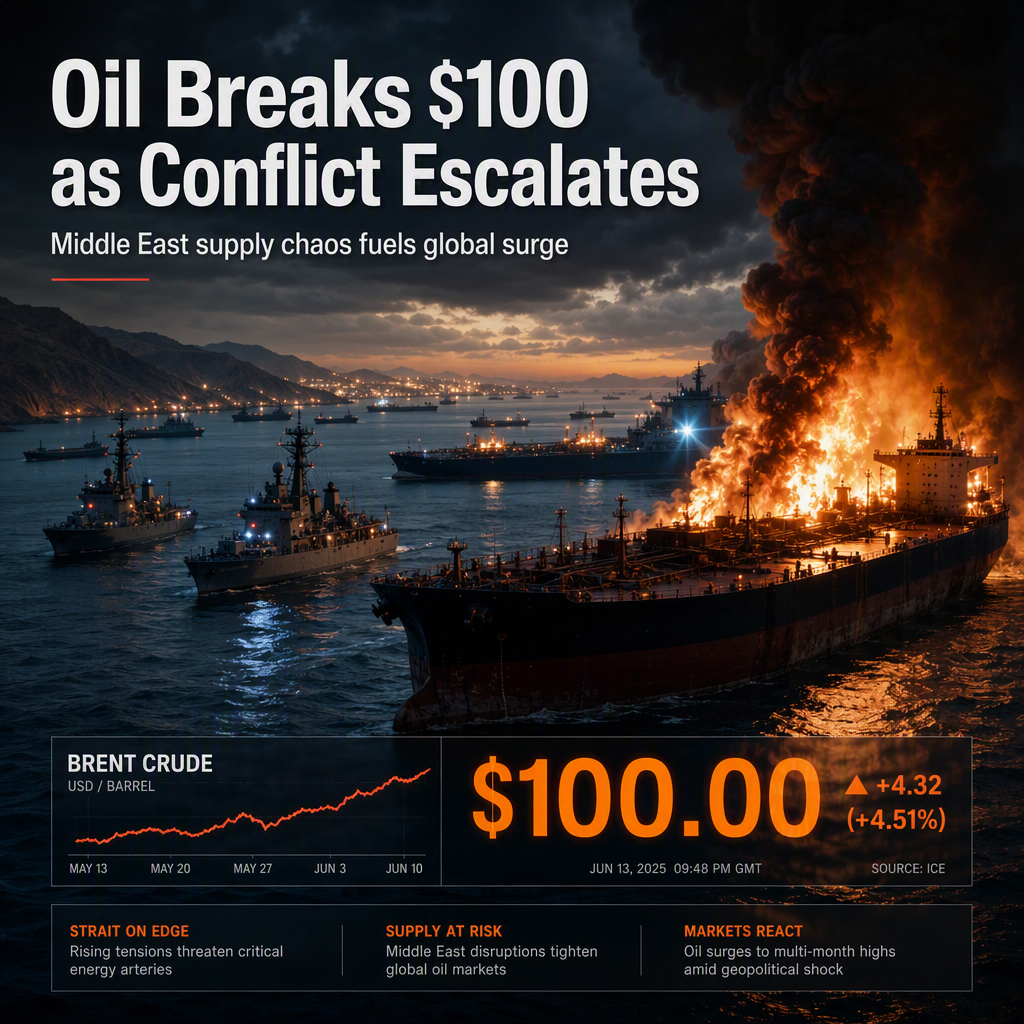
The price of oil surged past $100 a barrel on Wednesday, marking the first time in months that this threshold has been breached, as intensifying conflict between the United States and Iran fueled fresh concerns for global energy markets [1]. The spike followed the U.S. military's destruction of five Iranian tankers, which Central Command described as part of a 'multibillion-dollar shadow network' funding Iran’s Revolutionary Guard and regional proxies [1]. In retaliation, Tehran launched attacks on U.S. ships and a base in Jordan, escalating a conflict that has persisted for months and continues to disrupt oil flows [1].
Brent crude, the international benchmark, briefly rose above $100 at around 3 a.m. ET before dipping just below that level. This price is approximately 40 percent higher than pre-war levels, though still below the $120 peak seen in the early days of the conflict. The U.S. benchmark, West Texas Intermediate Crude, also climbed, reaching around $95 a barrel [1]. Gasoline prices increased to $4.22 on Wednesday, the highest since early June, raising concerns for consumers and political stakeholders ahead of the Midterm elections [1].
Oil exports from the Middle East have declined since the U.S. and Israel launched their war against Iran in February. The Strait of Hormuz, which previously accounted for a fifth of the world’s oil supply, has been throttled by Tehran in response, causing significant disruption to global shipping routes. Although the U.S. military has managed to restore some traffic through Hormuz, other key trade routes remain affected [1].
Additional instability has been introduced by Iran-backed Houthi rebels in Yemen, who have attacked tankers in the Red Sea and launched strikes on Saudi energy facilities, setting oil sites ablaze and threatening to expand their conflict with Saudi Arabia, a key U.S. ally [1]. President Donald Trump commented on social media that oil prices would 'drop precipitously' if the U.S. wins the war with Iran, suggesting prices could fall to 'two dollars a gallon.' However, there is currently no indication of such a resolution or price drop, as recent days have seen continued violent flare-ups and ongoing economic pressure from the U.S. maritime blockade [1].
CONCLUSION
Oil prices have surged to levels not seen in months due to escalating conflict and supply disruptions in the Middle East, with Brent crude briefly crossing the $100 mark. The ongoing instability and attacks on key energy infrastructure suggest continued volatility, with little sign of a resolution or price relief in the near term.