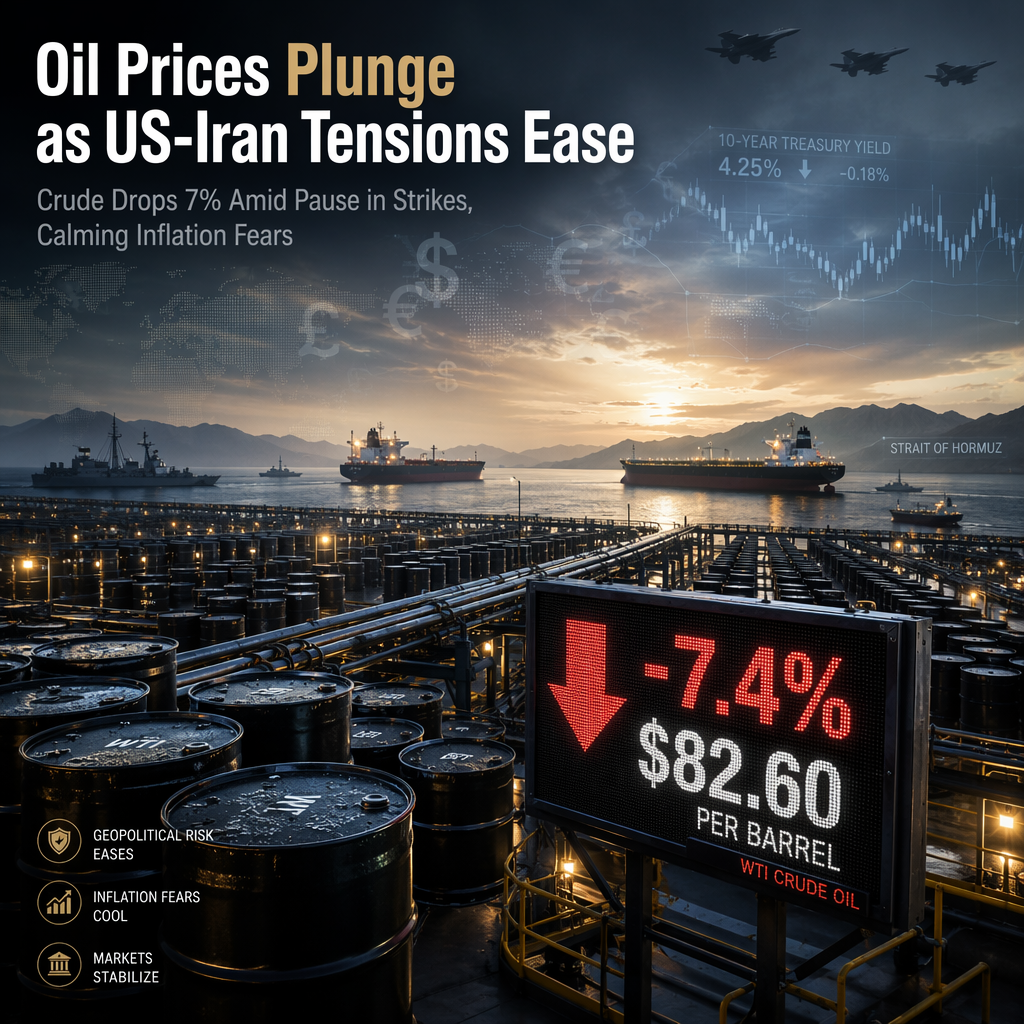
West Texas Intermediate (WTI) Oil experienced a sharp decline on Monday, dropping 7.4% to around $82.60 per barrel, following a temporary pause in military strikes between the United States and Iran over the weekend [1]. This de-escalation has led investors to reduce the geopolitical risk premium, with hopes that diplomatic talks may resume and commercial shipping could safely return through the Strait of Hormuz, a critical route for global oil exports [1]. The US halted its military campaign due to concerns over dwindling interceptor missile supplies and a limited number of high-value targets in Iran, as reported by General Dan Caine to President Trump [1]. Both US and Iranian officials have signaled a willingness to suspend military operations, provided the other side refrains from launching new strikes [1].
Analysts at OCBC, including Sim Moh Siong and Christopher Wong, note that easing oil prices, helped by reduced Iran–US tensions, are bringing crude closer to their base case of a gradual downtrend [2]. They argue that lower oil prices should relieve inflation pressure, partially reverse recent bear-flattening in global bonds, and leave equities and FX relatively unaffected [2]. The macro backdrop still favors overall USD strength and carry trades, particularly those pairing high-yielding, energy-exporting currencies such as the USD and AUD against low-yielding, energy-importing currencies like the EUR, CHF, JPY, and THB [2].
Despite the temporary pause, energy markets remain cautious. Risks to global oil supplies persist, especially after Iran-backed Houthis claimed responsibility for recent attacks on Saudi Arabian oil facilities along the Red Sea, which could limit the downside potential for oil prices if geopolitical tensions flare up again [1]. OCBC analysts caution that oil could rebound at some point as the underlying issues of freedom of navigation through the Strait of Hormuz and Iran’s nuclear programme remain unresolved [1][2]. ING analysts observe that the price action in oil reflects the market's desperation for positive news, noting that after 13 days of strikes, both the US and Iran have paused retaliatory attacks in the last two days [1]. Brent crude also retreated aggressively, down more than 7% at one stage, briefly falling below US$90 per barrel [1].
Overall, the easing of oil prices is seen as a positive development for inflation and global bond markets, but unresolved geopolitical risks and supply concerns continue to weigh on market sentiment [1][2].
CONCLUSION
The sharp drop in oil prices following the US-Iran pause in strikes has eased inflation concerns and supported a partial reversal in global bond yield curves, while leaving equities and FX largely unaffected. However, persistent geopolitical risks and unresolved issues around the Strait of Hormuz and Iran’s nuclear program mean that oil prices could rebound if tensions escalate. The market remains cautious, with analysts expecting a gradual downtrend but warning of potential volatility.