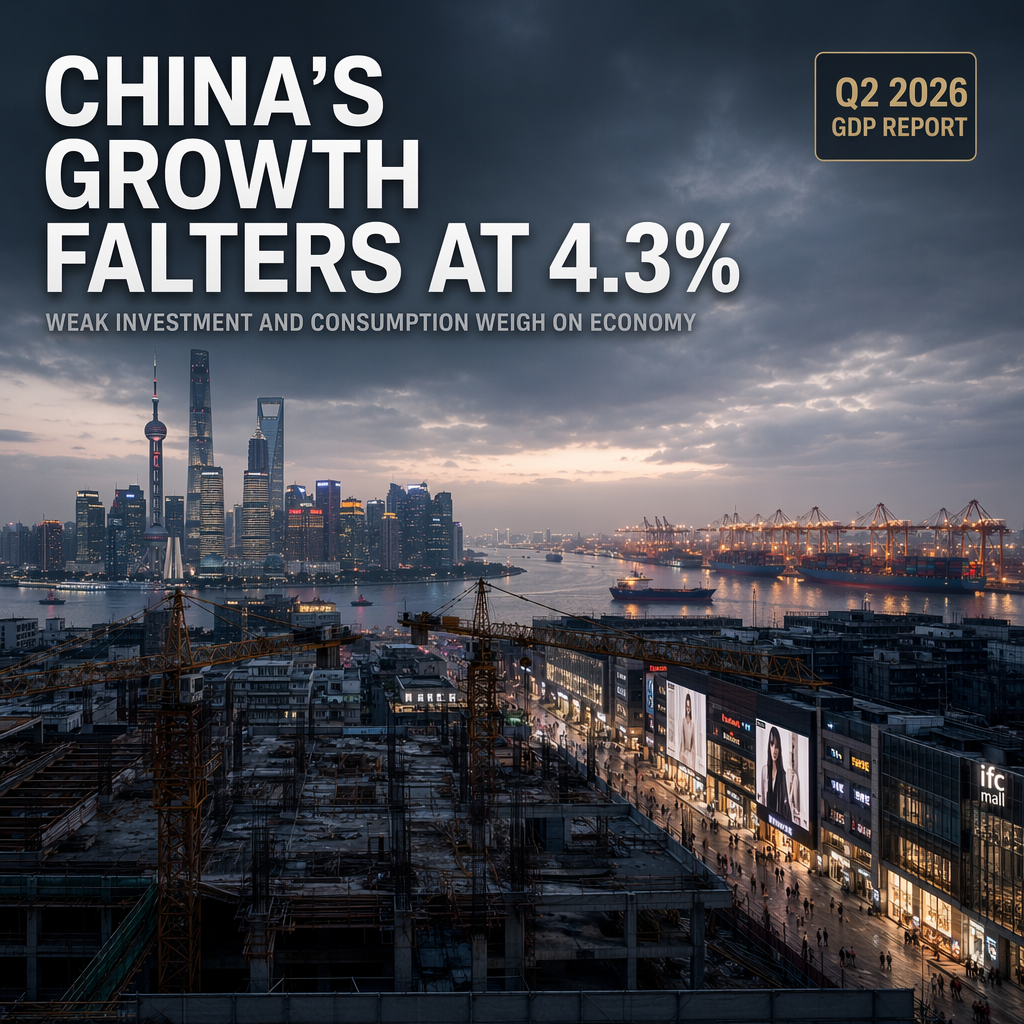
China's economy recorded its slowest quarterly growth since 2022, with gross domestic product (GDP) expanding by 4.3% in the second quarter of 2026, according to data from the National Statistics Bureau. This figure fell short of economists' expectations for 4.5% growth in a Reuters poll and marked a deceleration from the 5% growth seen in the first quarter of the year [1]. The reported growth also came in below Beijing's full-year target range of 4.5% to 5%, which is described as the least ambitious goal in decades, reflecting ongoing challenges such as tensions with major trade partners and subdued domestic demand [1].
A significant factor in the slowdown was a sharp decline in urban fixed-asset investment, which includes real estate development and infrastructure projects. Investment dropped 5.7% in the first half of the year compared to the previous year, a steeper fall than the 4.9% decline expected by economists and worsening from a 4.1% contraction in the first five months [1]. Urban investment had already slumped for the first time in decades last year, falling 3.8% year-on-year, as the property downturn and tighter local government borrowing constraints continued to weigh on growth [1].
On the consumption front, retail sales in June grew by 1%, rebounding from a 0.6% decline in May and surpassing expectations for a 0.1% fall. However, May's drop marked the first monthly decline in retail sales since late 2022, highlighting ongoing weakness in consumer demand and the impact of heavy discounting by merchants [1].
Industrial output provided a brighter spot, expanding 5.3% in June from a year earlier, outpacing the forecasted 4.7% growth and accelerating from 4.5% in May. The report notes that robust industrial production and exports, particularly those tied to the global AI investment boom, continue to support headline growth, even as private investment and consumption remain weak [1].
The urban unemployment rate stood at 5% in June, with Chinese leadership targeting an unemployment rate of less than 5.5% over the next five-year period [1].
CONCLUSION
China's second-quarter GDP growth missed expectations, underscoring persistent challenges from weak investment and subdued consumption. While industrial output and exports remain resilient, the overall economic outlook is clouded by a deepening property downturn and ongoing demand imbalances. The market is likely to view these results as a sign of continued headwinds for China's growth trajectory.