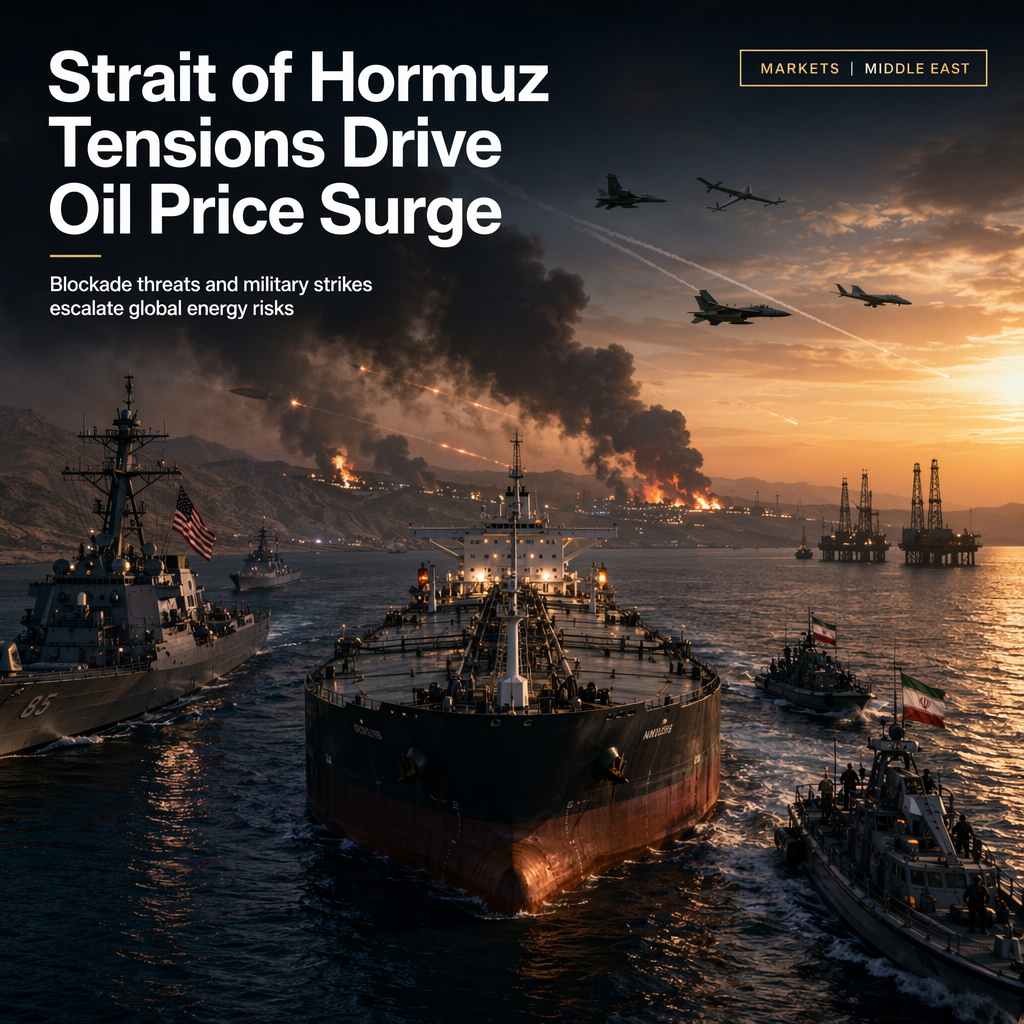
Tensions in the Middle East escalated as both Iranian and U.S. military forces took aggressive actions centered around the strategic Strait of Hormuz. The Iranian Islamic Revolutionary Guards Corps (IRGC) declared that the Strait of Hormuz would remain closed until what it termed the 'end of America’s evils,' and claimed responsibility for attacks on several U.S. military facilities in the region, including Kuwait’s Mina Abdullah, the Azraq base in Jordan, and the U.S. Fifth Fleet command in Bahrain. The IRGC also warned of potential closures of other oil and gas export routes that serve U.S. and allied interests, framing these actions as a response to U.S. 'hostile' activities [1].
Concurrently, U.S. Central Command (Centcom) reported a new wave of strikes against Iran, targeting dozens of military assets near the Strait of Hormuz and along Iran's coastline. The seven-hour operation involved fighter aircraft, drones, and naval vessels, and focused on missile and drone facilities, naval assets, and coastal defense systems to degrade Iran's ability to threaten commercial shipping. The U.S. also reinstated a naval blockade on vessels traveling to and from Iranian ports near the Strait of Hormuz [2].
Centcom Commander Brad Cooper stated that Iran had 'intentionally' targeted civilians and attacked seven commercial vessels over the previous week, resulting in approximately a dozen crew members being dead, missing, or injured [2]. This series of escalations has heightened concerns over the security of vital oil shipping lanes.
Market reactions were immediate, with West Texas Intermediate (WTI) futures for August delivery rising 1.01% to $80.14 per barrel, and September Brent futures up 1.23% at $85.77 [2]. However, at the time of the IRGC's statements, WTI was reported to be 'defending minor bids around $79.50,' indicating only a modest initial response [1]. Analyst Saul Kavonic of Mst Marquee noted that expectations for a rapid reopening of the Strait were premature, and warned that if hostilities persist or regional oil infrastructure is targeted, oil prices could retest $100 or move even higher [2].
CONCLUSION
The latest military actions and threats from both Iran and the U.S. have significantly raised tensions around the Strait of Hormuz, a critical chokepoint for global oil shipments. Oil prices have responded with notable gains, and analysts warn of further upside risk if the conflict escalates or disrupts regional infrastructure. The situation remains highly fluid, with market participants closely monitoring developments for further impact.