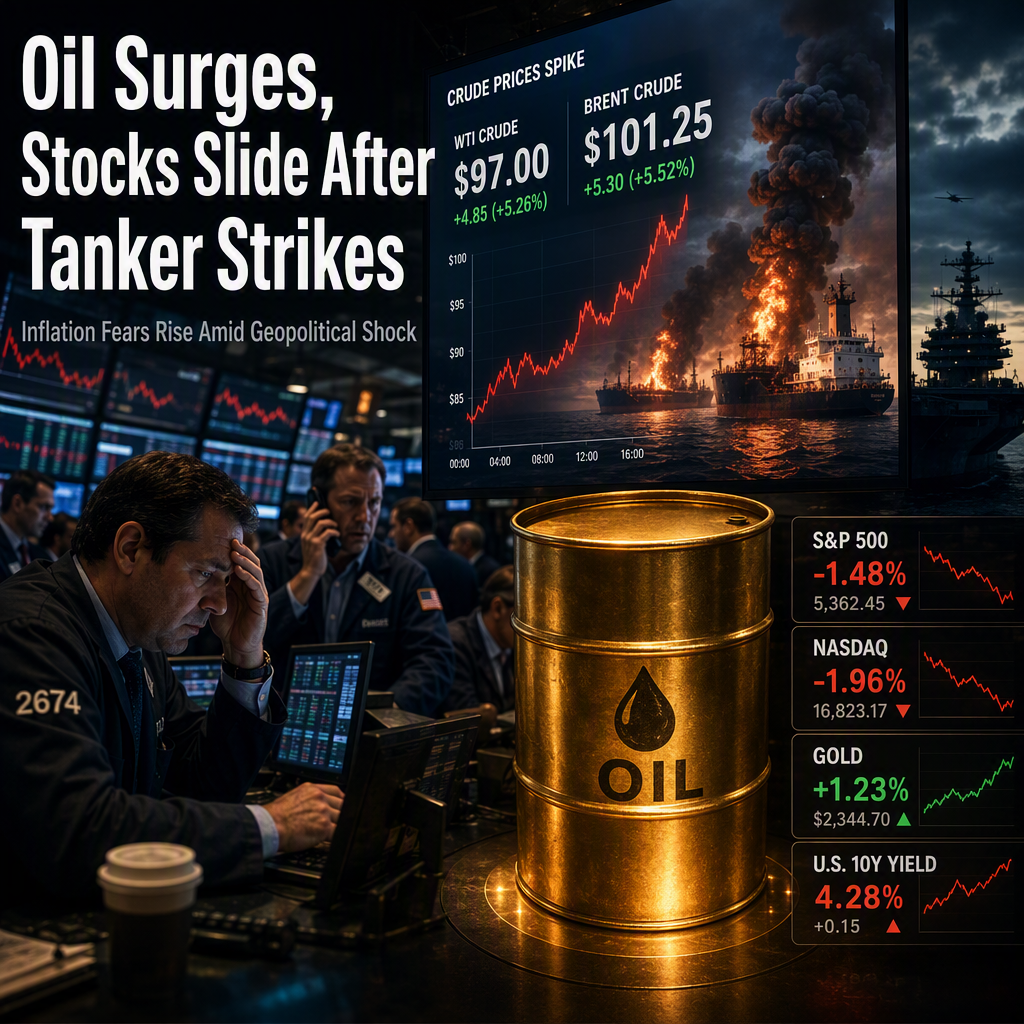
A significant escalation in the Middle East conflict drove major market moves on September 9, 2026, after U.S. Central Command confirmed that American forces destroyed five Iranian crude oil tankers in retaliation for an Iranian ballistic missile strike on a U.S. aircraft carrier [1]. This development sent crude oil prices sharply higher, with WTI crude climbing approximately 2.4% to trade near $97 a barrel and Brent crude surpassing $101 for the first time since July, as markets priced in a wider supply-risk premium [1].
The surge in energy prices revived inflation concerns just ahead of the pivotal U.S. CPI report, prompting a risk-off tone across global markets. The S&P 500 index fell around 0.5% to close near 7,636, marking its third consecutive decline, as investors grew cautious about the prospect of persistent inflation and a more hawkish Federal Reserve. Money markets reflected these concerns, assigning a roughly 60% probability of a Fed rate hike at the upcoming meeting [1].
Safe-haven assets benefited from the heightened geopolitical risk, with gold rising about 0.9% to trade near $4,398, spiking as high as $4,430 during the U.S. session before paring gains [1]. The U.S. dollar, after an initial slide, recovered to finish little changed, while Treasury yields moved toward multi-year highs amid the energy shock and disappointment over the Treasury's upsized debt buyback [1].
Additional economic data included a U.S. Consumer Credit Change of $18.06 billion for July (above the $16.0 billion forecast), a decline in MBA Mortgage Applications by 2.7%, and a 6.85% 30-year mortgage rate for September 4, 2026. In Asia, Japan's Tankan Index and Machine Tool Orders both exceeded forecasts, while China's CPI and PPI for August also came in above expectations [1]. President Trump commented that energy prices are unlikely to ease until after the November midterm election [1].
CONCLUSION
The destruction of Iranian crude tankers by U.S. forces triggered a sharp rally in oil prices and a broad risk-off move in equities, as markets braced for higher inflation and a potentially more aggressive Fed stance. With safe-haven demand rising and key economic data beating forecasts, investors remain cautious ahead of the upcoming U.S. CPI report and central bank decisions.