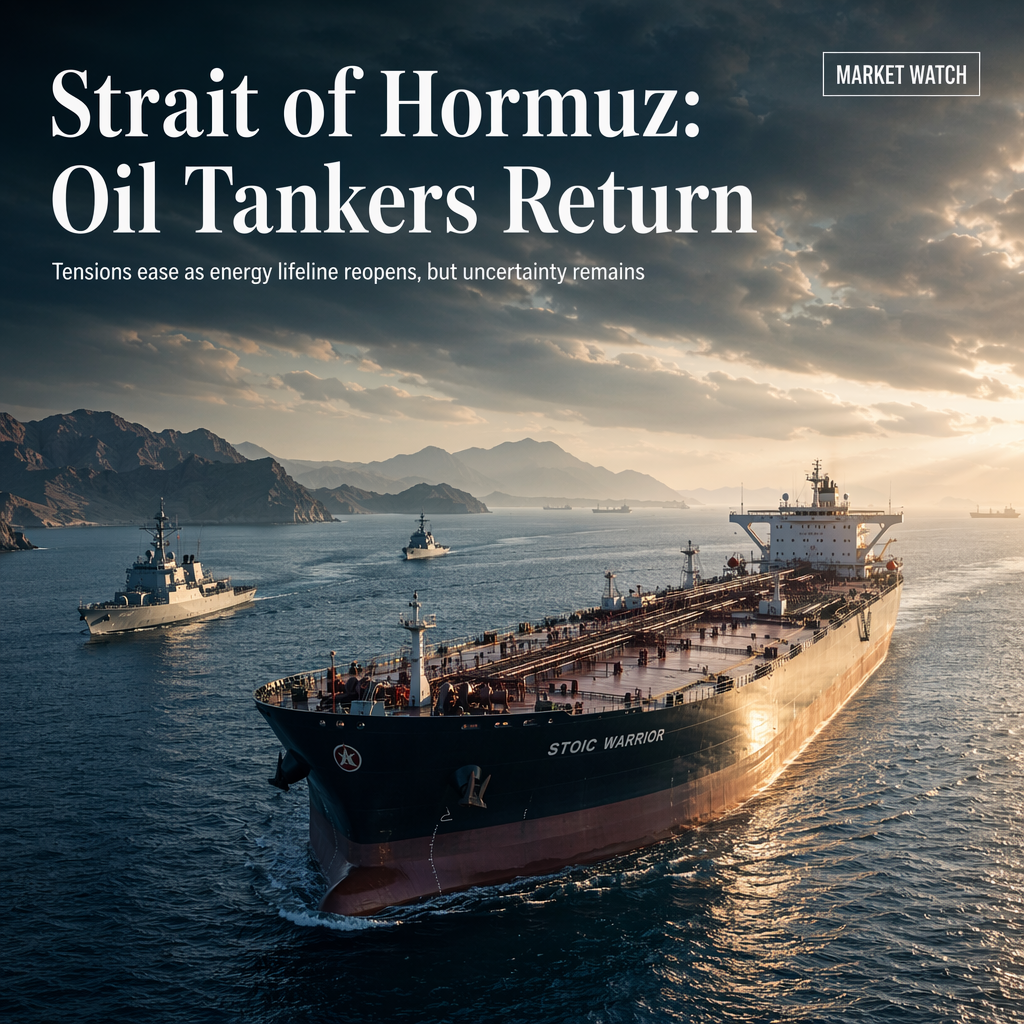
The Strait of Hormuz, a vital passage for nearly 20% of global energy supply, has seen renewed oil tanker activity despite ongoing threats from Iran and unresolved disputes over shipping routes. On Thursday, an oil tanker named Stoic Warrior successfully navigated the strait using a U.N.-recommended route near Oman, defying Iranian warnings that vessels not following Tehran-approved routes would face consequences. This passage, along with others such as the British-flagged World Prize, marks a cautious recovery in traffic, though volumes remain below pre-war levels. Since the signing of an initial 60-day U.S.-Iran agreement to reopen the waterway, approximately 35 million barrels of oil have exited the region, according to marine tracking firm Kpler [3].
Oman's Foreign Ministry clarified that future arrangements for the Strait of Hormuz do not include transit tolls, countering recent Iranian suggestions of a coordinated transit fee. This announcement was reported by a state media agency and appeared to have a notable impact, as it contrasted with Iran's earlier comments about implementing such fees [1]. Despite these developments, there was no immediate impact on oil prices following Oman's statement, with WTI Oil trading 0.6% lower at around $69.20 at press time [1].
Meanwhile, Iraq is facing a critical financial crisis due to a sharp decline in oil exports attributed to the Iran war. A senior oil ministry official stated that Iraq may consider leaving OPEC if its production quota is not significantly increased, though the current plan is to remain a member and seek a higher quota. These remarks have contributed to further declines in oil prices, with WTI Oil trading 1.12% lower near $69.00 during press time [2].
Market sentiment remains cautious as the situation in the Strait of Hormuz evolves. While the resumption of tanker traffic is helping to restore confidence and ease energy prices, key uncertainties persist regarding the management of shipping routes and the clearance of mines reportedly laid by Iran. U.S. Secretary of State Marco Rubio emphasized that the waters of the Strait of Hormuz "do not belong to any station state," underscoring ongoing geopolitical tensions [3].
CONCLUSION
The reopening of the Strait of Hormuz and the cautious return of oil tanker traffic have provided some relief to energy markets, but ongoing threats from Iran and unresolved OPEC quota disputes continue to weigh on sentiment. Oil prices have declined amid these developments, reflecting market uncertainty. The situation remains fluid, with further clarity on shipping arrangements and OPEC dynamics likely to influence future market movements.