
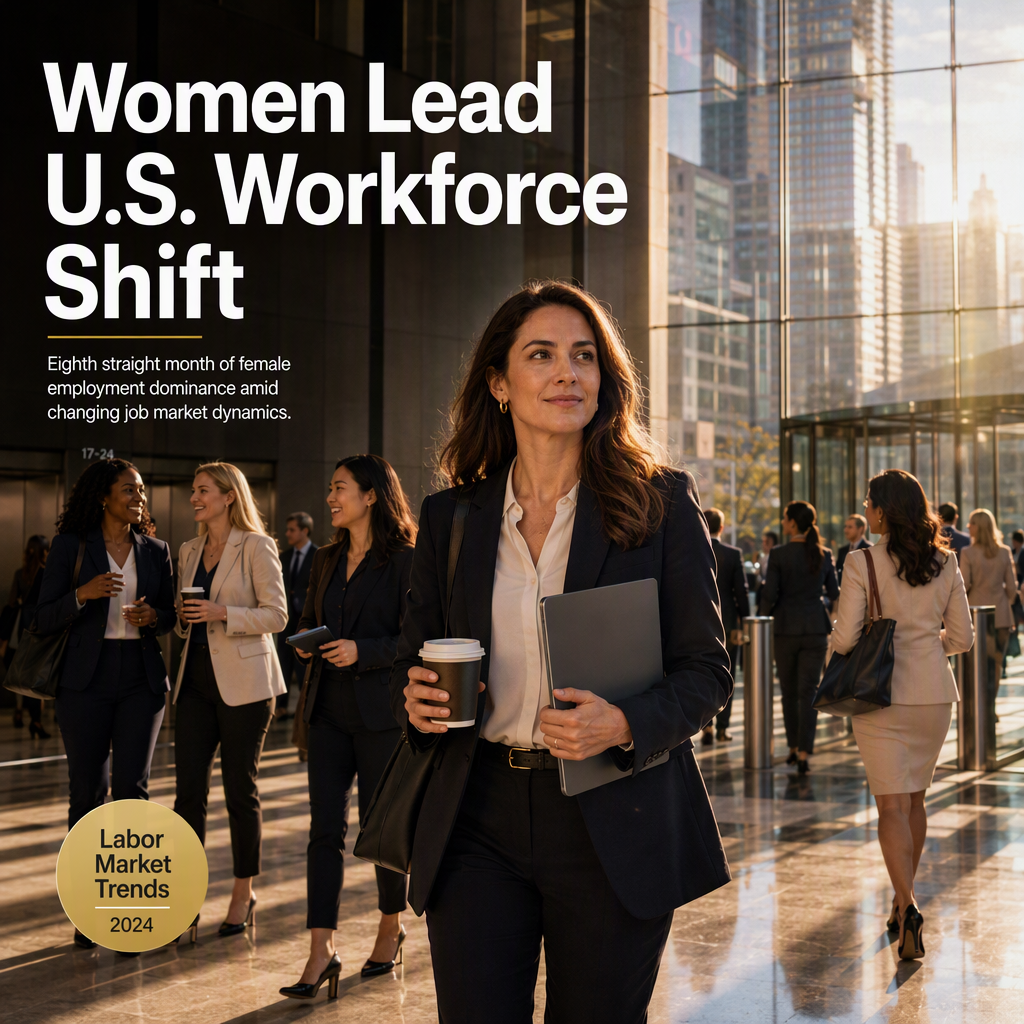
Women have outnumbered men in the U.S. workforce for eight straight months as of September, marking the longest such stretch since 2010, according to data from Indeed and government sources [1]. The seasonally adjusted number of employed men in the U.S. was lower by about 1.2 million in September compared to the same month a year ago, while the number of employed women increased by more than 650,000 over the same period [1]. This shift is attributed not to men losing jobs, as was the case in 2010, but to women gaining employment, according to Cory Stahle, senior economist at Indeed [1].
The latest jobs report released on Friday showed that U.S. payrolls grew by 29,000 jobs on net in September, which was significantly below economists' consensus forecast of 84,000 [1]. Men accounted for slightly over half of the net job growth in September, a notable change from the previous month when men represented just 2% of payroll growth [1]. Despite this monthly uptick, the overall number of employed men remains down year-over-year [1].
Industry trends are a key factor in these gendered labor market outcomes. Health care, which employs nearly four out of every five women in the sector, was responsible for more than half of the overall payroll expansion in September [1]. However, the Bureau of Labor Statistics noted that hiring in health care slowed compared to its average pace over the past year, potentially limiting the boost women typically receive from this sector [1]. Additionally, contraction in government jobs—a sector with a high proportion of female workers—further diluted employment gains for women in September [1].
The data highlights a significant shift in labor market dynamics, with women's employment gains driving the current workforce composition, even as overall job growth remains subdued and certain female-centric industries face headwinds [1].
CONCLUSION
The U.S. labor market is experiencing a notable gender shift, with women outnumbering men in the workforce for eight consecutive months due to rising female employment. While overall job growth has slowed, industry-specific trends continue to shape these outcomes. The market impact is medium, reflecting both the significance of the gender shift and the muted overall job gains.