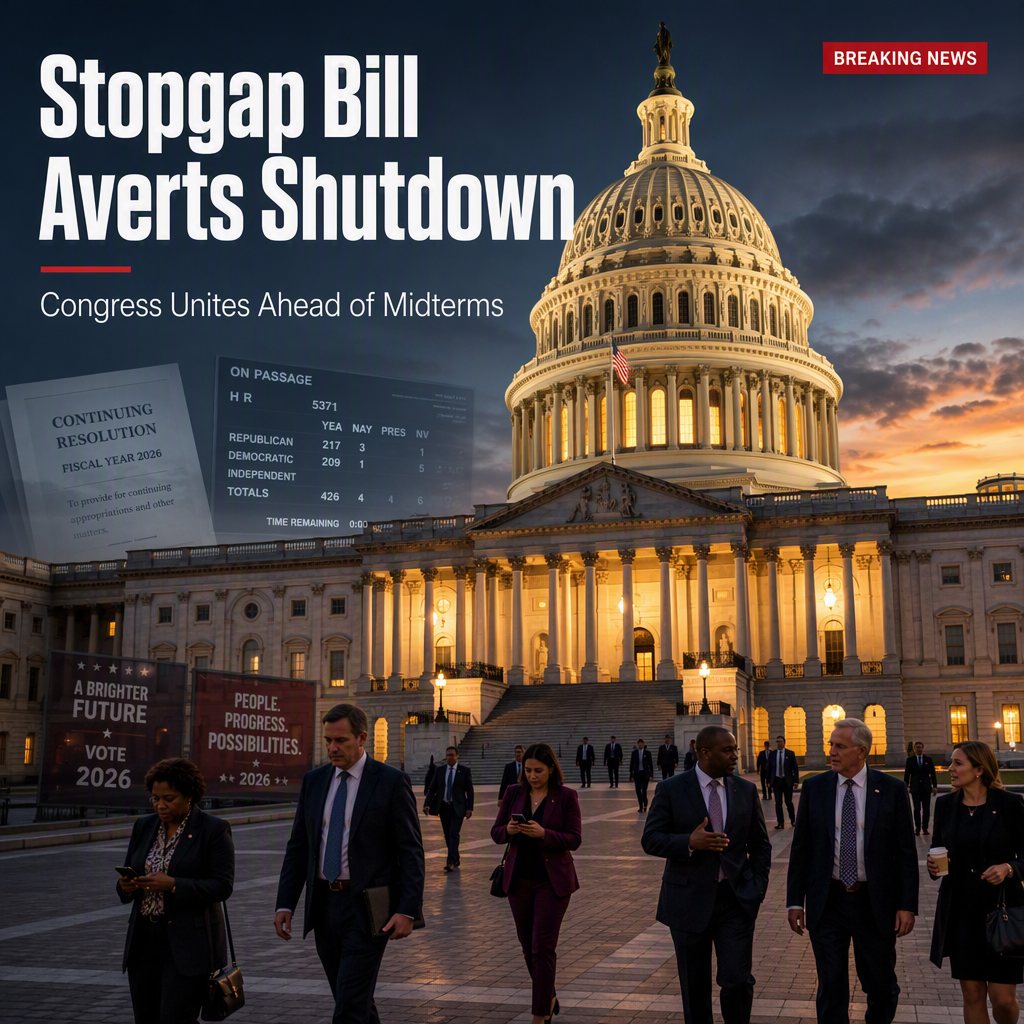
The U.S. House of Representatives voted 370-48 on Tuesday in favor of a stopgap spending measure designed to avert a government shutdown this fall, just ahead of the 2026 midterm elections. The legislation, which had already passed the Senate in August, will keep the government funded through December 11 and now awaits President Donald Trump's signature. Without this measure, government funding would have lapsed at the end of the federal fiscal year on September 30, a scenario both parties were eager to avoid as lawmakers prepare to return to their districts for campaigning [1].
The bill was brought to the floor under 'suspension of the rules,' a process requiring a two-thirds majority and enabling bipartisan support. Ultimately, 19 Republicans and 29 Democrats voted against the measure, but it passed with broad consensus. House Speaker Mike Johnson, R-La., credited House Republican leadership for initiating the process early to prevent a shutdown, emphasizing the importance of ensuring government employees, including troops, continue to receive paychecks [1].
Despite the bipartisan support, the measure faced resistance from GOP hard-liners, particularly members of the House Freedom Caucus. Rep. Chip Roy, R-Texas, expressed concerns about the bill's continued funding for Planned Parenthood and the lack of a ban on hemp products containing THC. He argued that the legislation merely extends the status quo and funds policies that some Republicans have opposed for months. Rep. Andy Harris, R-Md., chair of the Freedom Caucus, also voiced his intent to block the rest of the GOP's agenda for the week in protest [1].
Nevertheless, the opposition from the Freedom Caucus was insufficient to derail the bill, as Democratic support ensured its passage. The vote allows lawmakers to return to their districts for the election season, with Republicans aiming to maintain their narrow majorities in Congress amid polling that suggests Democrats are favored to win control of the House [1].
CONCLUSION
The passage of the stopgap spending bill by the U.S. House averts an imminent government shutdown and provides funding stability through December 11. While the measure faced opposition from some GOP hard-liners, broad bipartisan support ensured its success. The outcome allows lawmakers to focus on the upcoming midterm elections, with market participants likely to view the avoidance of a shutdown as a stabilizing development.