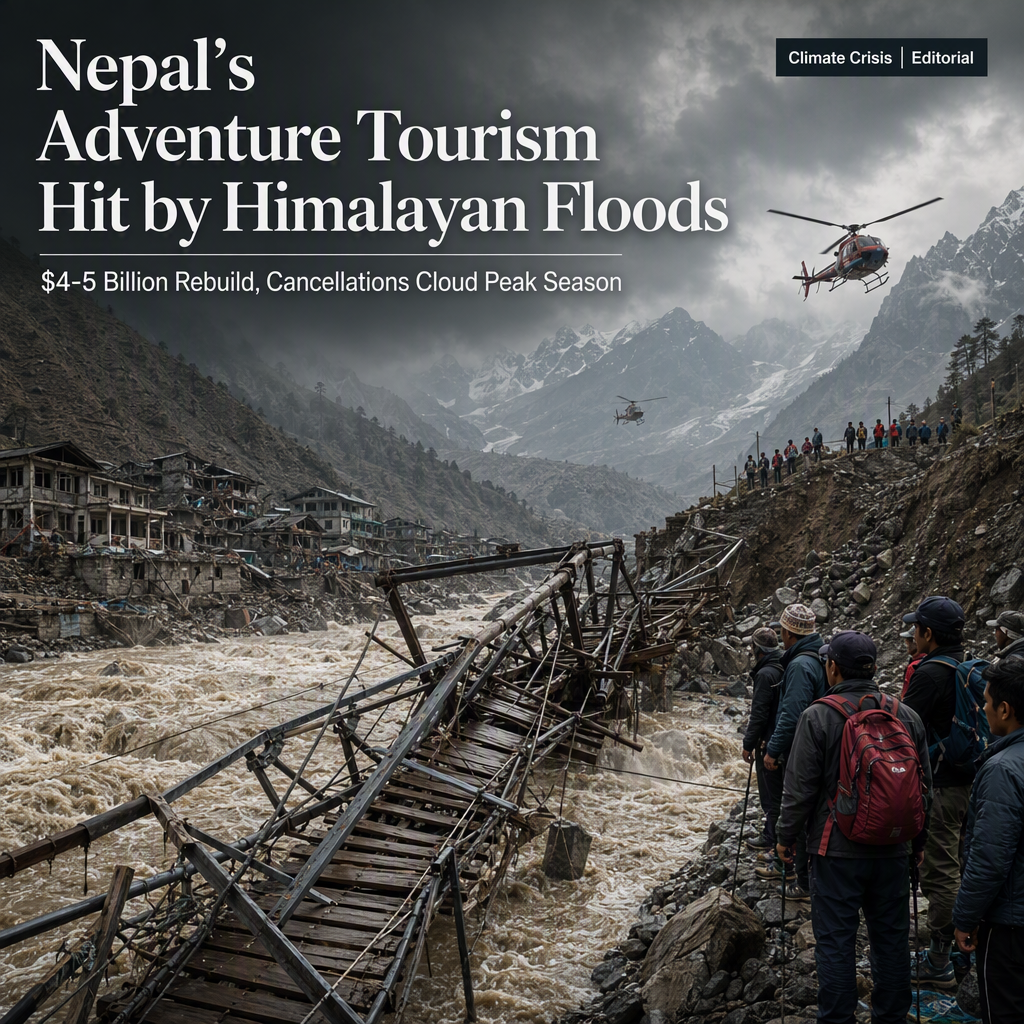
Nepal's adventure tourism industry has been severely impacted by devastating floods that began on August 26, 2026, following a massive glacial collapse in the Himalayas. The disaster swept through villages along the Nepal-Tibet border, causing extensive damage to roads, bridges, and hydropower facilities, and resulting in a death toll of 987 with nearly 4,250 people reported missing as of September 2, 2026 [1]. The catastrophe has prompted Nepal to estimate a rebuilding bill of $4 billion to $5 billion, which is nearly one-tenth of the country's economy [1].
Tour operators and hostel owners report a sharp decline in bookings, with one Kathmandu hostel forecasting occupancy could fall to 60% as international tourists cancel their trips ahead of Nepal's peak travel season from September 15 to November 15 [1]. The floods have raised concerns about the safety and resilience of Nepal's adventure tourism sector, a core component of the nation's economy and a major source of foreign exchange and revenue [1].
Rajendra Bahadur Lama, general secretary of the Nepal Mountaineering Association, described the floods as a "serious warning" for the industry, emphasizing the need for Nepal to build a tourism sector that is safer, smarter, and climate-resilient. Lama noted that international tourists are "increasingly conscious" of climate change and safety, and called for tourism infrastructure, routes, and destinations to be assessed and redesigned with better protection against floods, landslides, and other extreme events [1].
Nepali Prime Minister Balendra Shah has pushed for international climate action in response to the tragedy, highlighting the growing impact of climate change on adventure tourism in the region [1].
CONCLUSION
The Himalayan floods have dealt a significant blow to Nepal's adventure tourism industry, leading to widespread cancellations and a massive rebuilding bill. Industry leaders and government officials are calling for urgent reforms to make tourism infrastructure more resilient to climate change. The market outlook remains negative as the sector faces immediate challenges and uncertainty ahead of the peak travel season.