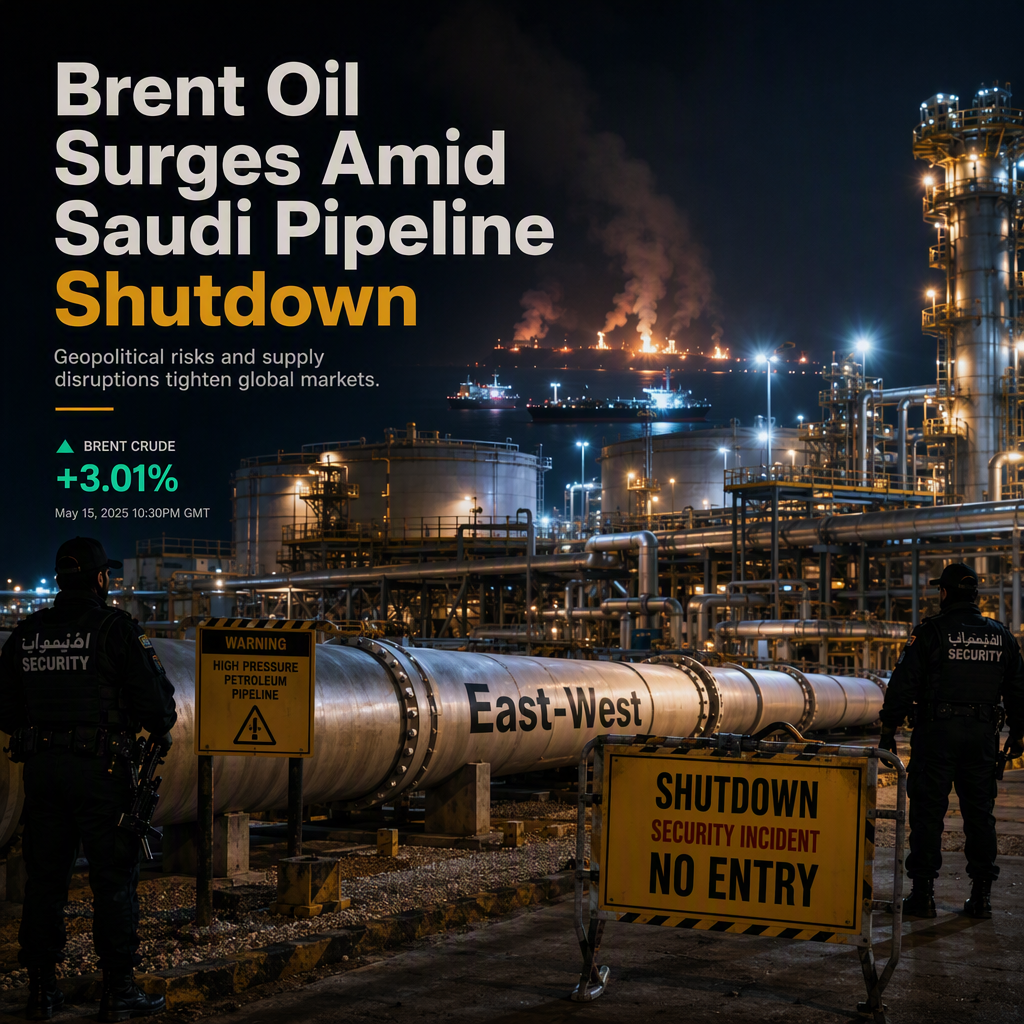
Brent crude prices rose approximately 3% following the shutdown of Saudi Arabia’s East-West pipeline, a key route for oil exports, after a series of attacks on Saudi energy infrastructure intensified supply concerns. The pipeline, which has a capacity of 7 million barrels per day, was closed as a result of these escalated attacks, heightening geopolitical risks around the Strait of Hormuz and raising fears of further supply disruptions [1].
ING analysts Warren Patterson and Ewa Manthey highlighted that the situation has led to increased volatility in oil markets, with the ICE Brent contract trading higher and middle distillate markets showing significant tightness. The ICE gasoil crack reached a record high of around $84 per barrel, while US diesel cracks surpassed $110 per barrel, reflecting strong demand and constrained supply. Despite these developments, ING maintains its base case forecast for Brent to average $80 per barrel in the fourth quarter of 2026, though they acknowledge that the current escalation brings the market closer to their more pessimistic scenario [1].
The International Energy Agency (IEA) responded to ongoing Middle East disruptions by making aggressive cuts to its global oil demand forecasts. The IEA now expects global oil demand to fall by 2.5 million barrels per day year-on-year in 2024, which is 940,000 barrels per day lower than its previous forecast. However, the agency anticipates a recovery in 2027, projecting demand growth of 2.6 million barrels per day year-on-year [1].
Additional market tightening has resulted from the growing scale of Ukrainian attacks on Russian refineries, prompting Moscow to ban diesel exports. This ban, which has been extended twice since its introduction in July, is scheduled to expire at the end of September. These factors, combined with disruptions in the Persian Gulf, have contributed to the current strength in middle distillate markets [1].
CONCLUSION
The shutdown of Saudi Arabia’s East-West pipeline and heightened geopolitical tensions have driven Brent prices higher and tightened global oil markets. Despite aggressive demand forecast cuts by the IEA, supply-side risks remain elevated, and middle distillate cracks are at record highs. Market participants should monitor ongoing developments, as the situation remains fluid and could further impact oil prices.