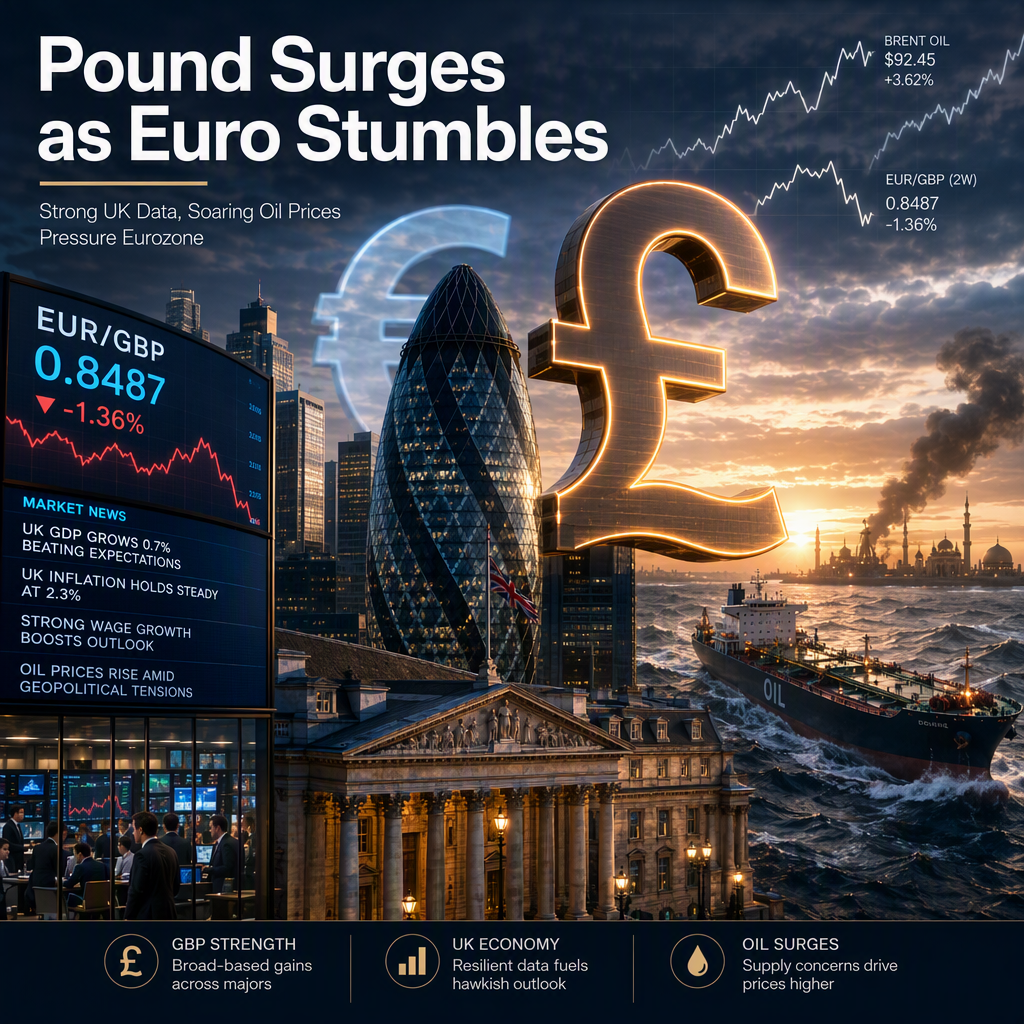
The Euro (EUR) extended its losses against the British Pound (GBP) at the start of the week, reaching nearly two-week lows at 0.8560, down from Friday's highs near 0.8600. This decline was driven by a combination of strong UK economic data and external pressures on the Eurozone. The British Pound received a significant boost after data from National Statistics showed UK Gross Domestic Product (GDP) grew by 0.4% in July, surpassing market expectations of flat growth. Additionally, UK Industrial Production and services activity both exceeded forecasts, further strengthening the Pound against most major currencies [1].
Meanwhile, the Euro faced broad-based weakness, exacerbated by high Oil prices, which are seen as a drag on Eurozone economic growth and could pressure the European Central Bank (ECB) to consider further monetary tightening. Brent Oil was trading near $104.00 per barrel after rallying more than 20% over the past two weeks, fueled by escalating tensions in the Middle East. Reports indicated that Iran-backed Houthi militias were advancing on the Red Sea coast, potentially threatening to close the Strait of Bab el–Mandeb and forcing Gulf countries to reroute crude shipments through the Suez Canal, thereby increasing freight costs. The Strait of Hormuz remains largely closed, and a meeting by Gulf countries to reopen it has been postponed [1].
Looking ahead, market attention is focused on the Bank of England's (BoE) monetary policy decision scheduled for Thursday. The BoE is widely expected to keep interest rates unchanged amid a divided committee, with investors closely watching for the number of hawkish dissenters as an indicator of future rate hikes. Economists at Commerzbank suggest that the BoE's cautious stance is likely to persist in the near term, despite market bets on rising rates. They note that continued economic growth could prompt the BoE to consider rate increases, but uncertainty about underlying growth momentum may reinforce the bank's cautious approach. Commerzbank also warns of downside risks for the Pound if the BoE fails to meet market expectations for more aggressive tightening [1].
CONCLUSION
The Euro's decline against the Pound is being driven by robust UK economic data and surging Oil prices, which are weighing on the Eurozone outlook. While the BoE is expected to maintain its current policy stance, market participants are alert to any signals of future tightening. The situation remains fluid, with both geopolitical risks and central bank decisions likely to influence currency movements in the near term.