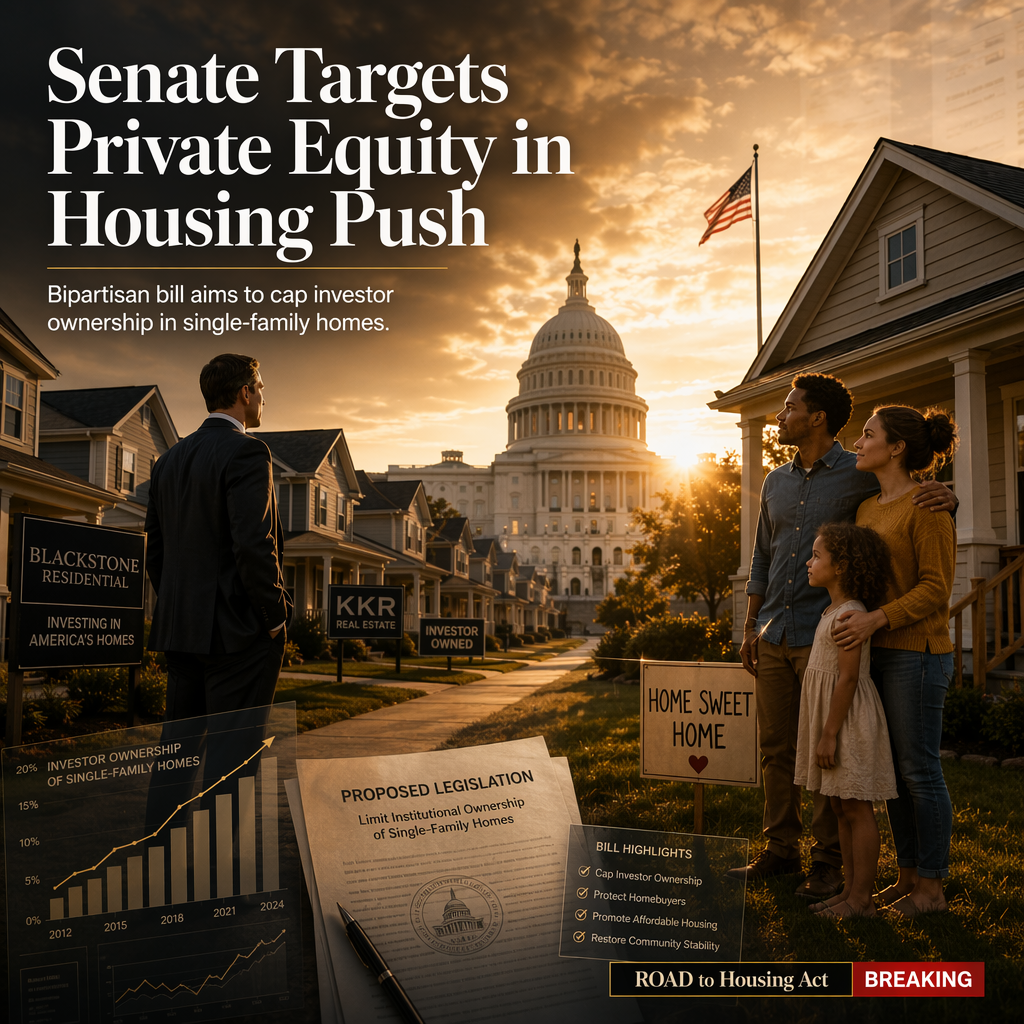
The U.S. Senate is expected to vote on a bipartisan affordable housing bill designed to limit the number of single-family homes that major institutional investors can purchase, following months of debate in both chambers of Congress [1]. The legislation, known as the ROAD to Housing Act, aims to address the ongoing housing crisis by increasing the supply of homes and curbing the influence of private equity in the housing market [1]. President Donald Trump has signaled his support for the bill, which could reach his desk by the end of the week if it passes both the Senate and the House, the latter of which is expected to vote on the bill later this week [1].
A key provision of the bill maintains a cap of 350 single-family units that institutional investors can own, but removes an earlier proposal that would have required investors to sell any new units built beyond that cap within seven years [1]. Lawmakers reached this compromise after concerns were raised that stricter limits could stifle new housing development [1]. The final version of the bill reflects a middle ground between the House version, which was more favorable to Wall Street, and the Senate version, which imposed greater restrictions on institutional investors [1].
Sen. Adam Schiff, D-Calif., a supporter of the legislation, emphasized the urgency of congressional action, stating, "America is facing a housing crisis, and it's long past time for Congress to act" [1]. Neil Bradley, executive vice president and chief policy officer at the U.S. Chamber of Commerce, highlighted the importance of expanding housing supply, noting that the U.S. faces a shortage of over 4.7 million homes [1]. Bradley stated that the supply-focused package would incentivize housing development, improve affordability, support workforce mobility, and strengthen local economies [1].
The bill is being advanced as both political parties seek to demonstrate their commitment to lowering the cost of living ahead of the 2026 midterm elections, with Republicans aiming to defend narrow majorities in both chambers [1]. The market implications are significant, as the legislation directly targets the role of institutional investors in the single-family housing market and seeks to boost housing supply through regulatory changes [1].
CONCLUSION
The Senate's advancement of the bipartisan affordable housing bill marks a significant step toward limiting private equity's role in the single-family home market and addressing the national housing shortage. With support from President Trump and key lawmakers, the bill is poised for a House vote and could soon become law, potentially reshaping the landscape for institutional investors and home affordability.