
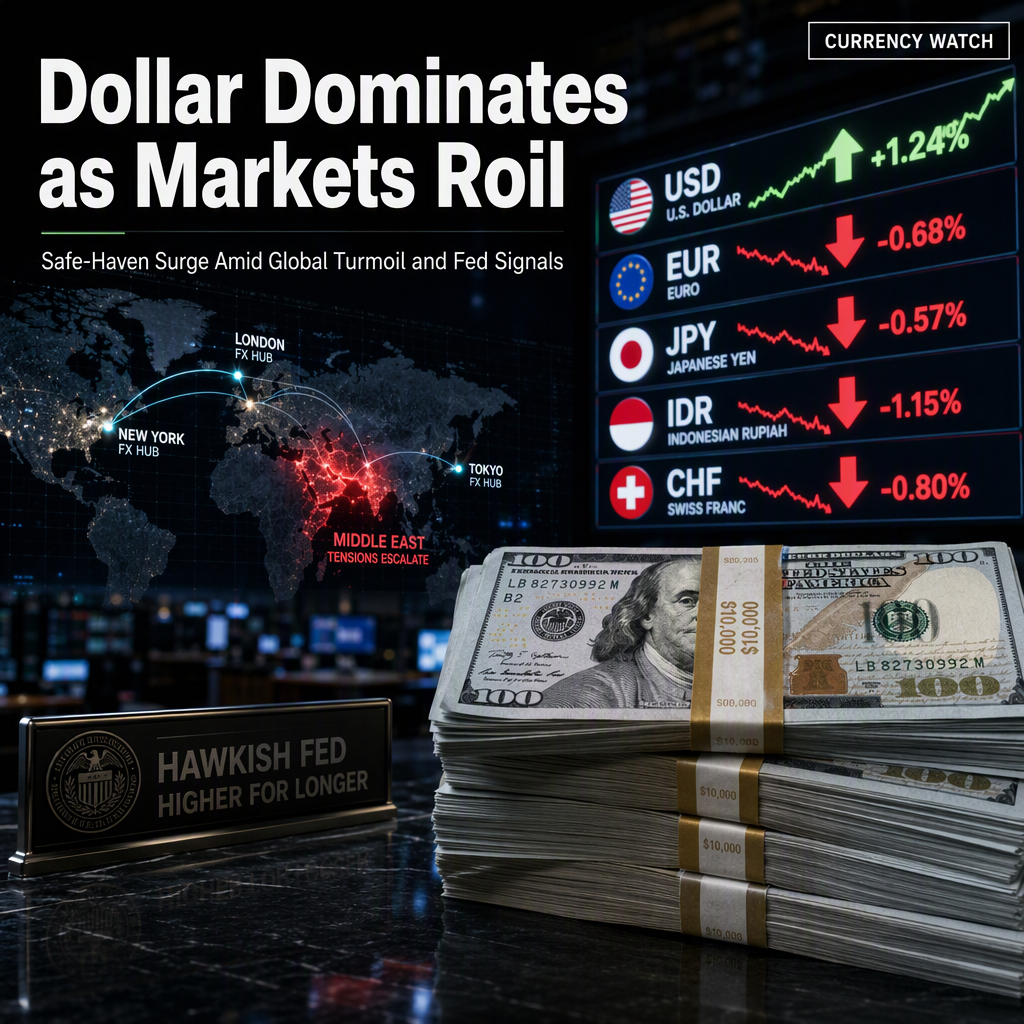
The US Dollar (USD) maintained its bullish momentum across global currency markets on Tuesday, driven by a surge in safe-haven demand following escalating geopolitical conflicts in the Middle East. Reports from Xinhua News Agency confirmed that Yemen's Houthi group launched coordinated missile and drone strikes against Saudi Arabian military bases, an oil facility, and major airports, with a hit on King Khalid International Airport in Riyadh disrupting local air traffic. This prompted investors to flock to traditional safe-haven assets like the Greenback, supporting USD gains against multiple currencies [1][2][3].
US Treasury yields reached fresh 24-year highs, fueled by a persistent global bond selloff, expanding fiscal deficits, and ongoing inflationary pressures. The latest ISM data showed US services sector input costs rising at their fastest pace in over four years, reinforcing inflation concerns and underpinning the Dollar's strength [1][2][6]. The USD Index (DXY) hovered near its highest level since April 2025, with the Dollar posting a 0.44% weekly gain against the Euro and outperforming most major peers [3][5].
Market reactions were pronounced: USD/IDR traded around 17,930, resisting further appreciation as the Indonesian Rupiah found some support from domestic fiscal conditions, with traders awaiting key economic releases later in the week [1]. USD/CHF extended gains to 0.8320, while the Swiss Franc remained a preferred refuge amid European fiscal anxieties, particularly France's sovereign debt concerns. However, strategists at UOB and DBS noted that USD/CHF is likely to remain range-bound between 0.8245 and 0.8365 in the near term, with limited longer-term upside [2][4]. USD/JPY traded above 158.00, as sustained USD buying offset intervention fears and the Yen was undermined by cautious Bank of Japan policy signals and concerns over Japan's fiscal stance [5]. NZD/USD declined below 0.5600, pressured by elevated US yields and a hawkish Fed narrative, with Fed's Logan advocating for at least 50 bps more in rate hikes and several additional moves, pushing the FXS Fed Sentiment Index to 136.59, well above the neutral threshold [6].
Despite the Dollar's strength, some sources noted that strong equity performance capped USD gains and allowed high-beta currencies to outperform, while rate expectations remain somewhat constrained. The CME FedWatch Tool indicated a 78% probability that the Federal Reserve will leave interest rates unchanged at its next meeting, following softer US labor market reports [2][3]. Meanwhile, crude oil prices eased, with WTI trading below $88, despite the Middle Eastern conflict, as resilient exports and emergency stockpile releases alleviated supply concerns [3][5].
Forward-looking statements from analysts and central bank officials suggest continued Dollar strength. ING’s Francesco Pesole highlighted the constructive domestic backdrop for the Greenback, while Fed’s Logan and BoJ Governor Ueda signaled ongoing policy normalization and gradual tightening, respectively. The NZD/USD technical outlook remains bearish, with oversold conditions but no reversal yet, and immediate support at 0.5555 [1][5][6].
CONCLUSION
The US Dollar's rally is being fueled by heightened geopolitical risks, surging Treasury yields, and hawkish Fed signals, resulting in broad-based weakness across global currencies. While some central banks and analysts expect range-bound trading or gradual policy shifts, the prevailing sentiment remains bullish for the Dollar. Market participants are closely watching upcoming economic releases and central bank communications for further direction.