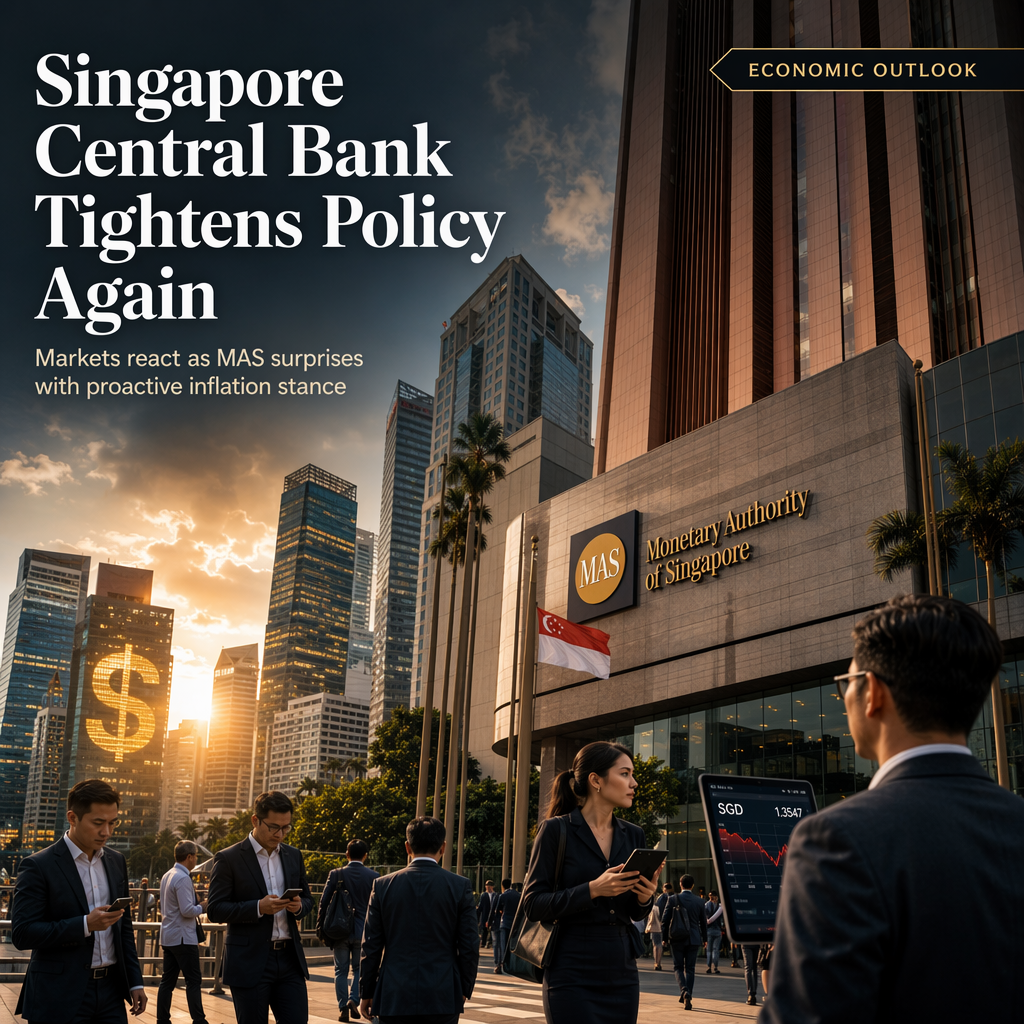
The Monetary Authority of Singapore (MAS) unexpectedly tightened its monetary policy for the second consecutive meeting, according to Commerzbank analysts. The MAS increased the slope of the Singapore Dollar (SGD) Nominal Effective Exchange Rate (NEER) policy band 'very slightly,' while keeping the centre and width of the band unchanged. This move was smaller than the tightening implemented in April and came despite relatively benign inflation data and softer energy prices [1].
The MAS's decision signals heightened concern over inflation risks, even as the official inflation forecast is likely to be revised up from the current 2-4%. However, MAS maintained its headline and core inflation forecasts at 1.5-2.5% for 2026 [1]. Following the announcement, the USD/SGD exchange rate dipped modestly to around 1.2890, compared to 1.2910 earlier, indicating a limited but positive reaction for the Singapore Dollar [1].
Commerzbank analysts noted that MAS could have left policy unchanged given the current inflation and energy price environment, but the central bank's action underscores its focus on managing upside inflation risks over downside growth risks. Singapore's economic growth was stronger than expected in the first half of 2026, reaching 6% [1].
CONCLUSION
The MAS's surprise tightening move highlights its proactive stance against inflation risks, despite moderate inflation data and easing energy prices. The Singapore Dollar saw a modest strengthening, reflecting market recognition of MAS's inflation concerns and the country's robust economic growth.