
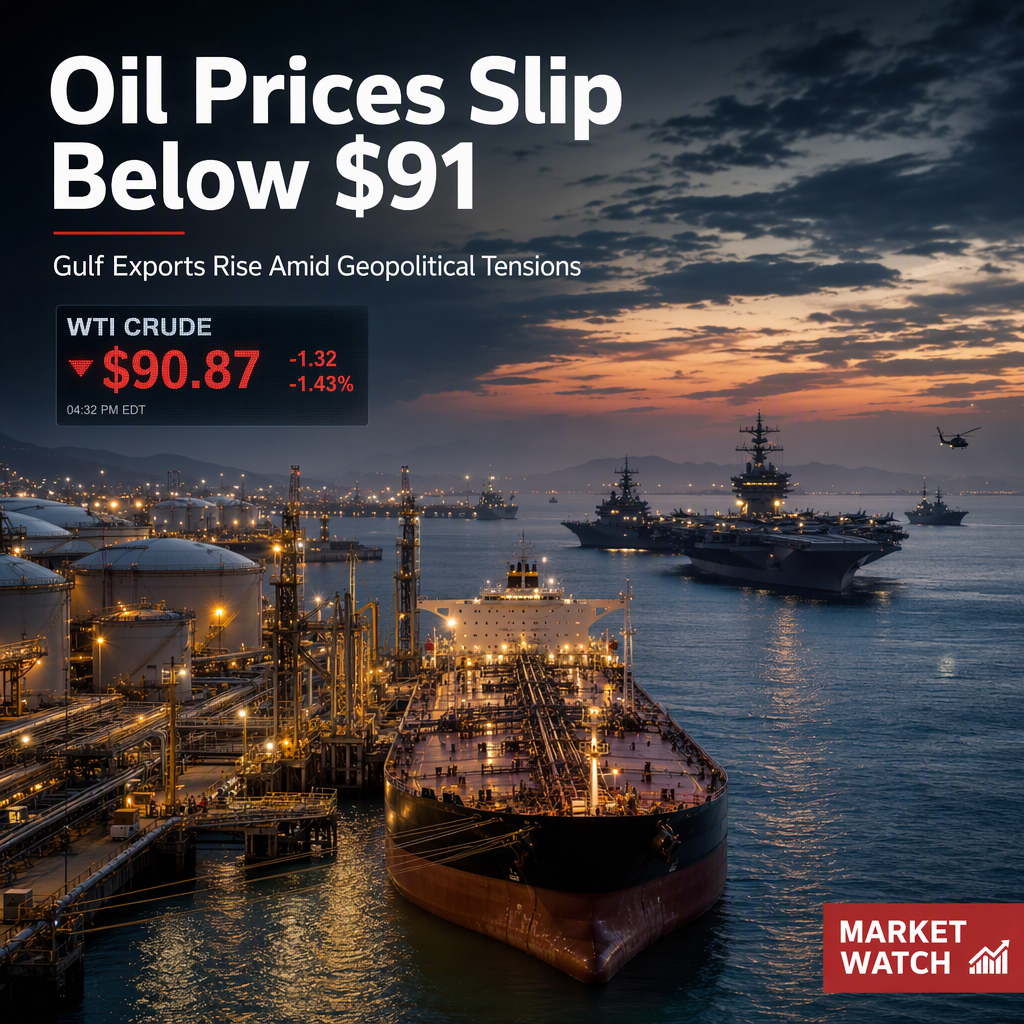
West Texas Intermediate (WTI) Oil prices experienced a moderate decline on Friday, trading just below $91.00 per barrel, down from Thursday's high of $92.64. This pullback is attributed to reports of increased crude oil exports from Gulf countries, which have helped offset concerns about stalled US-Iran peace negotiations [1]. According to JP Morgan, oil flows from Middle East countries averaged 17.7 barrels per day in September, representing about 98% of pre-war levels, while fuel exports averaged 3 million barrels per day, or 58% of pre-war supply [1].
Additional factors influencing the market include US President Donald Trump's call for France and Germany to release diesel stocks immediately or face a ban on US exports, which has contributed to easing price pressures [1]. Despite these developments, the reversal in crude prices remains limited due to escalating tensions between the US and Iran. The Wall Street Journal reported that the Pentagon is deploying a third aircraft carrier with approximately 10,000 troops to the region, signaling the possibility of renewed hostilities [1].
Security concerns persist, as the UK Maritime Trade Operations reported a tanker was struck by an unknown projectile while crossing the Strait of Hormuz on Thursday. This incident underscores the ongoing risks in the key sea corridor, preventing crude prices from falling further [1].
Overall, while increased Gulf exports and political moves have temporarily eased price pressures, ongoing geopolitical risks and supply disruptions continue to support oil prices, keeping the market cautious [1].
CONCLUSION
WTI Oil prices have edged lower due to increased Gulf exports and political actions, but persistent geopolitical tensions and security incidents in the Strait of Hormuz are limiting further declines. The market remains sensitive to both supply developments and regional instability, suggesting continued volatility in the near term.