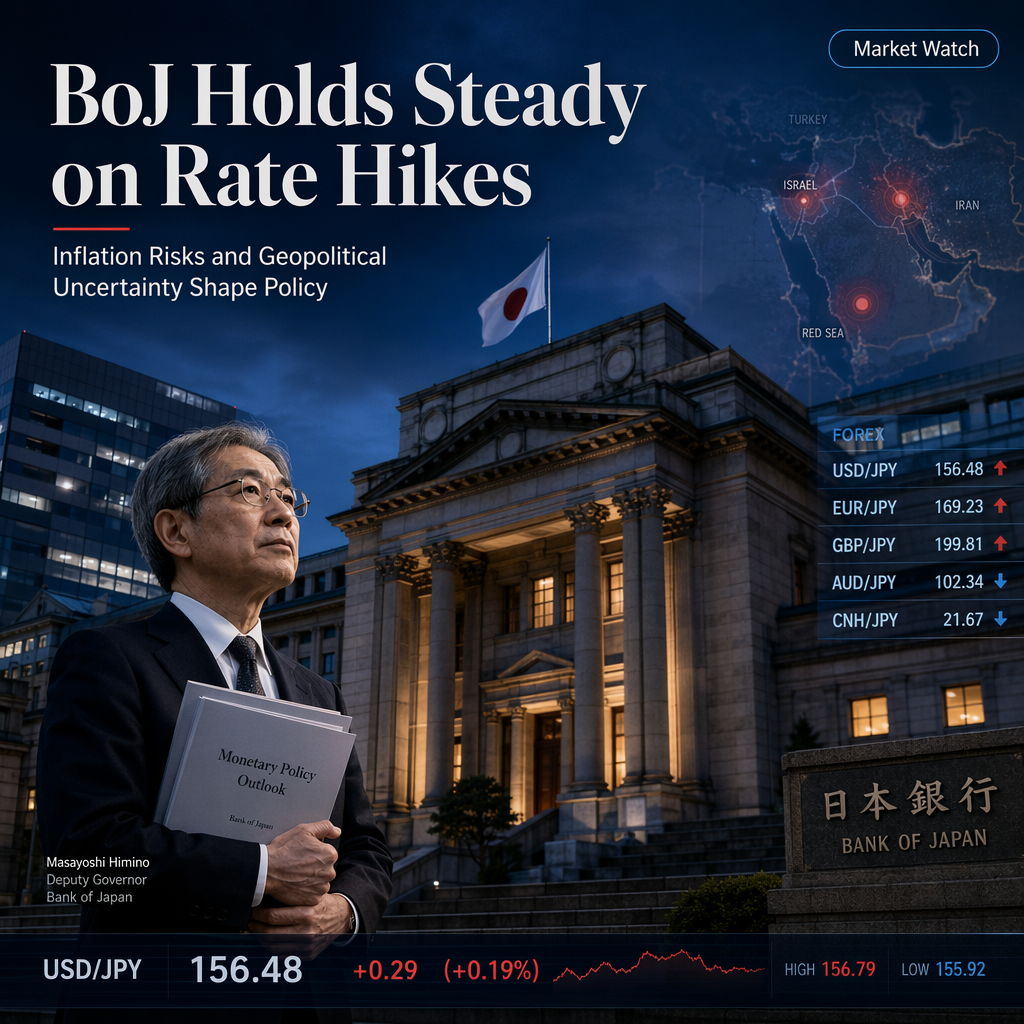
The Bank of Japan (BoJ) is signaling a likely continuation of interest rate hikes, with Deputy Governor Himino stating that the central bank will base its decisions on economic, price, and financial trends. Himino emphasized that currency movements could impact inflation expectations and core inflation, prompting the BoJ to closely monitor these developments. He noted that core inflation is nearing the 2% threshold and that recent price increases are not solely due to temporary supply shocks, highlighting the risk of core inflation deviating from the target. Despite rising oil prices posing a drag on growth, Himino described Japan’s economy as robust, supported by strong corporate profits and household income. He also clarified that while monetary policy is not aimed at currency moves, foreign exchange fluctuations now have a greater effect on inflation due to changes in corporate behavior [1].
According to the BoJ Minutes from the April meeting, many board members expressed the need for more time to assess the impact of the Middle East situation on Japan’s economy and prices. Several members noted a low probability of baseline forecasts materializing and found it challenging to balance downside growth risks against upside inflation risks. While members agreed it is appropriate to continue raising rates amid ongoing economic, price, and financial shifts, there was divergence regarding the urgency and pace of rate hikes. Some members suggested that the central bank could discuss the pros and cons of a rate increase if inflation risks significantly outweigh growth risks, and a few indicated that faster rate hikes might be necessary if the Middle East conflict persists to prevent inflation overshooting. However, one member argued that the situation was not urgent enough to justify hastening rate increases, and another urged caution against rate hikes amid severe supply chain disruptions. The timing and pace of future rate hikes were generally agreed to depend on the likelihood of baseline forecasts materializing and the balance of risks to growth and inflation. Notably, a proposal by board members Nakagawa, Takata, and Tamura to lift the overnight policy target to 1.0% from 0.75% was rejected by the board [2].
Market reactions to these developments were mixed. Following Himino’s comments, USD/JPY was down 0.06% at 161.21, while after the release of the BoJ Minutes, USD/JPY rose 0.41% to 161.31, indicating market sensitivity to the central bank’s policy signals and the ongoing uncertainty regarding the pace and timing of future rate hikes [1][2].
Forward-looking statements from both sources highlight the BoJ’s data-dependent approach, with the central bank emphasizing the need to monitor economic and geopolitical developments, particularly the impact of the Middle East situation, before making further policy adjustments. The board remains divided on the urgency and scale of future rate hikes, reflecting ongoing uncertainty in the economic outlook [1][2].
CONCLUSION
The Bank of Japan is maintaining a cautious but hawkish stance, signaling the likelihood of continued rate hikes while closely monitoring economic and geopolitical risks. Market reactions have been volatile, reflecting uncertainty over the timing and pace of future policy moves. The central bank’s approach remains data-dependent, with divisions among board members on how aggressively to proceed.