
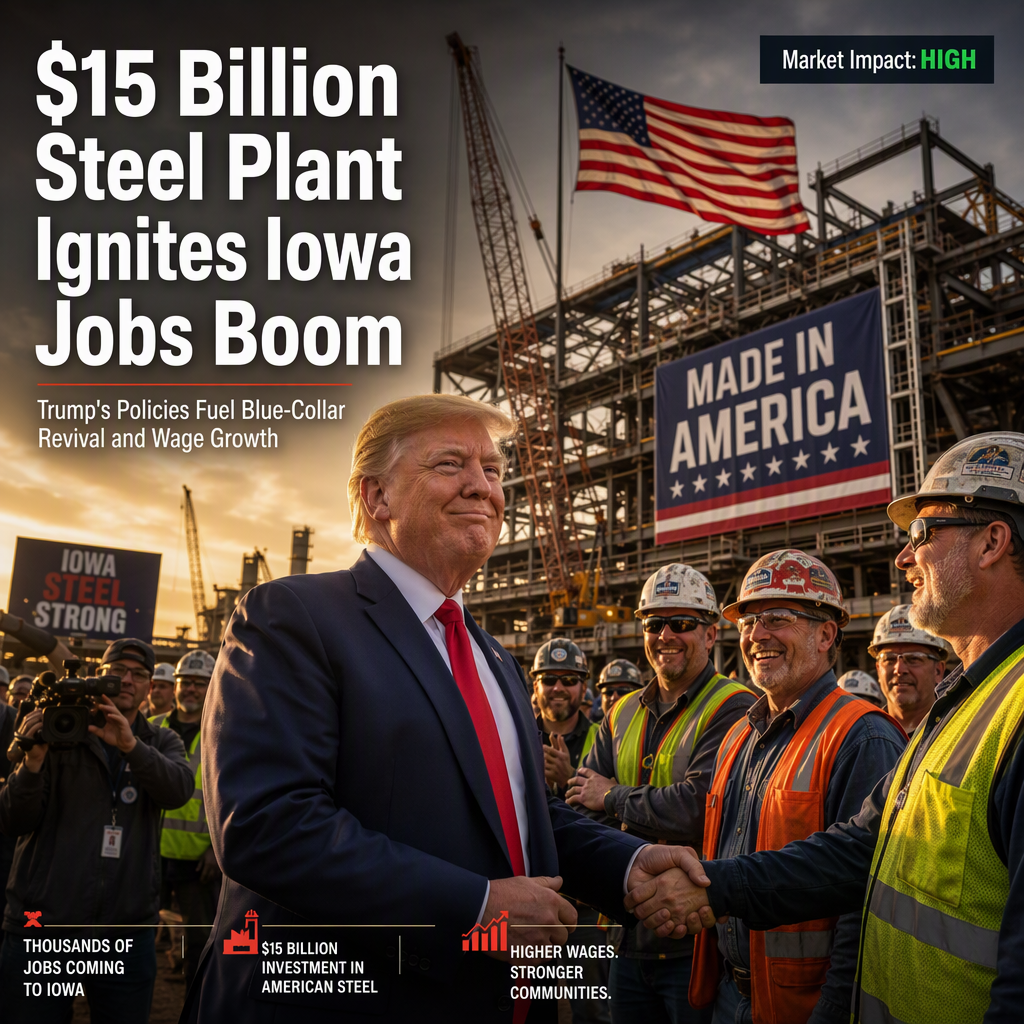
President Donald Trump is set to unveil a massive $15 billion steel plant project in Iowa, developed by Mesabi Metallics, which is expected to create more than 1,700 manufacturing jobs [1]. According to a new Council of Economic Advisors (CEA) report, the U.S. manufacturing sector has added 72,000 jobs in 2026 alone, reversing a previous trend where 200,000 manufacturing jobs disappeared during the last two years of the Biden administration [1]. The report attributes this resurgence to Trump's re-shoring policies and tariff strategies, as well as the landmark One Big Beautiful Bill Act (OBBB), which allows manufacturers an immediate 100% tax deduction on expenses related to new factory construction and equipment purchases [1].
The CEA report highlights several corporate success stories, including Jergens, an Ohio-based manufacturing company that expanded to Illinois thanks to the OBBB's provisions. CEO Jack Schron noted that 83% of his workers are now picking up overtime, benefiting from a provision that exempts overtime work from taxes [1]. Another example is Ketchie Inc. in North Carolina, which expanded its workforce by 25% after utilizing the 100% expensing provision to purchase new machinery, a move the company delayed until the OBBB was enacted [1].
Manufacturing workers have also seen wage increases, with pay rising by 7.9% since January 2025. Adjusted for inflation, this equates to blue-collar manufacturing workers earning nearly $2,500 more per year on average since President Trump took office [1]. Trump continues to defend tariffs as a central component of his economic agenda, asserting that they will bring manufacturing back to the United States and generate revenue [1].
The report underscores the positive impact of the administration's policies on American manufacturing, with companies reinvesting in domestic operations and workers benefiting from increased wages and overtime opportunities [1].
CONCLUSION
The unveiling of the $15 billion Iowa steel plant and the surge in manufacturing jobs signal a significant turnaround for the U.S. blue-collar workforce, driven by Trump's re-shoring policies and the OBBB. With substantial job creation, wage growth, and corporate expansion, the market impact is expected to be high, reflecting renewed optimism in American manufacturing.