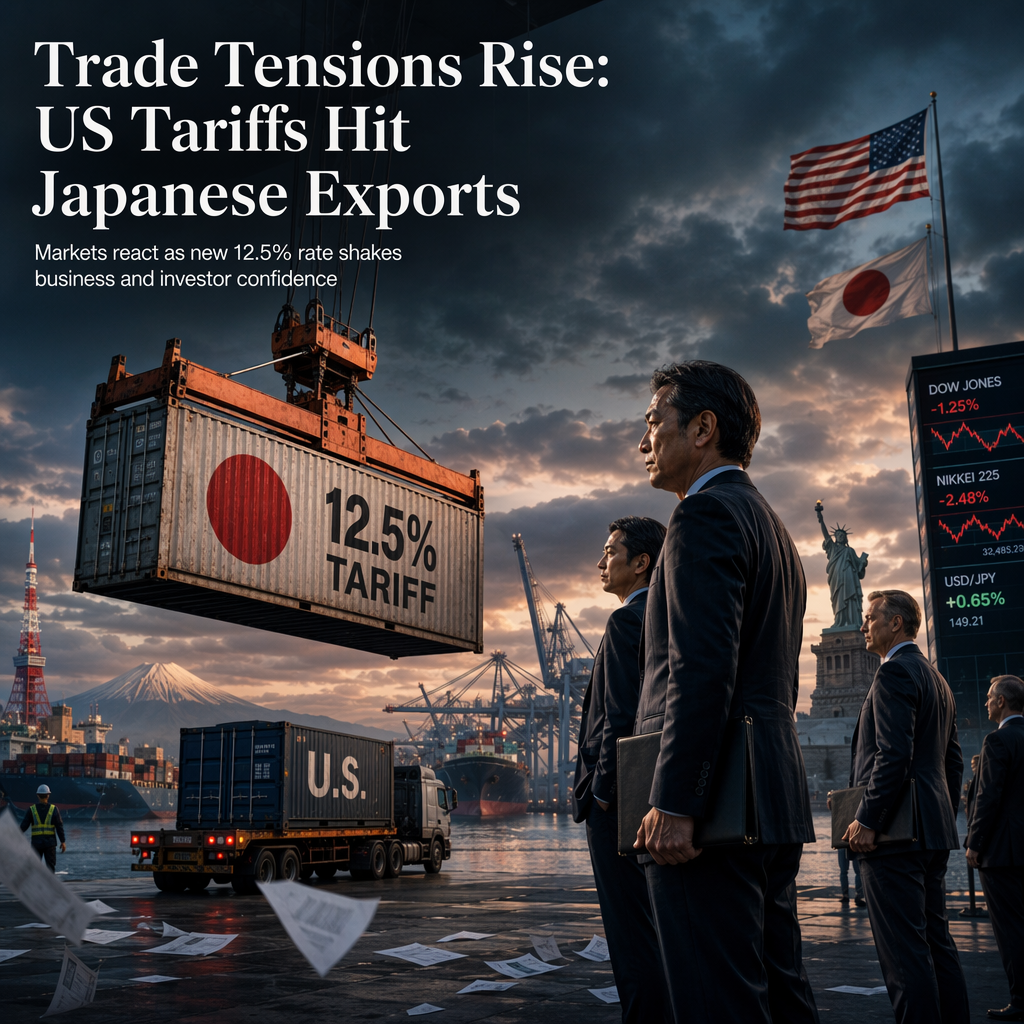
The Trump administration has implemented new additional tariffs, resulting in a combined tariff rate of 12.5% on certain Japanese exports to the United States [1]. Market participants have expressed concerns that these new tariffs will increase export costs for some Japanese companies and negatively impact their earnings [1]. There is also heightened attention on the broader effects this move may have on the Japanese economy and the future direction of trade negotiations between the two countries [1].
An expert cited in the article stated that a 12.5% tariff rate represents a significant burden compared to previous levels, and Japanese companies are expected to be forced to review their supply chains and strengthen cost management in response [1]. In the United States, there is growing focus on the potential impact on consumer prices and the supply situation for affected products [1].
Additionally, the article notes that investors are increasingly cautious about the possible effects on the foreign exchange and stock markets, indicating a broader sense of uncertainty and risk aversion in financial markets following the announcement [1].
CONCLUSION
The imposition of new tariffs by the Trump administration, raising the total rate on some Japanese exports to 12.5%, is seen as a significant market-moving event. Both Japanese companies and investors are bracing for increased costs, potential earnings impacts, and broader economic repercussions, while market participants remain vigilant for further developments in trade negotiations and financial market responses.