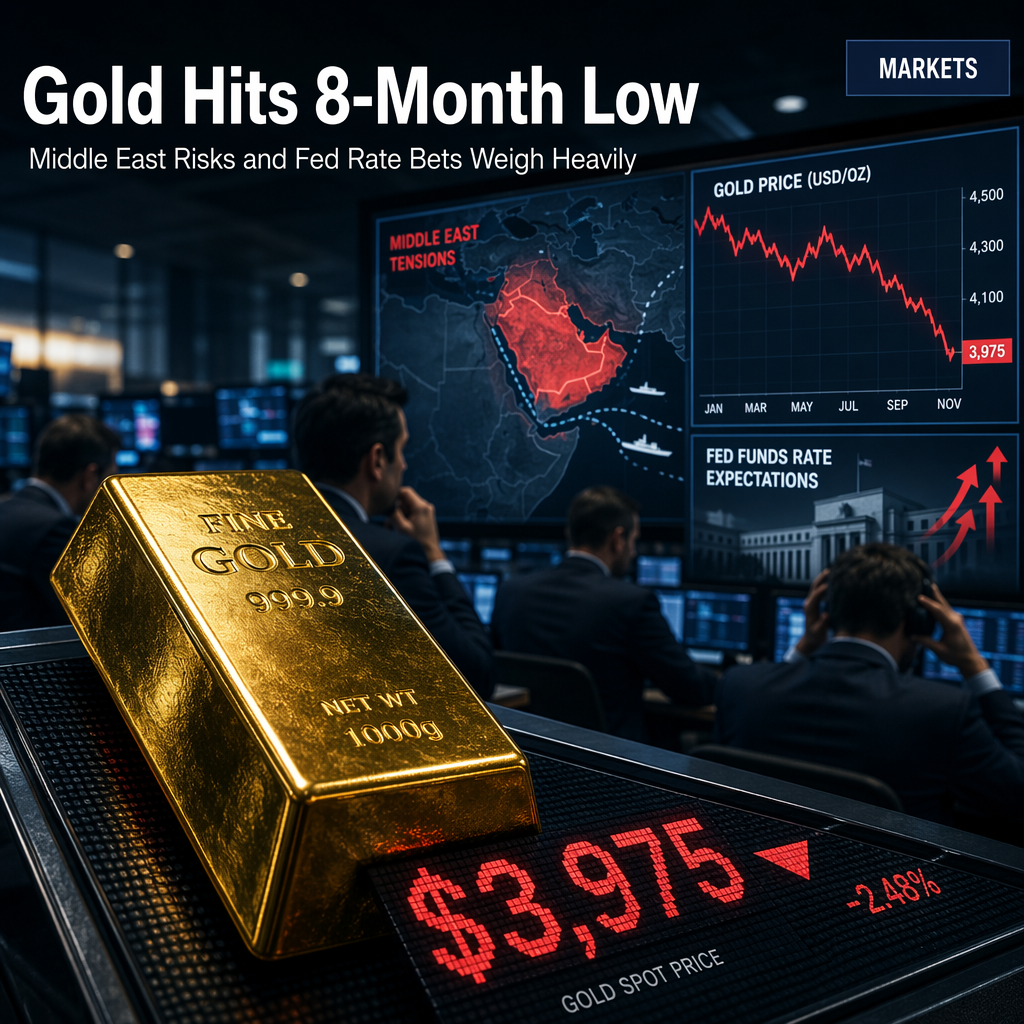
Gold prices (XAU/USD) fell sharply to an eight-month low around $3,975 during the early Asian session on Friday, extending a recent downward trend. The decline is attributed to escalating tensions in the Middle East, which have heightened inflation concerns and reinforced expectations that US interest rates will remain elevated for longer periods [1].
According to Reuters, Iran has instructed Yemen’s Houthi movement to be prepared to close the Red Sea oil route if the US strikes Iranian power infrastructure. This directive follows a threat from US President Donald Trump to attack Iran's power infrastructure earlier in the week. Any disruption to the Red Sea is seen as a significant risk to global energy supplies, especially in the context of Iran's closure of the Strait of Hormuz, and could further exacerbate the global energy crisis [1].
These geopolitical developments have overshadowed recent positive US inflation data. On Tuesday, US Consumer Price Index (CPI) inflation was reported to have slowed in June, and on Wednesday, the Producer Price Index (PPI) also showed a decline. Despite these signs of easing inflation, traders are now pricing in nearly a 55% probability that the Federal Reserve will hike rates in September, according to the CME FedWatch Tool [1]. The prospect of higher rates diminishes gold's appeal as a non-yielding asset, contributing to the metal's price decline [1].
CONCLUSION
Gold's drop to an eight-month low is driven by renewed Middle East tensions and reinforced expectations of higher US interest rates. Despite recent signs of easing inflation, the market is now focused on geopolitical risks and the likelihood of further Fed tightening, both of which are weighing heavily on gold prices.