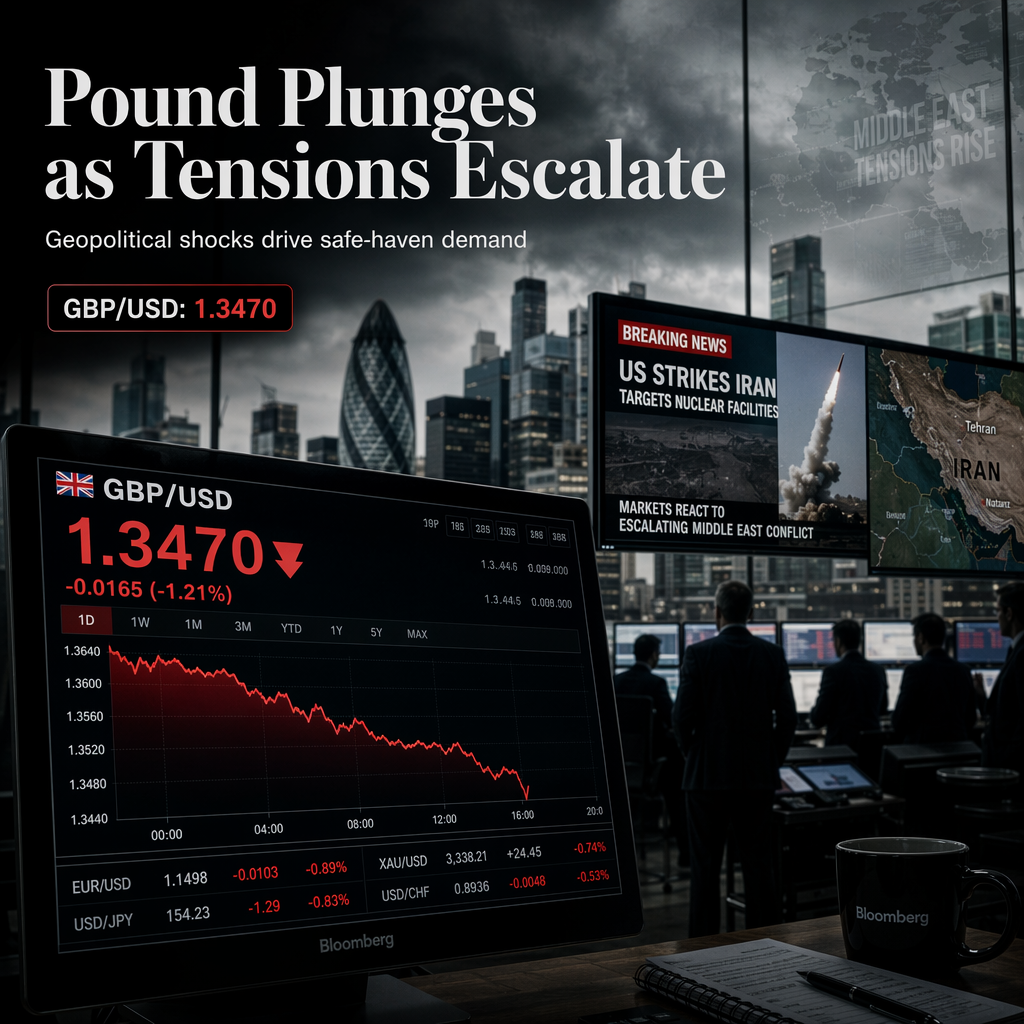
The British Pound (GBP) weakened against the US Dollar (USD), with the GBP/USD pair trading around 1.3470 during Asian trading hours on Friday, as escalating geopolitical tensions in the Middle East triggered a risk-off sentiment in the markets [1]. The United States has conducted major strikes on Iran for the sixth consecutive day, targeting civilian infrastructure such as power facilities and a train station in Bandar Abbas, southern Iran [1]. The US Central Command (CENTCOM) stated that these attacks aimed to 'further degrade Iranian military capabilities' and also reported boarding a vessel as part of a blockade of the strait [1]. Earlier in the week, US President Donald Trump threatened to strike Iran's bridges and power plants if Iran did not return to negotiations [1].
The heightened tensions have increased demand for safe-haven assets, benefiting the US Dollar at the expense of the British Pound [1]. On the economic data front, US Consumer Price Index (CPI) inflation slowed in June, and the Producer Price Index (PPI) also declined, according to data released earlier in the week [1]. As a result, traders are now pricing in nearly a 55% probability that the Federal Reserve will hike interest rates in September, based on the CME FedWatch Tool [1].
In the United Kingdom, Bank of England (BoE) Governor Andrew Bailey expressed concern about the renewed hostilities between the US and Iran but noted that, so far, there has been no significant impact on the UK inflation outlook [1]. Money markets are fully pricing in a BoE rate hike by the November policy meeting, with a second hike anticipated by April 2027, according to Reuters [1].
The preliminary reading of the Michigan Consumer Sentiment Index for July is also due later on Friday, which could further influence market sentiment [1].
CONCLUSION
The British Pound's decline below 1.3500 reflects heightened geopolitical risks and a shift toward safe-haven assets like the US Dollar. While central banks in both the US and UK are closely watched, immediate market moves are being driven by developments in the Middle East and expectations for future rate hikes.