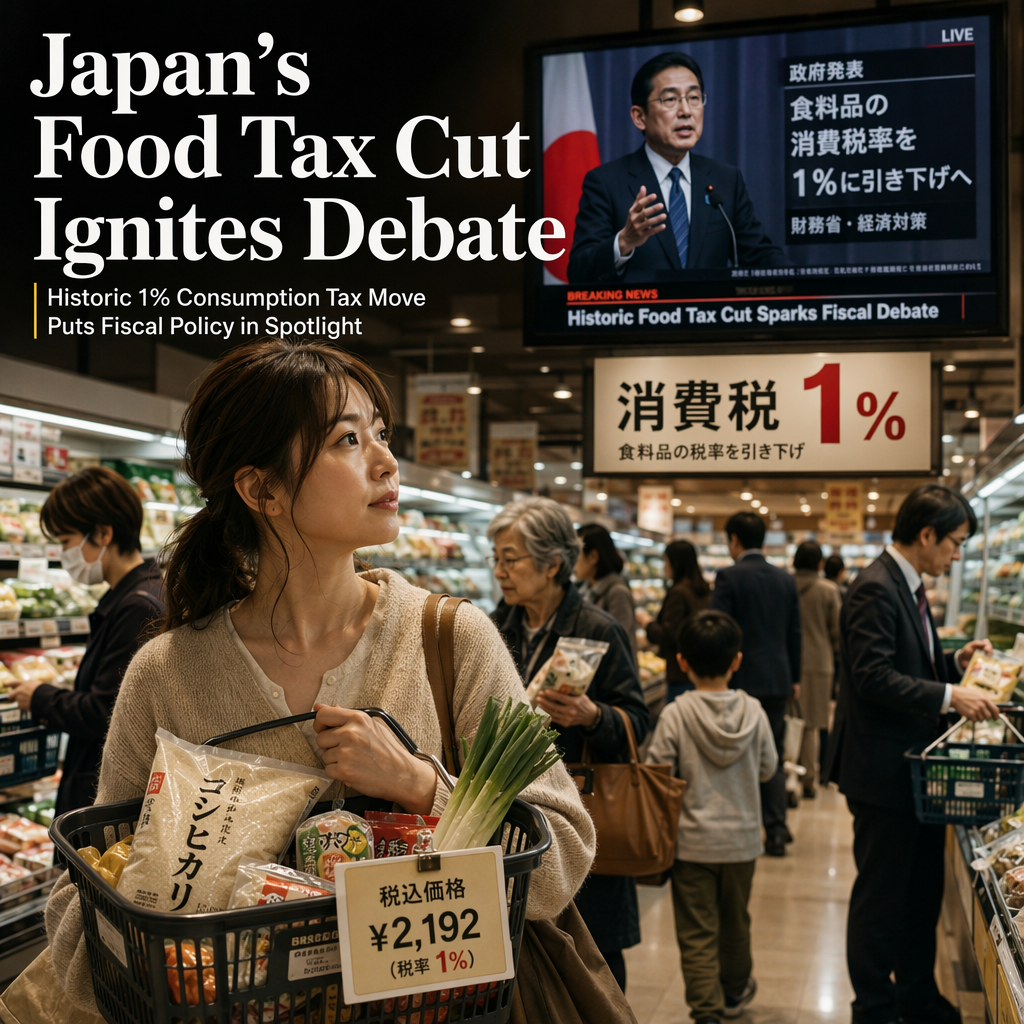
Japan is preparing to implement its first-ever cut to the consumption tax on food, with Prime Minister Sanae Takaichi advancing a plan to reduce the rate to just 1% in an effort to alleviate the impact of persistent inflation on households [1]. This move represents a $30 billion reduction in government revenue and comes at a time when rising prices are eroding purchasing power and fueling political backlash [1]. Despite concerns over Japan's strained public finances, Takaichi emphasized the necessity of the relief, stating, “The priority is to protect the livelihoods of our citizens during this period of persistent inflation” at a recent press conference [1].
Economists and market analysts have voiced mixed opinions regarding the tax cut's effectiveness and its potential consequences for the bond market. Some warn that the reduction in tax revenue could widen the fiscal deficit and exert upward pressure on government bond yields, given Japan's high debt-to-GDP ratio [1]. Conversely, others believe the measure could provide a short-term boost to consumption and help anchor inflation expectations, provided it is accompanied by credible plans for medium-term fiscal consolidation [1].
The Bank of Japan and Ministry of Finance are closely monitoring the situation, with market participants watching for any signs that the tax cut might prompt the BOJ to adjust its policy stance or trigger shifts in investor demand for Japanese government bonds [1]. The move has sparked debate among lawmakers and business leaders, with some sectors welcoming consumer relief and others cautioning against undermining fiscal discipline. A senior opposition figure remarked, "While the intention is understandable, we need to ensure that fiscal sustainability is not compromised" [1].
The government's plan is expected to be formally submitted to the Diet in the coming weeks, with a targeted implementation date later this fiscal year [1].
CONCLUSION
Japan's planned food tax cut to 1% is a bold response to inflation, but it raises significant concerns about fiscal sustainability and bond market stability. While the measure could temporarily boost consumption, its long-term impact will depend on accompanying fiscal reforms and market reactions. Investors and policymakers are closely watching for further developments as the proposal moves toward formal submission.