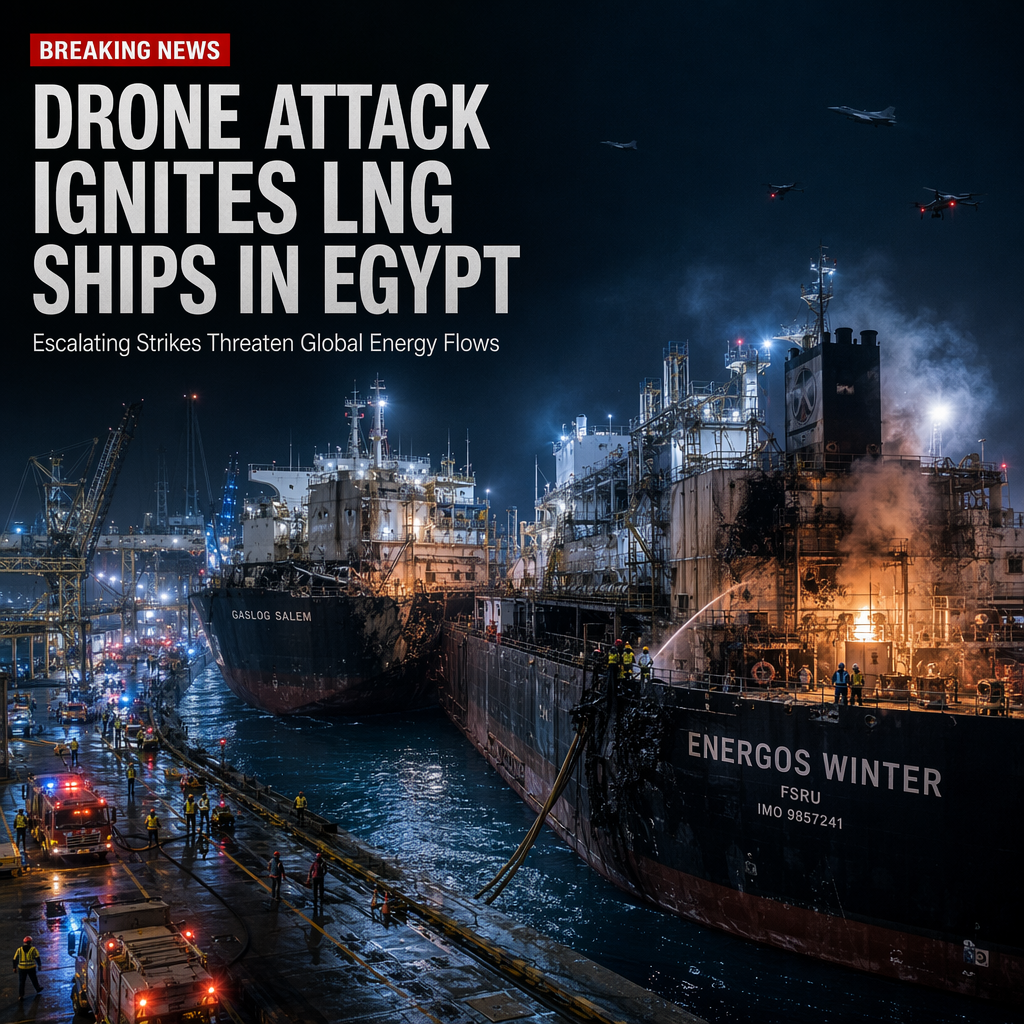
On July 30, 2026, Egypt reported that a drone attack struck two ships at the Mediterranean port of Damietta, escalating concerns over the security of energy infrastructure in the Middle East [1]. According to Egypt's Ministry of Petroleum and Mineral Resources, the incident occurred on Wednesday and resulted in fires on a regasification ship and a storage vessel at the liquefied natural gas (LNG) hub [1]. The vessels identified as damaged were the Energos Winter floating storage and regasification unit and the GasLog Salem LNG tanker, as reported by trade intelligence firm Kpler [1].
The Egyptian authorities responded to the incident with emergency and rapid response plans, coordinating firefighting and safety teams to address the situation [1]. No group has claimed responsibility for the attack as of the report's publication [1]. This event is part of a broader pattern of attacks on energy infrastructure in the region, with Iran, its Houthi allies in Yemen, and Iraqi militias intensifying strikes [1].
The report also notes that the U.S. launched renewed strikes against Iran on Wednesday in retaliation for an attempted missile attack by the Islamic Revolutionary Guard Corps on American forces in the Middle East [1]. Additionally, the Houthis claimed responsibility for targeting Saudi pipeline infrastructure earlier in the week, and Iran-allied militias in Iraq launched drone attacks on oil infrastructure in Saudi Arabia's Riyadh and Eastern regions [1]. In response, U.S. and Saudi warplanes conducted joint strikes against the Iraqi militias [1].
The attacks on critical energy infrastructure, including LNG and oil facilities, highlight the increasing risks to global energy supply chains and underscore the potential for market disruption as regional tensions escalate [1].
CONCLUSION
The drone attack on LNG ships at Egypt's Damietta port marks a significant escalation in threats to Middle Eastern energy infrastructure. With multiple actors targeting key facilities and retaliatory military actions underway, the risk to energy supply and market stability remains elevated.