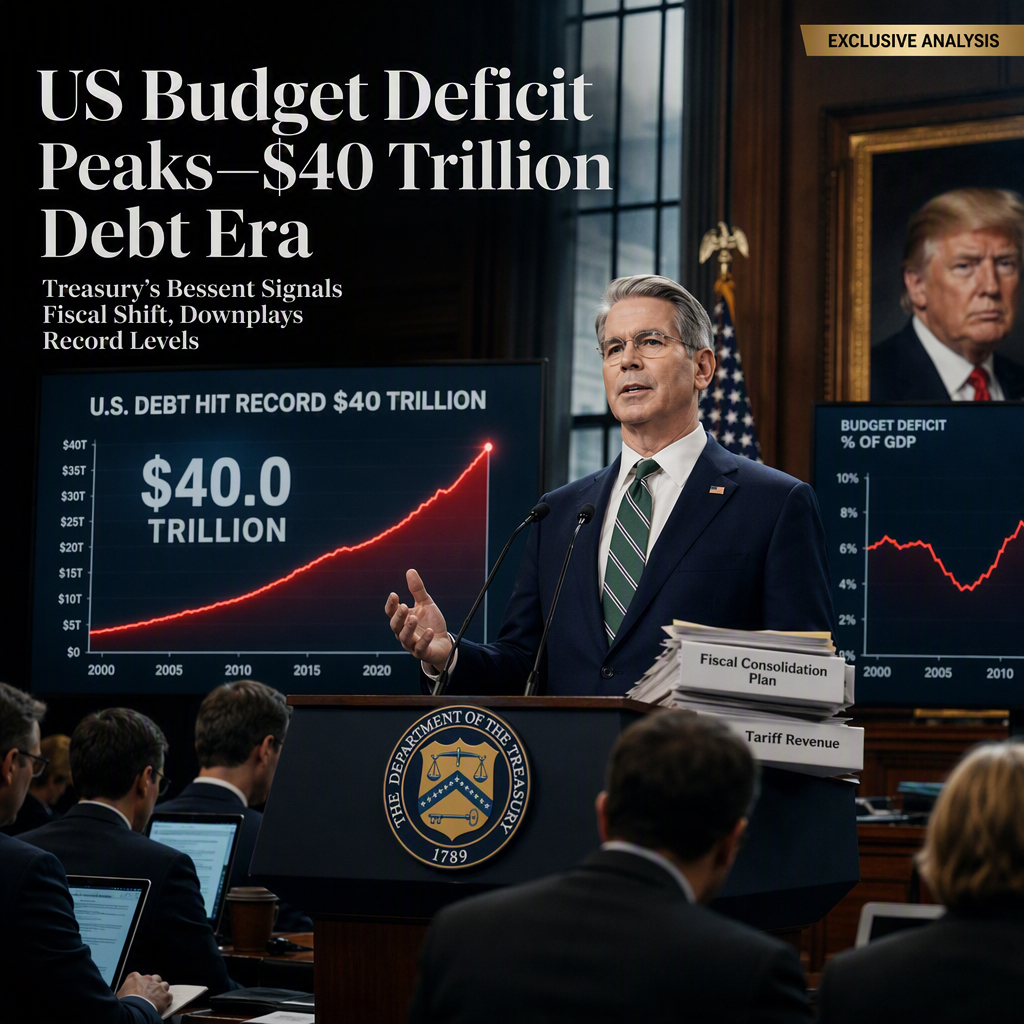
Treasury Secretary Scott Bessent stated that there is a 'very good chance' the U.S. budget deficit under President Donald Trump has peaked, following a period of record-high deficits and debt accumulation [1]. In July, the monthly U.S. budget deficit reached $432 billion, marking its highest level in more than half a decade, while the fiscal year-to-date deficit climbed to nearly $1.8 trillion, surpassing last year's figures at the same point [1]. The Treasury Department also announced that the U.S. government debt pile has hit a new record above $40 trillion, more than doubling over the past decade and raising concerns about the nation's financial health [1].
Bessent emphasized ongoing efforts by himself, President Trump, and Russell Vought, director of the Office of Management and Budget, to implement fiscal consolidation measures that could save several hundreds of billions of dollars [1]. The White House has promoted broad and steep tariffs on trading partners as a potential revenue source to help reduce the national debt, but these tariffs have faced repeated legal challenges, including a Supreme Court decision that struck many of them down [1]. Despite these setbacks, Bessent expects this year's tariff revenue to match 2025's levels, noting that the re-implemented levies should not require refunds to companies [1].
Bessent downplayed the significance of the $40 trillion debt figure, stating, 'There's nothing magic about the 40-trillion number. We can grow our way out of that,' suggesting optimism about the country's ability to manage its debt through economic growth [1].
CONCLUSION
The U.S. budget deficit has reached historic highs, but Treasury Secretary Bessent believes it may have peaked under President Trump. Despite record debt levels and legal challenges to tariff revenue, federal leaders are pursuing fiscal consolidation measures and remain optimistic about future economic growth. The market is likely to closely monitor these developments given their significant impact on U.S. fiscal health.