
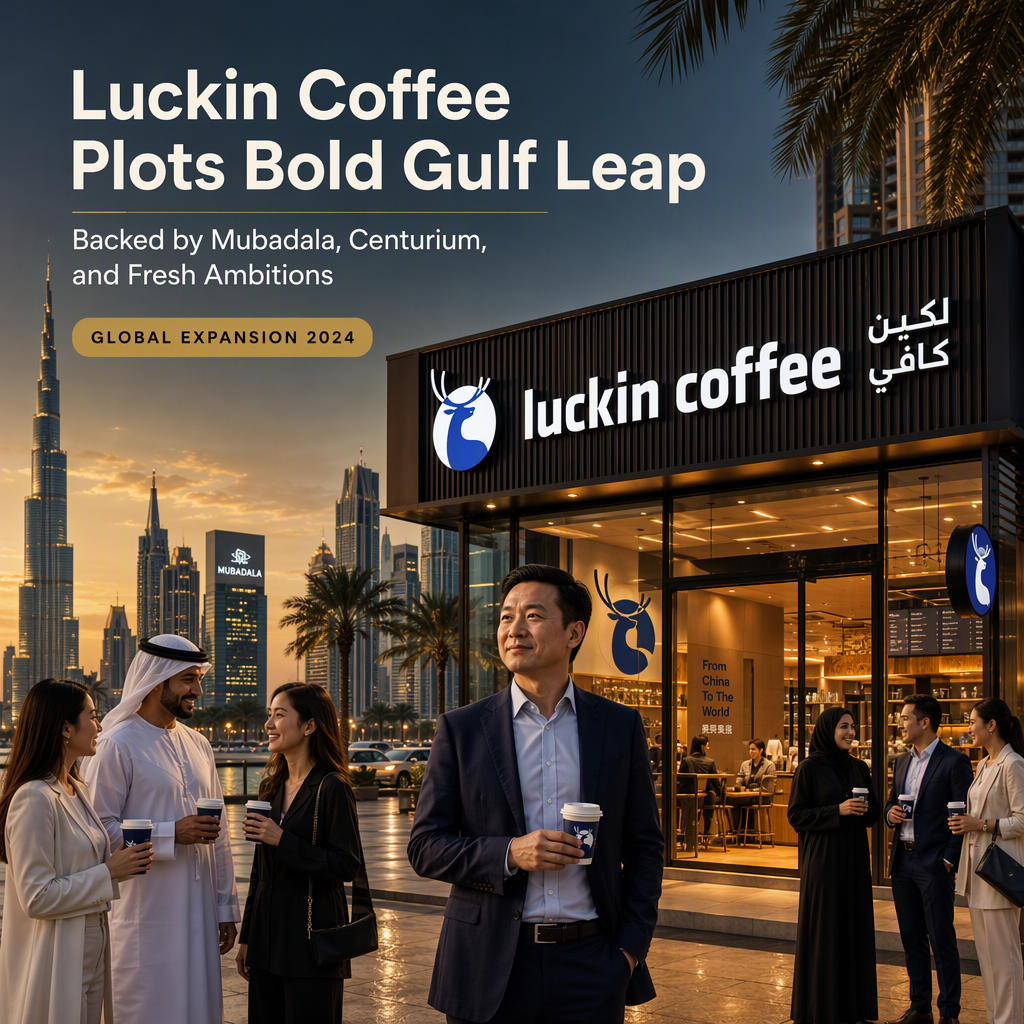
Luckin Coffee is considering entering Gulf markets as part of its ongoing overseas expansion strategy, according to Chairman David Li, who is also the co-founder and CEO of Centurium Capital, Luckin's controlling shareholder. This potential move comes after Luckin secured significant backing from Abu Dhabi's sovereign wealth fund Mubadala, which, alongside Centurium, made a $1 billion joint investment in early September. The specific stake sizes were not disclosed. Mubadala, with assets totaling $385 billion, has invested over $20 billion in China, including stakes in companies such as Shein and Dalian Wanda's shopping malls business [1].
Luckin's CEO Jinyi Guo highlighted the Gulf region's stable, high-frequency coffee demand and a growing preference for low-sugar, health-oriented drinks as key factors driving the company's interest in the market. Luckin had previously planned to expand into the Middle East and India in 2019, but those plans were not realized [1].
The company has undergone a significant turnaround since an accounting scandal six years ago, which involved fabricated sales, bankruptcy filing in the U.S., and delisting from Nasdaq. With Centurium's support, Luckin has now surpassed Starbucks as China's largest coffee chain by sales. The company's shares, currently traded over-the-counter, value Luckin at approximately $9.6 billion, compared to Starbucks' China business, which was valued at over $13 billion in a deal last November [1].
Centurium has also expanded its coffee portfolio by acquiring premium brand Blue Bottle Coffee from Nestlé for reportedly less than $400 million in April. Luckin is actively pursuing a relisting on a U.S. mainboard, but still requires approval from Chinese regulators and has not provided a clear timeline for this process [1].
CONCLUSION
Luckin Coffee's potential entry into Gulf markets, supported by major global investors, marks a significant step in its international expansion and recovery from past scandals. The company's strong turnaround and growing valuation signal renewed investor confidence, though regulatory hurdles remain for its U.S. relisting ambitions.