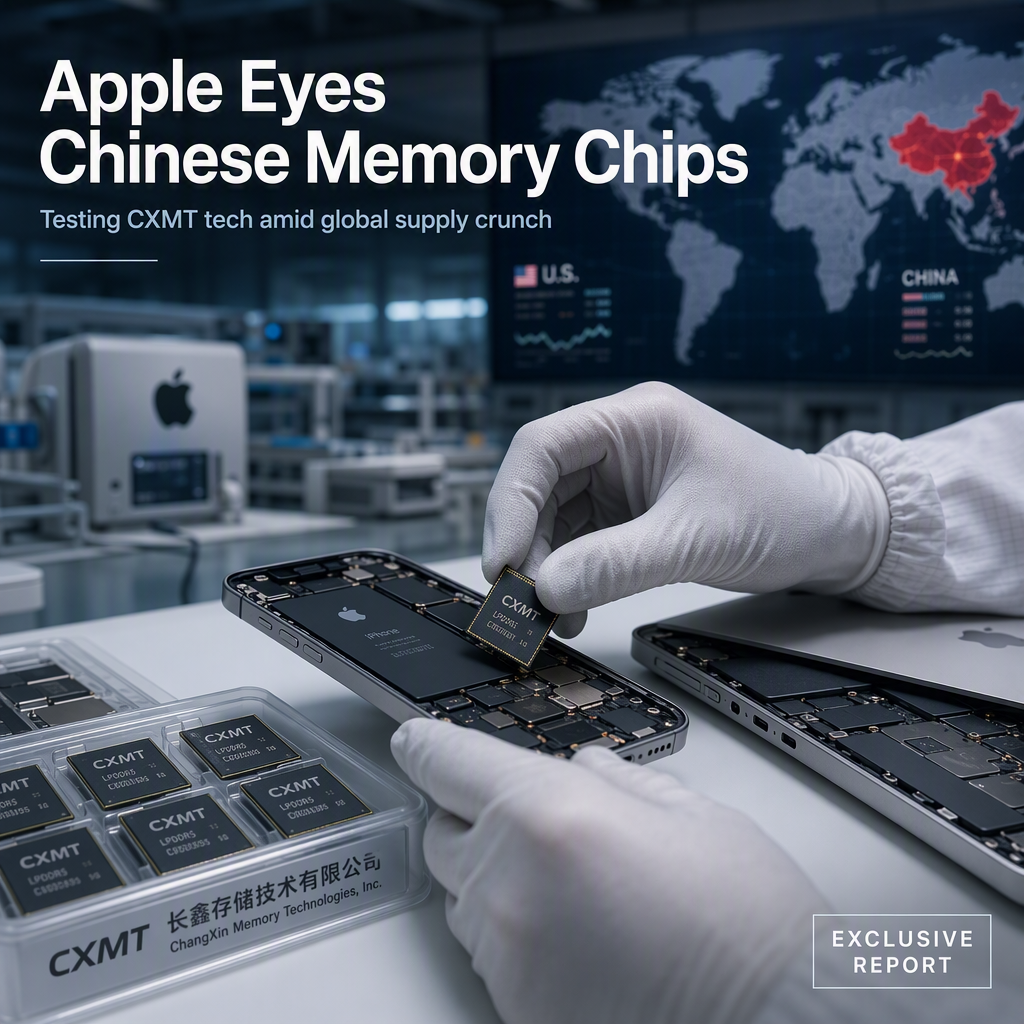
Apple is reportedly testing memory chips produced by Chinese company CXMT for use in its devices, including iPhones and MacBooks, as the company seeks solutions to address a global shortage of memory chips [1]. According to The Wall Street Journal, Apple has engaged in early discussions with CXMT about supplying chips specifically for devices sold in China, though the arrangement would require approval from the White House due to U.S. regulations restricting technology transfers to Chinese firms, including CXMT [1]. The current rules permit Apple to purchase off-the-shelf components from CXMT but prohibit the ordering of custom chips tailored to Apple's specifications. If the deal proceeds, Apple may need to redesign certain products for the Chinese market to accommodate standard CXMT chips [1].
The report also notes that other laptop manufacturers, such as HP and Acer, have secured limited quantities of memory chips from CXMT and are seeking to increase their supply for the coming year [1]. Apple has attributed recent price increases on its products worldwide to the surging costs of memory chips, a situation exacerbated by heightened demand from artificial intelligence companies [1]. On the market front, Apple Inc. (AAPL) shares closed at $313.33, up 0.29% [1].
CXMT is identified as the largest chipmaker in China by market value and has become the world's fastest-growing supplier of DRAM memory chips [1]. The company reportedly maxed out its production capacity this year and is prioritizing domestic Chinese tech firms, with plans to more than double its output by 2028 [1]. CXMT is also considering building a second memory chip plant in Beijing to further expand its capacity [1].
U.S. companies face restrictions in dealings with CXMT, as the company is listed by the Pentagon due to its connections with the Chinese military and affiliations with the Chinese government's Ministry of Information Technology and other state agencies [1].
CONCLUSION
Apple's exploration of Chinese-made CXMT memory chips highlights the ongoing challenges posed by the global chip shortage and rising component costs. While the potential deal could help Apple secure supply for the Chinese market, it faces regulatory hurdles and may require product redesigns. The situation underscores the growing influence of Chinese chipmakers and the complex regulatory environment for U.S. tech firms.