
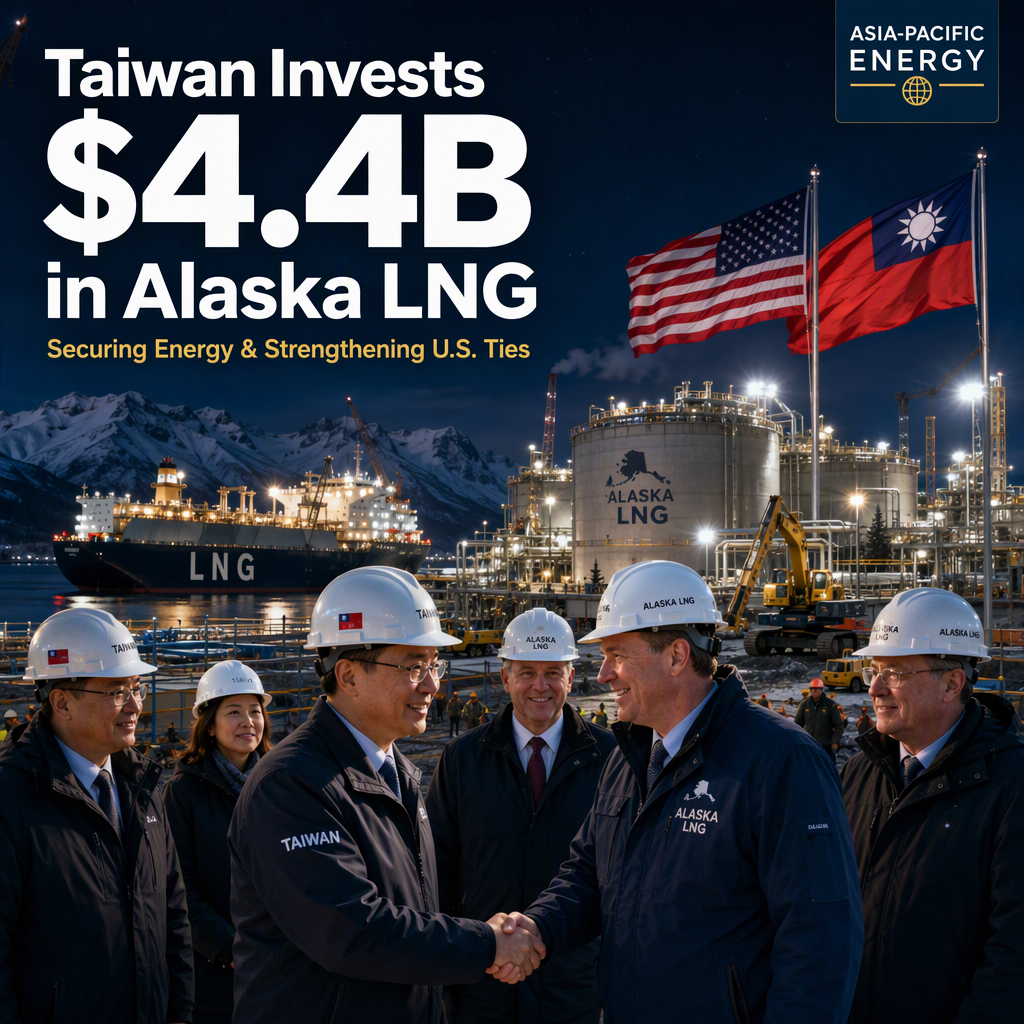
Taiwan has confirmed plans to purchase liquefied natural gas (LNG) from a proposed project in Alaska, marking a significant development in energy cooperation between Taiwan and the United States [1]. The Taiwanese economy ministry has outlined a $4.4 billion investment in the Alaska LNG project, with an annual commitment to buy 6 million tons of LNG [1]. U.S. President Donald Trump highlighted Taiwan's plans during a rally in Wasilla, Alaska, on October 13, emphasizing the strategic and economic importance of the deal amid ongoing regional tensions [1].
This agreement is expected to diversify Taiwan's energy supply, reducing its reliance on other sources and ensuring a more stable LNG supply [1]. Market analysts suggest that the $4.4 billion investment demonstrates Taiwan's intent to secure long-term energy security, which could influence global LNG trading dynamics, particularly in the Asia-Pacific region [1]. The annual purchase of 6 million tons represents a substantial portion of Taiwan's energy imports and may impact LNG spot and future prices, potentially supporting higher price levels in the Pacific basin due to increased demand [1].
Taiwanese officials have underscored the importance of stable energy supplies in light of regional geopolitical risks and recent disruptions in the Middle East, stating that the Alaska LNG cooperation is aimed at mitigating such vulnerabilities [1]. While the article does not provide specific trading advice or technical analysis, market sentiment is described as positive regarding the strengthened partnership and the prospects for more secure energy flows to Taiwan [1].
CONCLUSION
Taiwan's $4.4 billion investment in the Alaska LNG project marks a major step in securing its energy future and deepening ties with the United States. The deal is expected to have significant implications for LNG markets in the Asia-Pacific region, with positive sentiment surrounding the enhanced energy security for Taiwan.