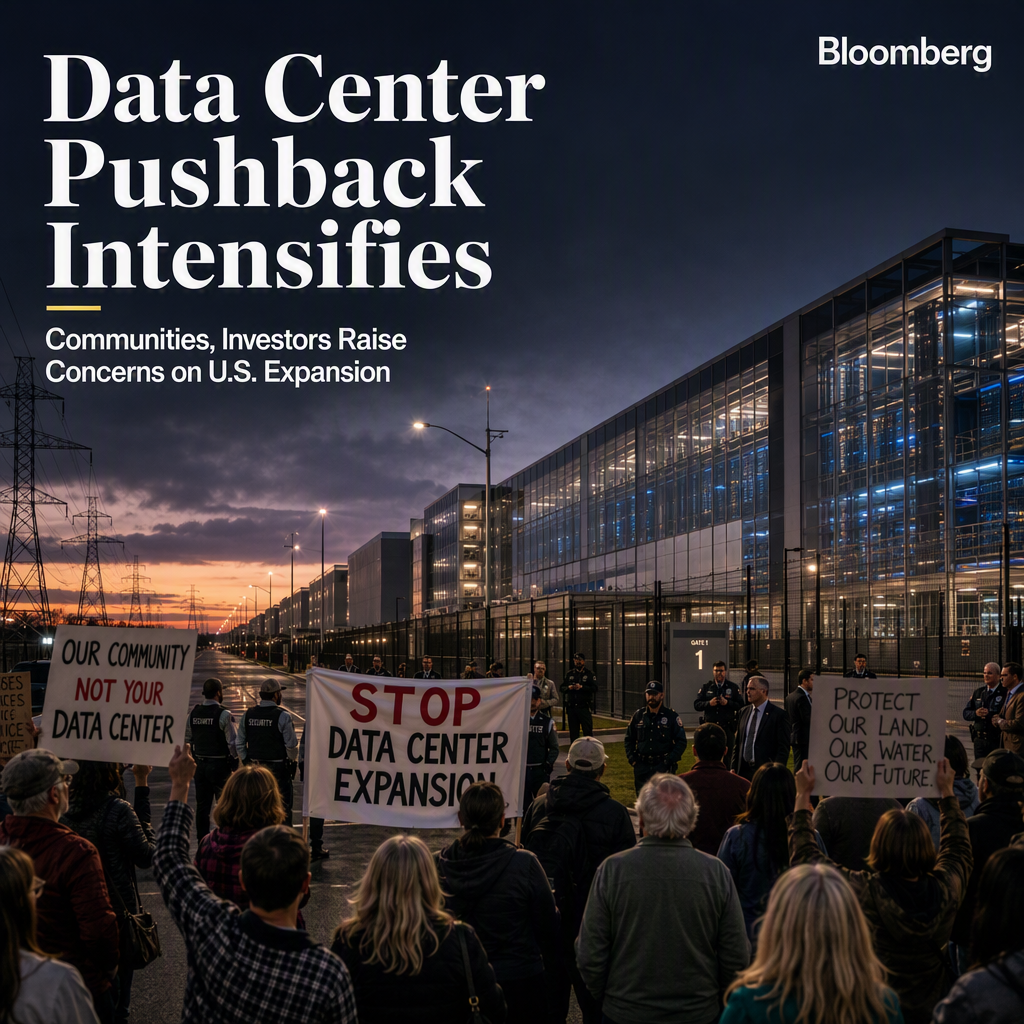
Berkshire Hathaway CEO Greg Abel stated in a CNBC interview that there is 'a lot more pushback' from communities across the United States regarding the construction of data centers. Abel explained that Berkshire's primary interest in the data center buildout is related to power and electricity generation for these sites, emphasizing that the company is willing to work with supercomputing firms as long as costs for other customers are not affected [1]. Abel said, 'We are interested in serving these hyperscalers ... if there was no impact to the rates of our other customers' [1].
Wall Street investors and analysts have echoed Abel's observations, noting a rise in organized political resistance to large-scale computing projects due to concerns about local power and water resource strain. New York State has already enacted a moratorium on data center construction, and several other states are considering bans or restrictions of varying degrees [1]. The United States currently has approximately 4,700 data centers, with the number continuing to grow [1].
Analysts at Mizuho, including Vikram Malhotra, highlighted in a client note that investors believe data centers could become a significant issue in the upcoming midterm elections. Malhotra wrote, 'This is clearly an evolving situation as some investors question the set-up with upcoming mid-term elections and validity of claims around resource consumption and limited long-term job creation' [1].
CONCLUSION
Rising community and political resistance to data center construction in the U.S. is creating uncertainty for the sector, with potential implications for power providers and hyperscale computing firms. The issue is gaining attention among investors and could become a notable topic in the upcoming midterm elections. Market participants are closely monitoring regulatory developments and their impact on future data center expansion.