
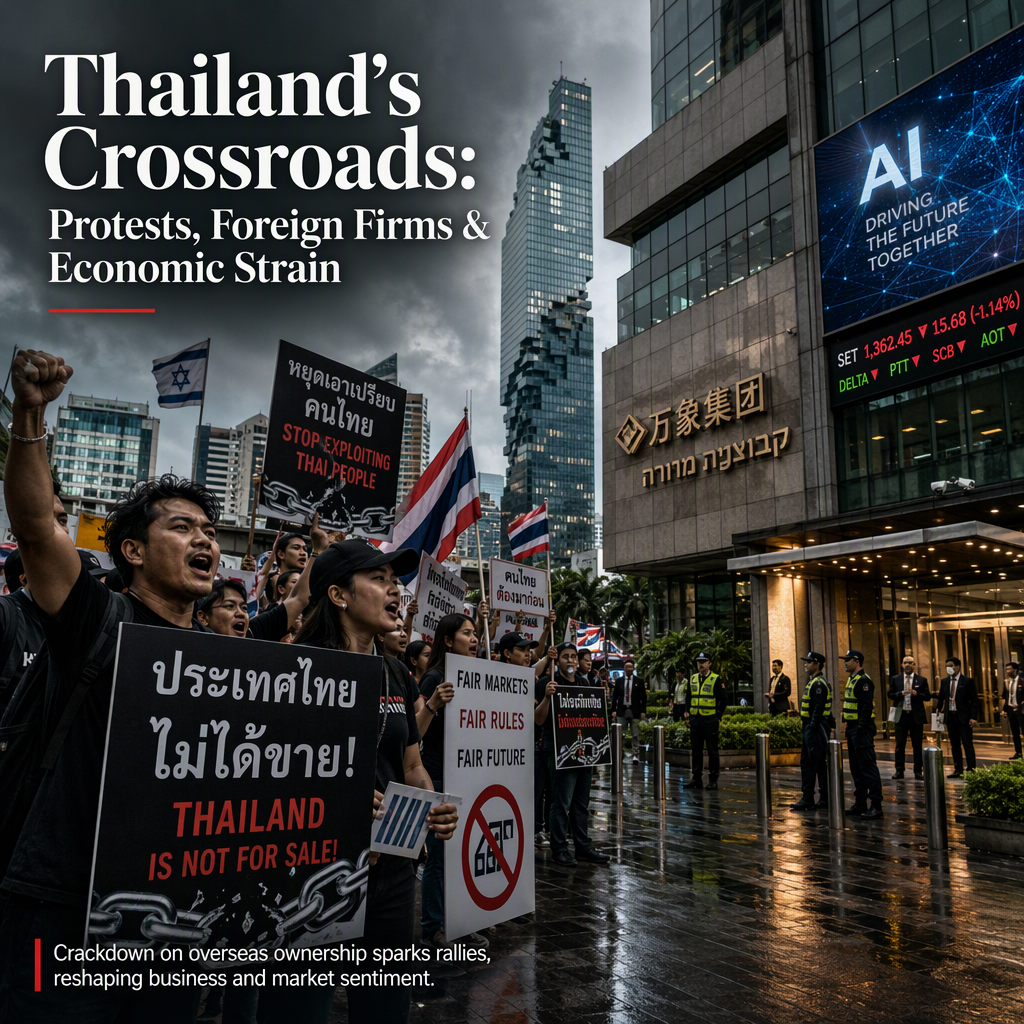
A protest movement has emerged in Thailand, targeting companies from China, Israel, and other countries for allegedly circumventing ownership rules, as the nation faces sluggish economic growth. Thai activists recently staged a rally at the Israeli embassy, accusing foreign companies of exploitation and legal violations, which has heightened concerns about unfair competition and market sentiment [1]. The Thai government is considering a crackdown on ownership loopholes, a move that could significantly impact foreign enterprises operating in the country. Officials are reviewing regulations to ensure stricter compliance and protect domestic interests [1].
Thailand's economic challenges are underscored by a Q2 GDP growth rate of only 1.9%, with energy and travel sector woes contributing to the slowdown [1]. Despite these concerns, investment applications surged by 37% in January-June, largely driven by an AI boom, indicating that foreign investment remains a crucial driver of the economy [1]. Some Thai business leaders have advocated for closer collaboration with Chinese EV makers, warning that local firms could be disadvantaged without such partnerships [1].
In response to the changing economic landscape, the Thai exchange is set to ease listing criteria to attract tech stocks, aiming to boost capital market activity and foster growth in the technology sector [1]. Additionally, there is a push for local procurement in defense industries, prompting Thai firms to pivot their operations [1].
Market analysis suggests that the proposed regulatory crackdown could alter foreign companies' operations and investment strategies in Thailand, while the easing of listing criteria reflects a strategic effort to stimulate the tech sector. The continued influx of investment, especially in AI, demonstrates resilience in certain sectors despite the overall slow growth [1].
CONCLUSION
Thailand's economic slowdown has triggered protests and prompted the government to consider stricter regulations on foreign company ownership. While these measures may impact foreign enterprises, robust investment in AI and tech sector reforms indicate ongoing opportunities and resilience in the Thai market. The situation remains fluid, with potential implications for both domestic and international business interests.