
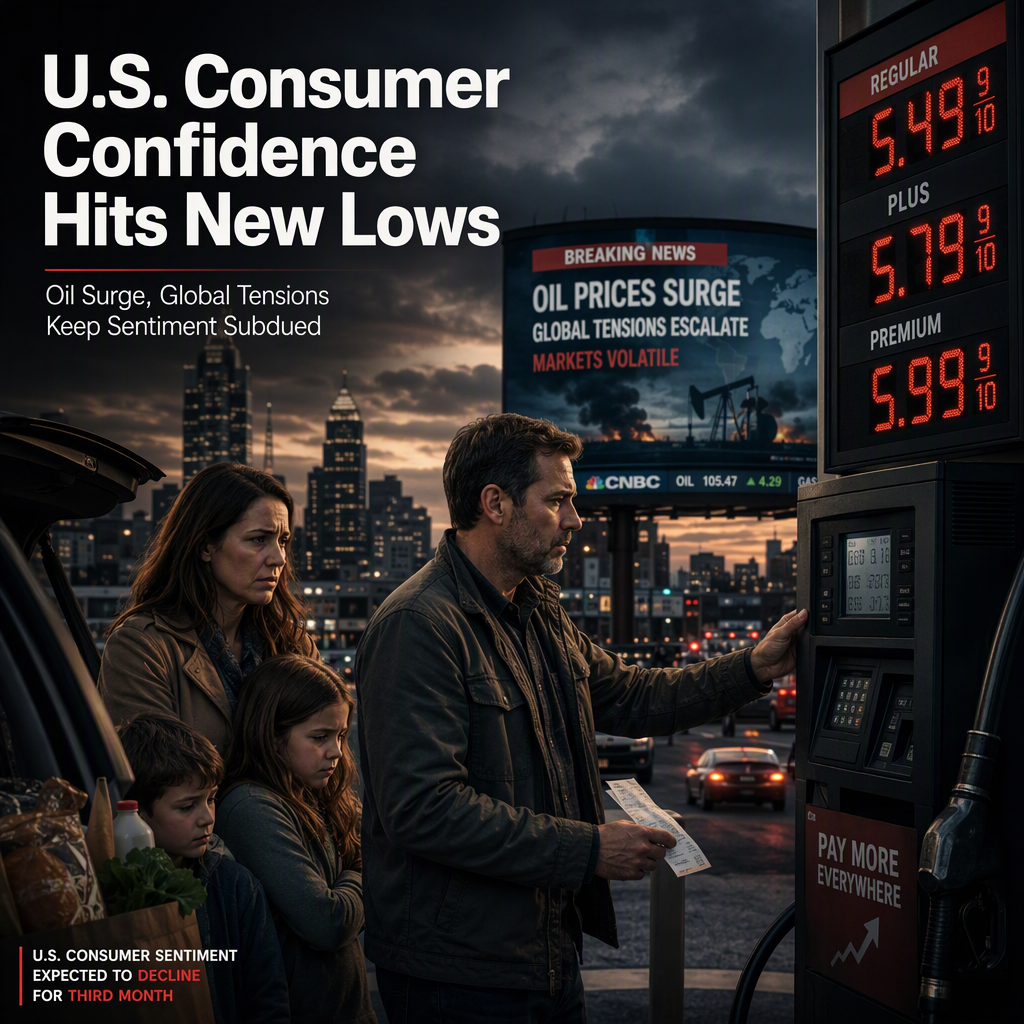
The University of Michigan (UoM) is set to release its preliminary estimate for the United States October Consumer Sentiment Index on Friday, with market analysts expecting a decline for the third consecutive month. The anticipated reading is 47.6, down from 48.1 in September, which was already the second-lowest historical level, just above the record low of 44.8 posted in May [1]. This persistent decline in consumer sentiment is attributed to elevated energy prices, driven by the ongoing Middle East conflict that began as a dispute between Iran and Israel and has since escalated into a broader regional crisis involving the US [1].
The surge in oil prices, exacerbated by the blockage of the Strait of Hormuz, has led to multi-year highs in energy costs and significant inflationary pressures. Although crude oil flows in the Persian Gulf have nearly returned to pre-war levels, oil prices remain high, with West Texas Intermediate (WTI) futures rising roughly 5% on Thursday following statements from US President Donald Trump regarding a potential resumption of large-scale military operations against Iran [1]. These developments have contributed to sustained consumer concerns about elevated energy and food prices, despite some easing in overall price pressures. The latest Personal Consumption Expenditures (PCE) Price Index rose 3.4% year-over-year in August, down from 4% earlier in the year, while core PCE increased by 3% during the same period, both figures remaining above the Federal Reserve's 2% target [1].
The UoM report will also include 1-year and 5-year Consumer Inflation Expectations, currently at 4.6% and 3.4%, respectively [1]. The Federal Reserve has responded to persistent inflation by raising the benchmark interest rate by 25 basis points, aiming to bring inflation closer to its 2% goal [1]. Despite these efforts, the recent spike in oil prices is expected to keep inflation expectations elevated and consumer confidence subdued [1].
The UoM Consumer Sentiment Index and Consumer Inflation Expectations are scheduled for release on Friday at 14:00 GMT. Ahead of the announcement, the US Dollar Index (DXY) remains well above the 102 mark, close to its yearly peak reached in October, indicating cautious market sentiment [1].
CONCLUSION
The anticipated decline in the UoM Consumer Sentiment Index reflects ongoing consumer concerns about high energy prices and inflation, driven by geopolitical tensions in the Middle East. While inflation has eased from its peak, it remains above the Federal Reserve's target, and market sentiment is expected to remain cautious until there is greater clarity on energy prices and geopolitical developments.