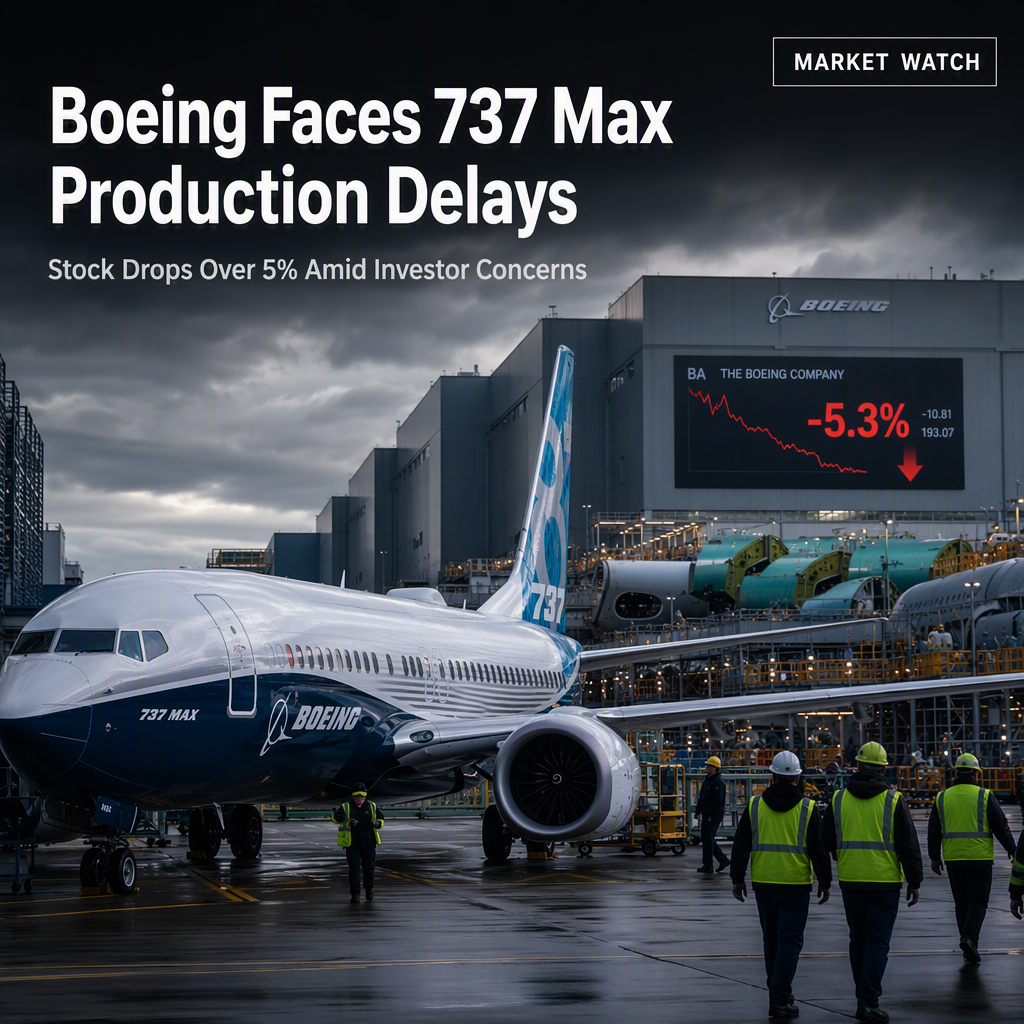
Boeing CEO Kelly Ortberg announced that stabilizing production of the company's 737 Max aircraft is taking 'a little bit longer' than initially expected, citing wing production at the Renton, Washington factory as a current constraint. Ortberg assured investors that Boeing has plans in place to address these issues and expects to increase output of the 737 Max next year [1]. The 737 Max remains Boeing's best-selling aircraft and is central to the company's turnaround efforts following years of safety and quality crises [1].
Currently, Boeing is producing about 47 737 Max aircraft per month [1]. Ortberg also reiterated at a Morgan Stanley industry conference that certification for the Max 10, the largest model in the family, is expected 'very soon,' although this model is years behind schedule [1].
Following Ortberg's comments, Boeing's stock extended its losses for the day, falling more than 5% in afternoon trading [1]. This decline reflects investor concerns about ongoing production challenges and delays in certification [1].
Ortberg clarified that he did not expect imminent aircraft orders from China, despite President Donald Trump being scheduled to host Chinese leader Xi Jinping at the White House on September 24. He stated that any orders from China would be announced by the airlines at their own pace [1].
CONCLUSION
Boeing's ongoing production challenges with the 737 Max have led to a significant drop in its stock price, highlighting investor unease. While the company expects to ramp up output and achieve Max 10 certification soon, delays and uncertainties persist. The market remains cautious as Boeing works to resolve production constraints and awaits potential new orders.