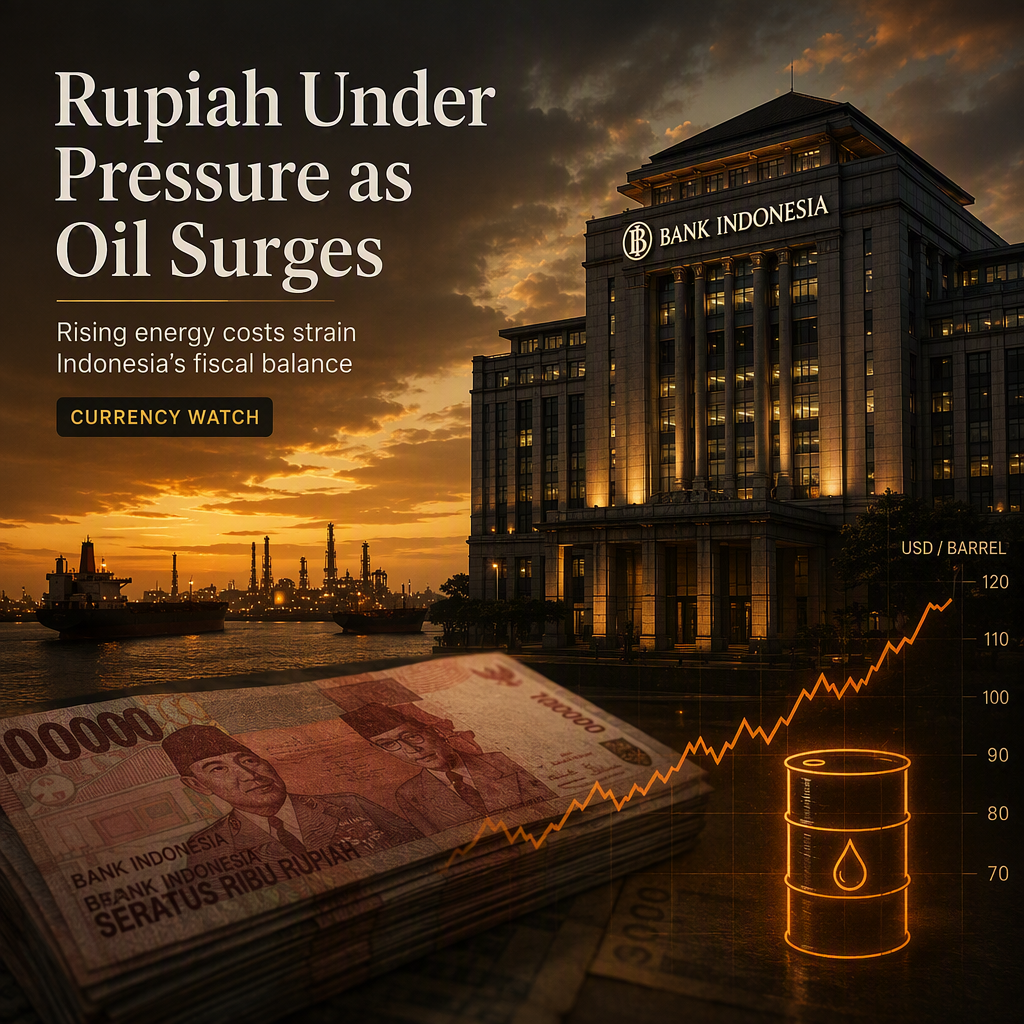
The Indonesian Rupiah (IDR) is under renewed pressure as higher oil prices add to existing economic challenges, according to MUFG’s Lloyd Chan. August Consumer Price Index (CPI) inflation accelerated to 3.19% year-over-year, while Gross Domestic Product (GDP) growth continues to exceed 5%, indicating persistent inflation risks skewed to the upside [1].
Indonesia’s trade balance showed a modest surplus of $0.12 billion in July after two consecutive months of deficits. This improvement was mainly attributed to a narrowing oil and gas trade deficit, which decreased to $2.9 billion from $3.5 billion previously [1]. However, the overall trade balance remains substantially below 2025 averages, underscoring the ongoing drag from elevated oil and gas imports [1].
Bank Indonesia’s policy support and intervention framework are expected to provide near-term backing for the rupiah. Nevertheless, MUFG warns that if Brent crude prices remain above $90 per barrel, Indonesia’s fiscal and external positions could face increasing pressure, which would likely weigh further on the IDR [1].
No specific market reactions or analyst forecasts beyond MUFG’s cautious outlook were provided in the source article.
CONCLUSION
The Indonesian Rupiah remains vulnerable due to rising oil prices, accelerating inflation, and a trade balance still below historical averages. While Bank Indonesia’s interventions may offer short-term support, sustained high oil prices could further strain Indonesia’s fiscal and external positions, keeping pressure on the currency.