
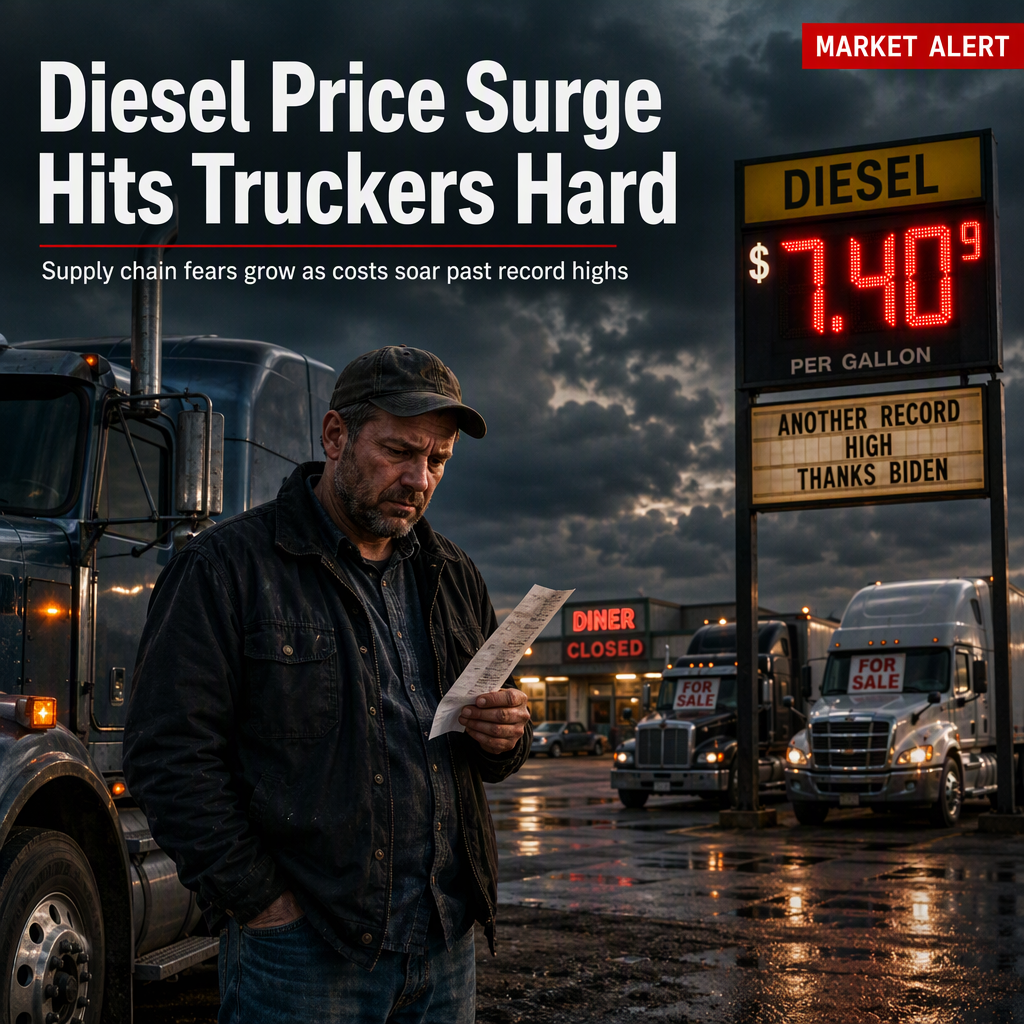
American truckers are sounding alarms as diesel prices have soared to a national average of $6.32 per gallon, up from $3.69 a year ago—a jump of more than 70%—according to AAA data cited by Fox News Digital [1]. This surge has surpassed the previous record of $5.816 per gallon set in June 2022, which was attributed to global energy price shocks following Russia's invasion of Ukraine [1]. The current spike is linked to the Iran war, which has further tightened fuel markets and squeezed truckers' margins [1].
Truckers interviewed, including Miami-based Suave Dorsett and Louisiana's Tyler Rinaldi, report that rising diesel costs are severely impacting their earnings and forcing companies to cut routes [1]. Dorsett noted paying as much as $7.40 per gallon in Ohio, while Rinaldi observed that weekend routes at his company have already been scaled back, leading to noticeable changes and concerns about reduced income [1]. Both drivers emphasized that smaller operators are especially vulnerable, with Dorsett predicting a "domino effect" that could force them off the road and eventually pressure larger carriers [1].
The financial strain extends beyond fuel, as truckers face additional expenses such as diesel exhaust fluid, parking, showers, weighing loads, repairs, and towing [1]. If diesel prices remain elevated, Dorsett warned that smaller owner-operators would "slowly fall off," potentially triggering broader disruptions in the industry and affecting the movement of goods across the country [1].
President Donald Trump is quoted as predicting that oil prices will "fall like a stone" amid expectations that the Iran conflict could soon end, but drivers say the damage is already mounting and the impact is being felt throughout the sector [1].
CONCLUSION
The rapid rise in diesel prices is placing significant financial pressure on American truckers, particularly smaller operators, and is already leading to route reductions and fears of broader supply chain disruptions. Unless fuel costs decline, the trucking industry may face a cascading effect that could impact the availability of goods for consumers. Market sentiment is negative, with high potential for economic ripple effects if the situation persists.