
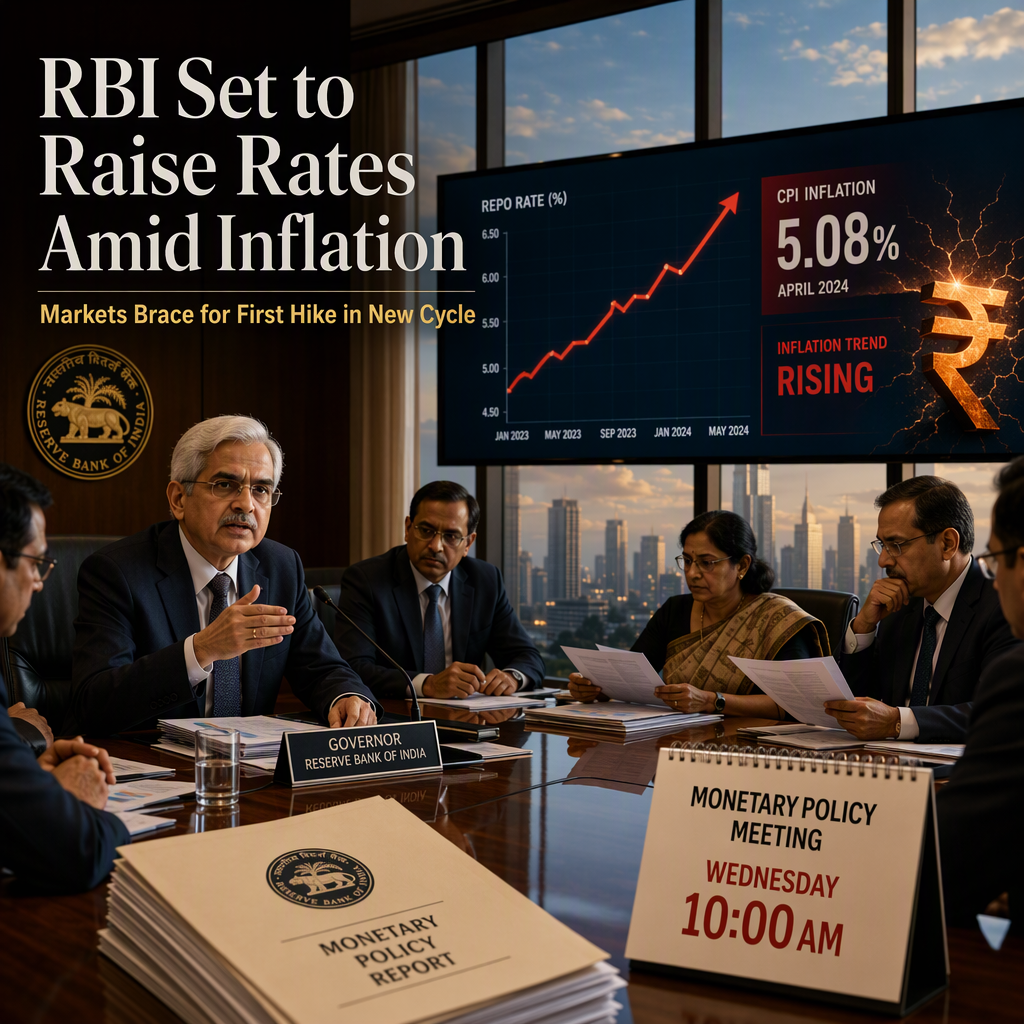
The Reserve Bank of India (RBI) is anticipated to announce a 25 basis point increase in its key Repo Rate, raising it from 5.25% to 5.5%, during its upcoming bi-monthly monetary policy meeting scheduled for Wednesday at 10:00 AM IST (04:30 GMT) [1]. This move is widely expected by market participants and is seen as the likely start of a new interest rate hike cycle, following a period of policy rate stability earlier in the year [1].
Analysts at Societe Generale attribute the expected rate hike to a notable pickup in services inflation and persistent headline inflation, which has remained above the median target for three consecutive months. In August, India's retail Consumer Price Index (CPI) reached 4.82% year-on-year, marking the highest level since the current series began in January 2025, though it remains within the RBI's 2%-6% tolerance band [1]. Societe Generale suggests that the RBI could even consider a larger 50 basis point hike, though their base case remains a 25 basis point increase at the October meeting [1].
However, there is some divergence in analyst expectations. MUFG forecasts that the RBI will maintain the status quo at this meeting, with the possibility of initiating a rate hike cycle from December instead. MUFG emphasizes that a shift towards higher policy rates is imminent, even if not immediate, and that the central bank's stance is likely to change in the near term [1].
In the previous August policy meeting, RBI Governor Sanjay Malhotra reiterated a 'neutral' policy stance and highlighted ongoing risks from Middle East tensions, which continue to impact crude oil prices, currencies, and financial markets. Malhotra also noted that inflation is not becoming broad-based and is expected to decline after peaking in Q3FY27 [1]. Market participants are expected to closely monitor the RBI's guidance on future rate hikes, as the Indian Rupee has been under pressure due to persistent outflows [1].
CONCLUSION
The RBI is widely expected to begin a rate hike cycle with a 25 basis point increase, driven by rising inflation pressures, though some analysts anticipate a delay until December. The central bank's forward guidance and assessment of inflation and external risks will be closely watched by markets, especially given the ongoing volatility in the Indian Rupee.