
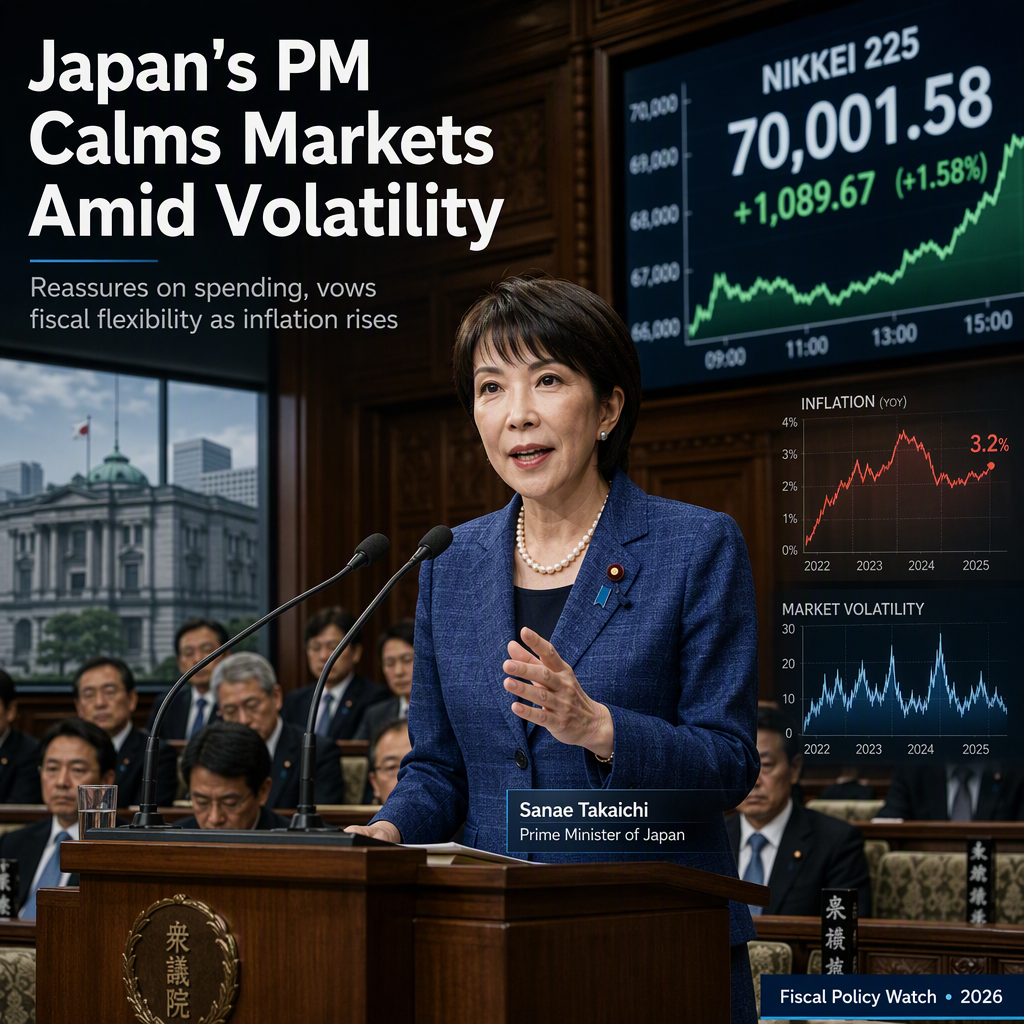
Japanese Prime Minister Sanae Takaichi addressed the House of Representatives on October 5, 2026, aiming to reassure financial markets regarding her government's fiscal policy. In her policy speech, Takaichi pledged to respond 'flexibly' to economic and market conditions, while giving little indication of a shift away from her administration's expansionary spending agenda. She emphasized the importance of maintaining market confidence and ensuring the sustainability of public finances, stating, 'We will continue to address economic and market developments with flexibility while ensuring the sustainability of public finances' [1].
Takaichi's remarks come amid investor concerns about the long-term impact of ongoing robust government spending. Market participants have been closely monitoring for any signs of a pivot toward fiscal consolidation or stricter budgetary controls, but the prime minister offered few indications of an immediate change in policy. Financial analysts noted that, despite Japan's high debt levels, the administration appears rhetorically committed to balancing economic growth with fiscal discipline to maintain investor confidence [1].
The prime minister's comments were delivered at a time of market volatility, with Japan's Nikkei average briefly regaining the 70,000 mark, driven by renewed optimism in artificial intelligence stocks. Inflationary pressures remain a concern, as recent data showed a jump in Tokyo's core inflation rate, raising the prospect of further Bank of Japan rate hikes after the central bank recently increased rates to 1.25% [1].
Market participants are expected to continue closely monitoring the government's fiscal stance, particularly in relation to spending, inflation, and interest rate trends, as any adjustments could have significant implications for market confidence and economic growth [1].
CONCLUSION
Prime Minister Takaichi's assurances signal a continued commitment to expansionary fiscal policy, despite market concerns over debt and inflation. While her remarks aimed to calm market jitters, investors remain attentive to future government actions and central bank moves, given ongoing volatility and inflationary pressures.