
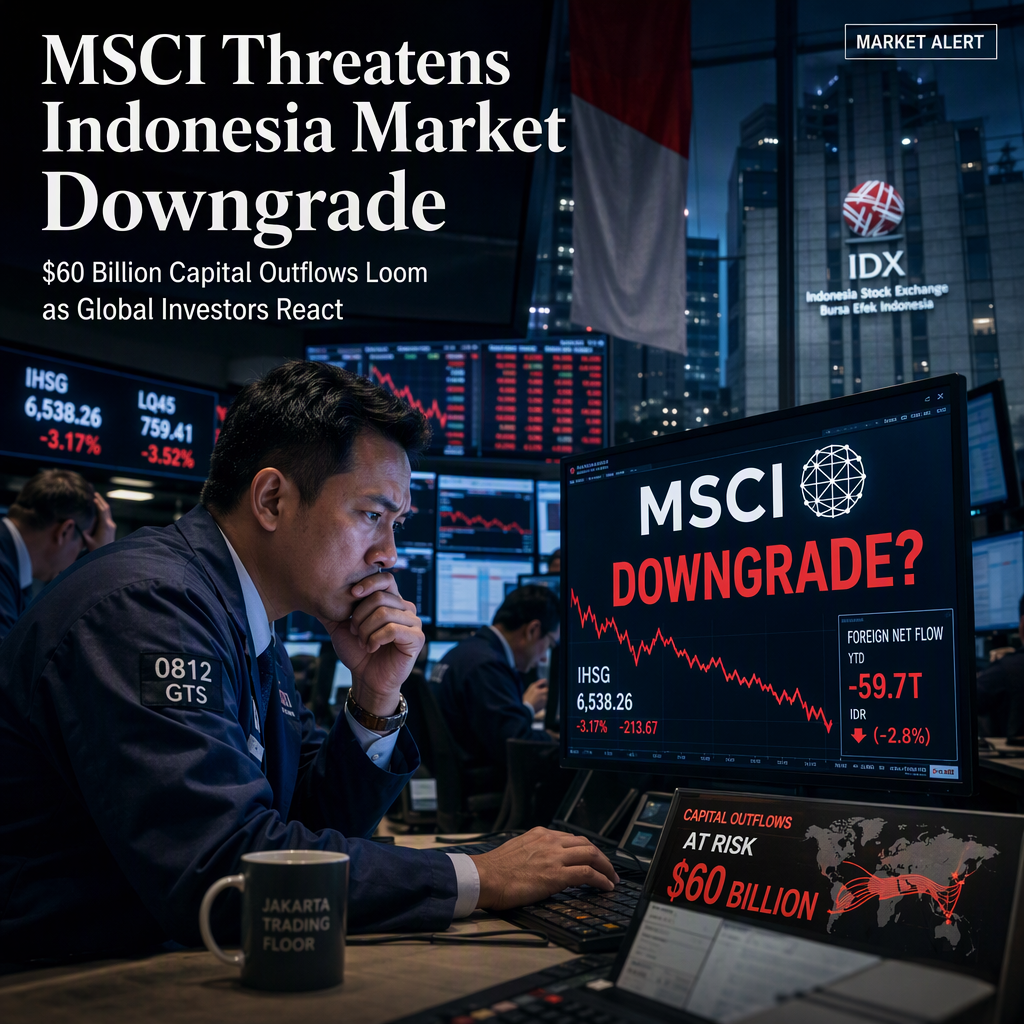
MSCI, a global financial services company, announced that it is considering downgrading the MSCI Indonesia Index from emerging market to standalone market status, marking a significant setback for Indonesia's efforts to maintain its emerging market classification [1]. This announcement comes in contrast to FTSE Russell's recent reaffirmation of Indonesia's emerging market status, highlighting a divergence in assessments by major index providers [1].
The potential downgrade is particularly concerning for Indonesia as it seeks to align with international market standards and attract global investment. Market analysts estimate that Indonesia’s stock market could experience capital outflows of up to $60 billion if the downgrade proceeds, as many global funds track MSCI's emerging market benchmarks and may be forced to divest from Indonesian equities if the country is reclassified as a standalone market [1].
Key concerns cited by MSCI include market liquidity, transparency, and the regulatory framework governing listed securities in Indonesia. The consultation process initiated by MSCI will involve market participants and stakeholders to assess Indonesia’s progress in addressing these issues, with particular attention to the minimum price for listed stocks and overall market accessibility [1].
In response, the Indonesian government and financial regulators have pledged to implement reforms aimed at avoiding the downgrade and ensuring the market remains attractive to international investors [1].
CONCLUSION
MSCI's consideration of downgrading Indonesia's index status poses a significant risk of capital outflows and could undermine investor confidence. The outcome will depend on Indonesia's ability to address MSCI's concerns through regulatory reforms and market improvements.