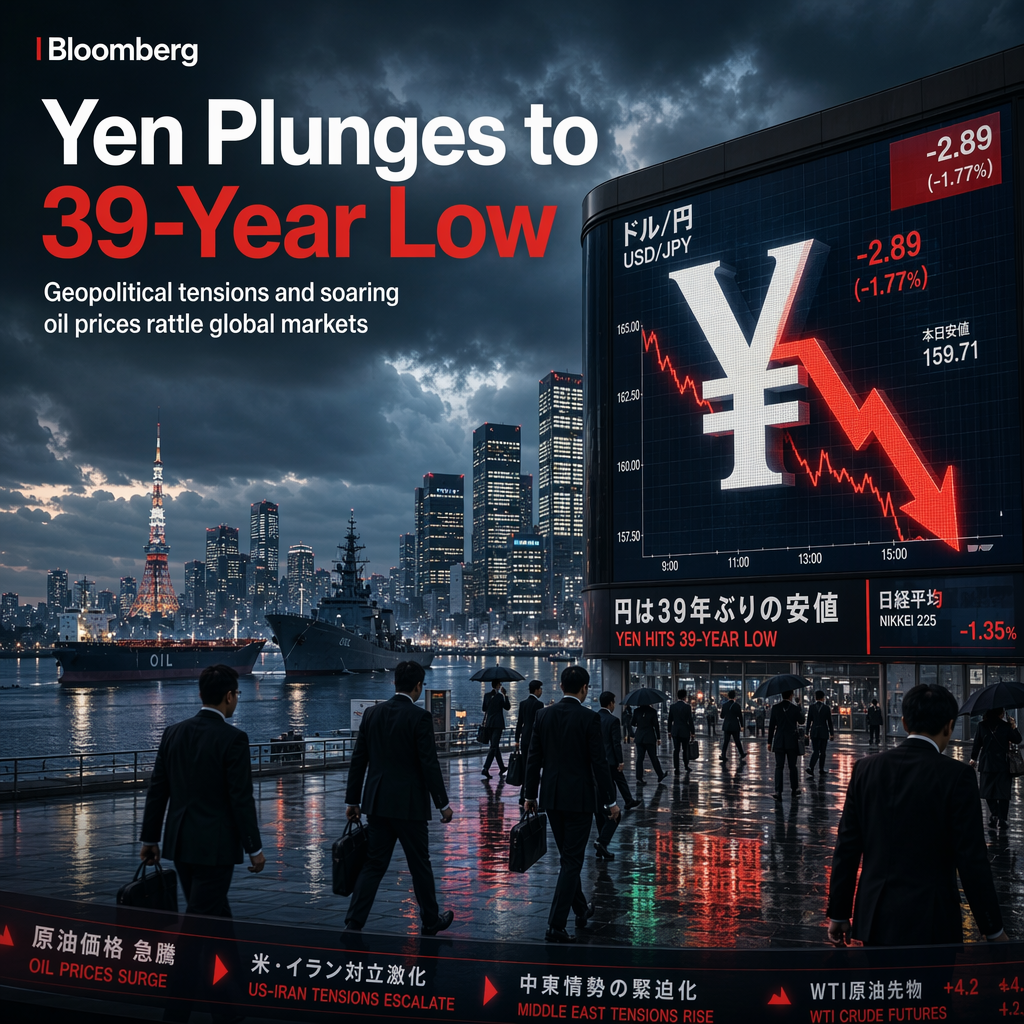
The Japanese yen fell to its lowest level in nearly four decades, reaching 163 per dollar, as heightened US-Iran tensions drove oil prices higher and increased global uncertainty [1]. Brent crude futures climbed above $92, signaling further inflationary pressures and prompting investors to seek the US dollar as a safe haven [1]. Technical analysis showed that yen support at 160 was breached, with resistance near 163, and Japanese bond yields are approaching 3% amid fiscal fears, adding volatility to both bond and currency markets [1].
Market participants attributed the yen's weakness not only to geopolitical risks but also to concerns over Japan's economic direction, influenced by the Takaichi plan, which proposes a new economic blueprint for the country [1]. Analysts warned that persistent yen weakness could trigger intervention fears, especially as the currency enters the 160 range for the first time in two weeks. Speculation about Japan's mega pension fund's JGB buying also affects both yields and the yen's performance [1].
Meanwhile, the US Dollar Index (DXY) trades near 101.15, declining amid uncertainty over US Federal Reserve rate decisions and softer US inflation data, which might lower the possibility of a rate hike later this year [2]. Fed funds futures indicate a 74.9% chance of a rate hold at the upcoming July 29 meeting, up from 61.5% a month ago [2]. Despite the DXY's weakness, escalating US-Iran conflict, including US military strikes and threats to shipping routes like Bab el-Mandeb, could support the dollar due to its safe-haven status and positive correlation with oil prices, according to Commonwealth Bank of Australia currency strategist Samara Hammoud [2].
In the broader currency market, the Canadian dollar edged higher as oil prices surged to fresh highs amid Middle East conflicts and threats to key shipping routes [3]. However, the upside for the CAD is capped by new US tariffs on Canadian products and expectations that the Bank of Canada will keep rates unchanged through 2026 following soft inflation data [3]. Hawkish Fed expectations, driven by energy-driven inflation concerns, continue to favor USD bulls, though the USD paused after a four-day rally [3].
CONCLUSION
The yen's sharp depreciation to a 39-year low reflects heightened geopolitical risks and surging oil prices, with market participants favoring the US dollar as a safe haven. While the US Dollar Index has weakened on Fed rate uncertainty, ongoing Middle East tensions and inflationary pressures may bolster the dollar's appeal. The overall market impact is high, with traders closely monitoring intervention risks, policy changes, and further developments in the geopolitical landscape.