
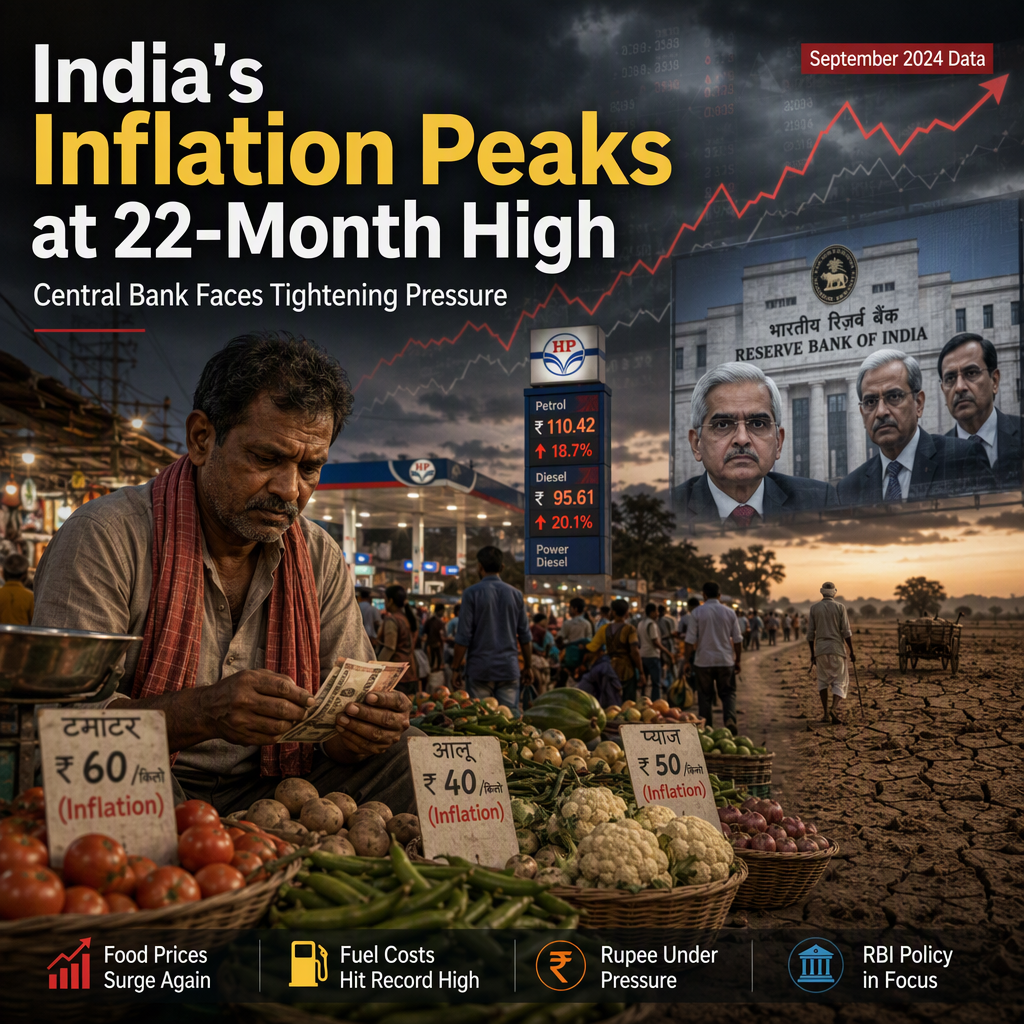
India's consumer price inflation surged to 5.54% in September, up from 4.82% in August, marking the highest level in 22 months and surpassing economists' expectations of 5.40% according to a Reuters poll [1]. This persistent rise in inflation, now ongoing for 11 consecutive months, is exerting significant pressure on the Reserve Bank of India (RBI) to further tighten monetary policy [1]. Food inflation was a major driver, climbing to 7.74% in September from 5.97% in August, with rural areas experiencing faster price increases than urban centers [1]. Transport services for goods saw inflation of 14.73%, while personal transport costs rose by 7.46% [1].
In response to these inflationary pressures, the RBI raised interest rates earlier this month for the first time since 2023, aligning with other major central banks in efforts to curb accelerating inflation [1]. The RBI has indicated that, under current conditions, further rate cuts are not being considered in the near term, and future policy actions could involve either a rate hike or a pause [1]. The central bank projects core inflation at 4.4% and headline inflation at 5.2% for the financial year ending March 2027, both above its medium-term target of 4% [1].
India's vulnerability to external shocks has increased due to elevated oil prices stemming from Middle East tensions and the Iran war, as the country imports nearly 85% of its fuel needs and previously relied heavily on energy supplies through the Strait of Hormuz [1]. Experts anticipate continued volatility in oil prices due to ongoing geopolitical risks and the impact of Hurricane Isaias [1].
Additionally, the RBI raised its economic growth estimate by 40 basis points to 7.1%, but warned that persistent geopolitical tensions, trade frictions, tighter financial conditions, and high international commodity prices could dampen economic activity [1]. The rural economy faces further challenges from the Super El Nino, with India experiencing its lowest rainfall in over a decade during the critical June to September period, the fourth lowest since 2001 and the 13th driest since 1901, leading to extreme drought conditions in several key farming states [1].
CONCLUSION
India's inflationary surge to a 22-month high is intensifying pressure on the central bank to maintain a tight monetary stance, especially amid external risks like elevated oil prices and adverse weather conditions. While the RBI has raised its growth outlook, it remains cautious about the headwinds posed by geopolitical and climate-related challenges. Market participants are likely to anticipate further policy tightening or a prolonged pause in rate adjustments.