
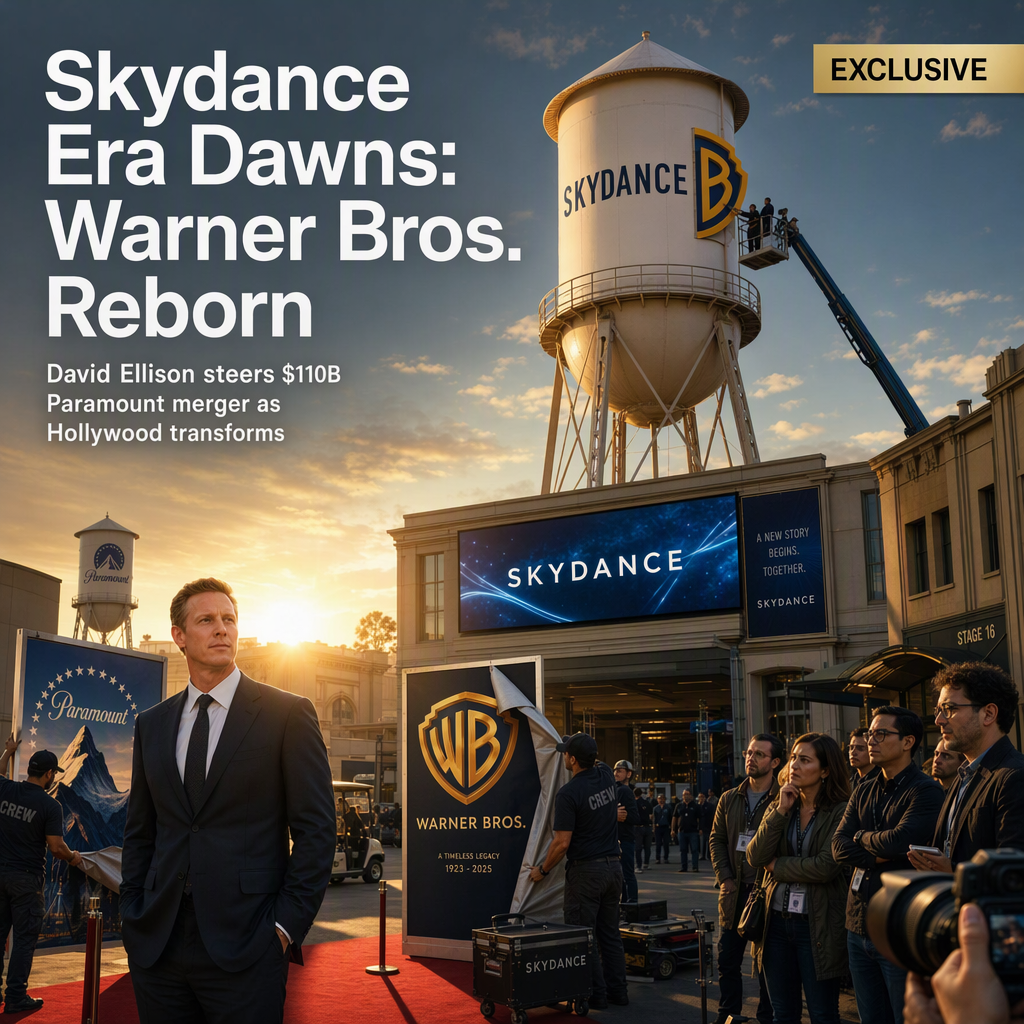
On Tuesday, Warner Bros. Discovery underwent a significant transformation as Skydance Corp. completed its $110 billion merger with Paramount, marking the beginning of a new era under CEO David Ellison's leadership [1]. Employees were greeted with new Skydance branding both digitally and physically, including updates to the iconic Warner Bros. water tower in Burbank and the company's New York City office [1]. In a memo titled 'Day 1,' Ellison and co-CEO Ynon Kreiz emphasized their commitment to moving forward and shaping the future of the combined company [1].
The merger brings together two historic film studios (Paramount and Warner Bros.), two major streaming platforms (Paramount+ and HBO Max), and two prominent news organizations (CBS News and CNN) under the Skydance umbrella [1]. Larry Ellison, Oracle's chief and David Ellison's father, is personally backing the deal with tens of billions of dollars from his own fortune [1].
The path to closing the deal was marked by opposition from Hollywood actors, writers, and producers, who expressed concerns about increased corporate consolidation threatening the creative community [1]. Regulatory approval was obtained from the U.S. Justice Department, the European Commission, and numerous other countries, but the merger faced a legal challenge from California's attorney general, Rob Bonta, and other state attorneys general, who argued it could reduce competition and jeopardize the journalistic independence of CNN [1].
This legal challenge was resolved on September 21, when Paramount Skydance agreed to release 30 films per year for the first two years, and 32 films annually for the following three years, or pay a fee for missing the target [1]. Additionally, Ellison pledged to establish independent editorial boards for CNN and CBS News to safeguard their editorial independence [1].
CONCLUSION
The completion of the $110 billion Paramount-Warner merger under Skydance Corp. and David Ellison marks a major shift in the entertainment industry, with significant rebranding and strategic commitments. While the deal overcame regulatory and legal hurdles, its long-term impact on competition and creative independence remains a point of industry concern.