
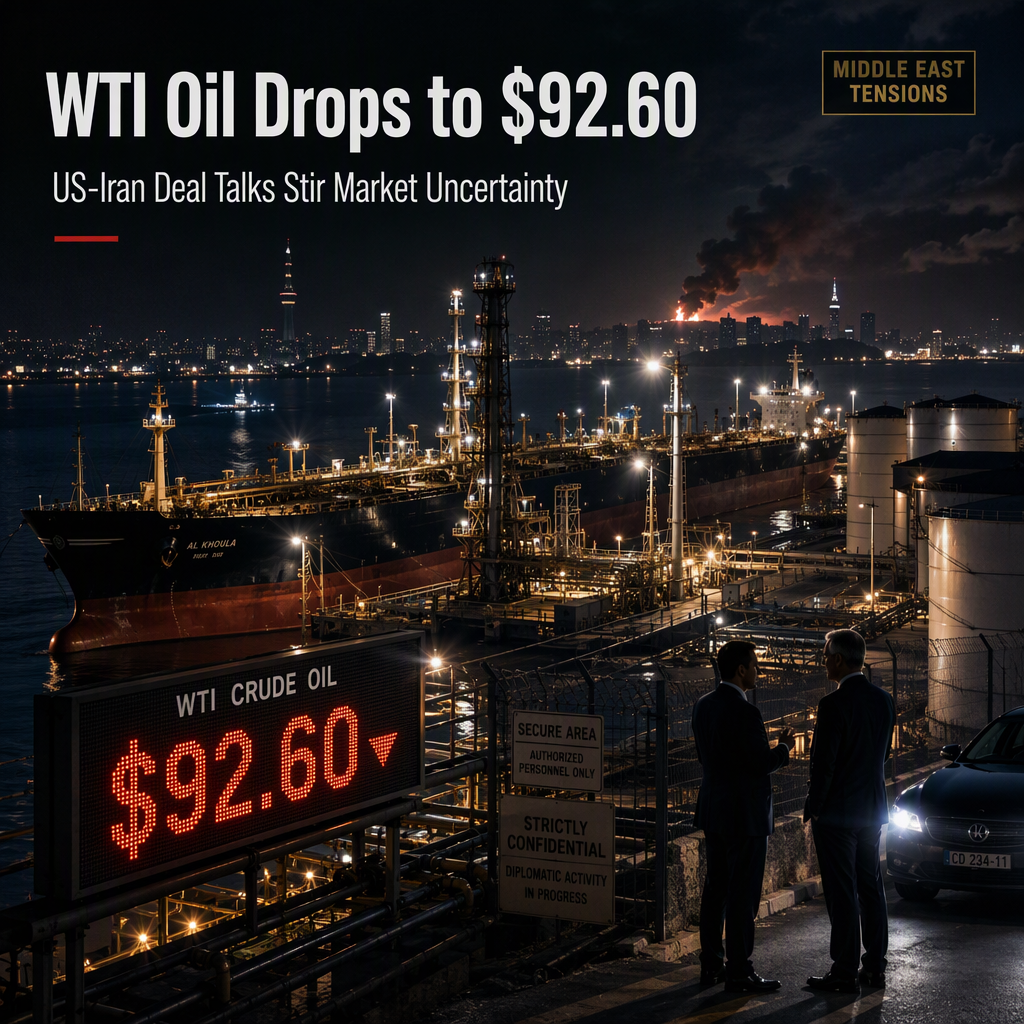
West Texas Intermediate (WTI) oil prices declined to around $92.60 per barrel during Asian trading hours on Friday, following two consecutive days of gains. The drop was attributed to reports that the United States and Iran were considering a phased deal to reopen the Strait of Hormuz and lift the US blockade on Iranian ports, with Qatari officials mediating the discussions on the sidelines of the United Nations General Assembly [1]. Despite these negotiations, both countries maintained firm stances: Iran demanded control over the Strait and the lifting of military pressure and the port blockade, while a White House official stated that President Donald Trump was open to talks but felt little pressure to negotiate due to the US's strong position after its sanctions campaign [1].
Market sentiment remains cautious, as analysts at ING highlighted that restrictions on shipping through the Strait of Hormuz have raised concerns about global energy shortages, higher prices, and potential production disruptions for manufacturers. However, they noted that the US is better positioned to manage these risks compared to European and Asian competitors, as it produces more energy than it consumes, providing a buffer against supply disruptions and price spikes [1].
Meanwhile, escalating tensions in the Middle East could reverse the recent price decline. Iran-aligned Houthi militants in Yemen launched missiles targeting Saudi cities, including Yanbu and Taif, though the Saudi-led coalition intercepted six ballistic missiles [1]. This ongoing instability in the region continues to pose upside risks to oil prices.
No specific forward-looking statements or additional analyst opinions were provided beyond ING's assessment of the US energy position [1].
CONCLUSION
WTI oil prices fell to $92.60 per barrel amid reports of potential US-Iran negotiations and ongoing Middle East tensions. While the US is seen as relatively insulated from supply shocks, continued regional instability could drive prices higher. Market participants remain watchful for further developments in both diplomatic talks and regional security.