
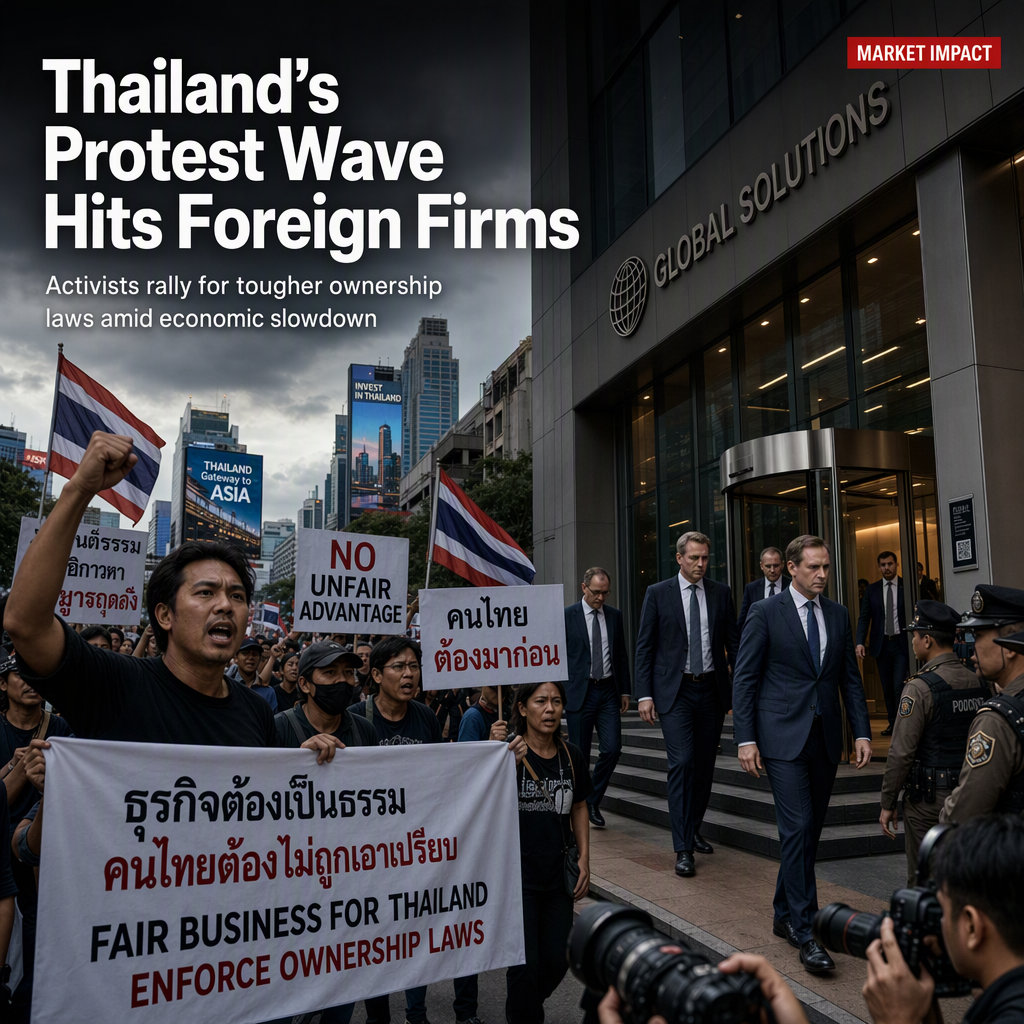
A growing protest movement in Thailand is targeting companies from China, Israel, and other countries, accusing them of circumventing ownership rules as the country's economic growth slows [1]. Thai activists recently staged a rally at the Israeli embassy, protesting alleged exploitation and legal violations by foreign businesses [1]. The movement is intensifying due to concerns that foreign enterprises are using loopholes to bypass regulations on ownership, which has become a sensitive issue amid sluggish economic conditions [1].
In response, the Thai government has announced a crackdown on ownership loopholes, signaling potential broad implications for foreign companies operating in the country [1]. Activists claim that some foreign businesses disguise themselves as local entities to gain favorable treatment and market access, increasing pressure on domestic companies and workers [1]. As economic growth slows, resentment among local stakeholders is rising, and calls for stricter enforcement of ownership and labor laws are gaining momentum [1].
This shift in sentiment represents a departure from Thailand’s historically open approach to foreign investment [1]. The government is reportedly considering changes to the legal framework governing foreign business ownership, aiming to prevent rule circumvention and protect local interests [1]. While the article does not provide specific financial data, price levels, or technical analysis, the economic context and potential regulatory changes could impact investor sentiment and the operating environment for foreign companies in Thailand [1].
CONCLUSION
The intensifying protest movement and government crackdown on ownership loopholes signal a changing environment for foreign companies in Thailand. While no specific financial figures are provided, the shift in sentiment and potential regulatory changes could affect investor confidence and the business landscape. Market participants should monitor developments closely as stricter enforcement may impact foreign investment and operations.